No. 25-7489October Term 2025DismissedUpdated Sep 12, 2026
Ragland v. North Carolina Division of Employment Security

Case status
Where it stands
The case ended without a full Supreme Court ruling on the merits.
What it's about
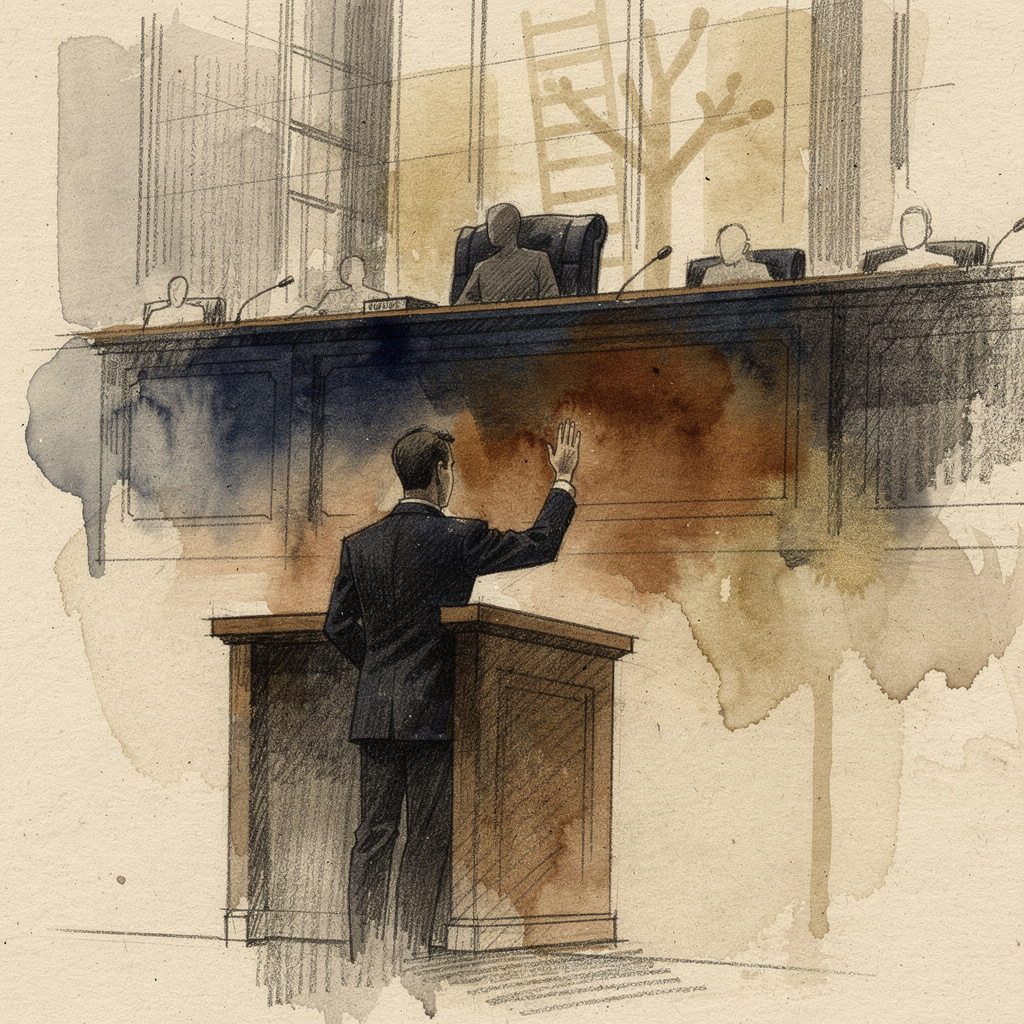
Kimarlo Ragland challenged North Carolina courts’ handling of his appeals involving the state’s Division of Employment Security, including the dismissal of his appeals and denial of trial transcripts. He alleged that those actions denied him due process and equal protection, particularly because he was self-represented and unable to pay; the Supreme Court dismissed his petition.
Question presented
1. Whether NC Courts dismissal of petitioner’s appeal(s) are unconstitutional and contravene I violate clause(s) set forth in Griffin v Illinois 351 US 12, and Douglas v. California 372 US 353? 2. Whether NC Courts denial of trial transcripts violate standards set forth in MLB v SLJ 519 US 102, Griffin v Illinois 351 US 12, and the equal protection under law clause of the 14th amendment? 3. Whether the actions of the respondent and NC court(s) devoid neutrality and equity satisfy due-process and ultimately violate the petitioner’s 5th and 14th amendment constitutional right by taking property without due-process of the law and failure to provide equal protection under the law? 4. Whether the NC appellate Courts failure to opine an appeal in strict compliance with their rules of appellate procedure is unconstitutional? 5. Whether NC Court(s) (particularly the appellate courts) rulings consistently along ideological and partisan lines are unconstitutional as in this case and cases of the petitioner? 6. Whether NC Court(s) discriminatory and less favorable than licensed attorneys treatment of self-represented litigants are unconstitutional and inconsistent with law? 7. Whether NC Courts (particularly the appellate courts) efforts to siphon funds (as in this matter) from the impoverished is unconstitutional? 8. Whether the long-standing demographic makeup of the NC appellate courts which is NOT representative NOR reflective of the community, while executing I rendering decisions equivalent to that of a jury is unconstitutional?
Why it matters
The denial leaves no new Supreme Court rule on access to transcripts or treatment of self-represented people who cannot afford court costs. It affects people like Ragland by leaving their cases to the existing state-court process.
The petition raised due process and equal protection concerns about access to appeals, transcripts, and fair treatment for self-represented litigants.
Documents
Related cases
 Transgender athletes in girls' sportsWest Virginia, et al., Petitioners v. B. P. J., By Her Next Friend and Mother, Heather JacksonDecided24-43Decided
 Transgender athletes in girls' sportsBradley Little, Governor of Idaho, et al., Petitioners v. Lindsay Hecox, et al.Decided24-38Decided
 Jason Wolford, et al., Petitioners v. Anne E. Lopez, Attorney General of HawaiiDecided24-1046Decided
 Cisco Systems, Inc., et al., Petitioners v. Doe I, et al.Decided24-856
Docket activity
AI analysis generated: Case Briefing
AI analysis generated: Decision Record
Brief added: Petition
More questions
- What did the Supreme Court do in Ragland v. North Carolina Division of Employment Security?
- The Court denied Ragland's petition to review the case. It did not decide whether North Carolina courts violated his constitutional rights.
- What was Ragland challenging?
- He challenged the dismissal of his appeals, denial of trial transcripts, and alleged unfair treatment of self-represented litigants who cannot pay.
- Who is affected by the denial in Ragland's case?
- Ragland's case will not receive Supreme Court review. The denial creates no new Supreme Court protection for self-represented people seeking transcripts or appeals.
- Is Griffin still the law after Ragland v. North Carolina Division of Employment Security?
- The Court's denial did not change or interpret Griffin. It did not decide the legal questions Ragland raised under that precedent.
Sources
Primary materials plus reporting. Best-effort analysis: this explainer relies on a mix of primary materials and trusted secondary sources. Official filings and opinions remain authoritative.