No. 25-1341October Term 2025Petition PendingUpdated Sep 2, 2026
Birks v. Clemente Javier Aguirre-Jarquin
Case status
Where it stands
Awaiting an order on the petition
- Next
- No decision timeline until the Court agrees to hear the case.
What it's about
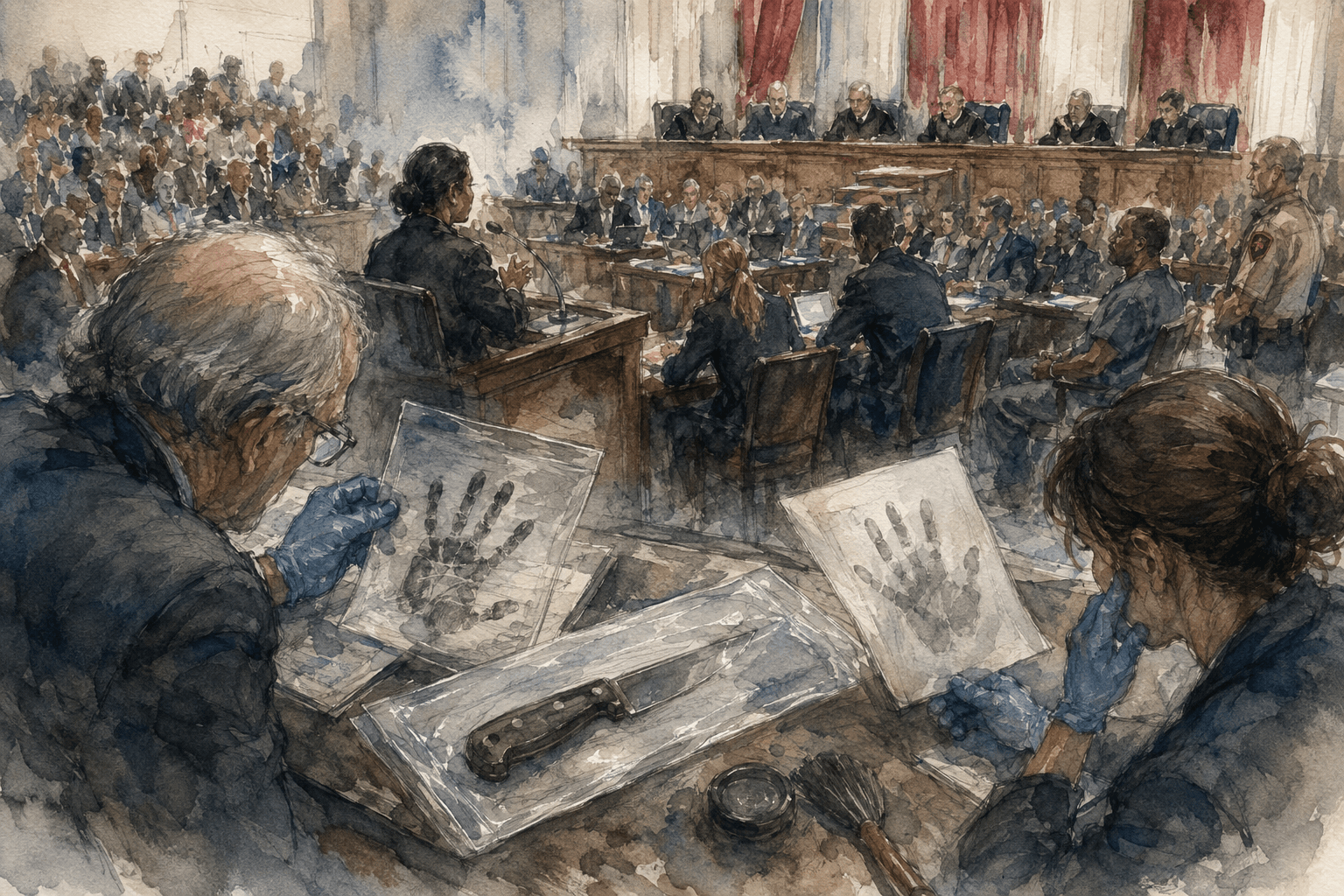
This case concerns a civil-rights claim against a latent-print analyst whose trial testimony identifying a palm print on a murder weapon was later found inaccurate. The petition asks whether the analyst violated the defendant’s due-process rights and whether she is entitled to qualified immunity, including because the defendant testified that he handled and removed the weapon.
Question presented
1. Whether a Fourteenth Amendment claim for deprivation of liberty without due process of law, founded on an allegation that a latent print analyst caused plaintiff’s murder conviction and subsequent imprisonment when the analyst erroneously testified to a match of the plaintiff’s palm print to a latent print on the murder weapon, is foreclosed by plaintiff’s own testimony during the same criminal trial that he picked up and removed the weapon from the murder scene? 2. Whether the submission of latent print evidence in a criminal prosecution and trial, which later is determined to have been inaccurate, is a due process violation where the latent print analyst was not subjectively aware at the time she testified to it that her opinion evidence was inaccurate? 3. Whether, for qualified immunity purposes, it was clearly established in the 2004-2006 timeframe that the unknowing and unintentional submission of inaccurate latent print evidence was a due process violation under the Fourteenth Amendment? 4. Whether the law was clearly established by 2006 that a latent print analyst, who is required to have a positive print match verified by a another credentialed analyst, deprived a criminal defendant of due process by asking a fellow credentialed analyst working alongside her in the same lab to verify her positive identification, where she harbored subjective concerns about the competence of her colleague due to his age and infirmity? 5. Whether the Eleventh Circuit erred in denying a latent print analyst qualified immunity on an entirely novel form of §1983 due process liability founded solely upon the analyst’s negative personal opinions as to the competence of her more experienced and equally credentialed co-worker print analyst, whom she asked to verify her positive print identification?
What happens next
The Court may decide whether to grant certiorari (the Court's decision to hear the case) or take another scheduling action. No decision window is available yet.
Why it matters
The case could affect people who were convicted after forensic evidence was later found inaccurate, as well as lab analysts who testify in criminal trials. For example, it could shape whether an analyst faces a civil damages claim for an unintentional print-identification error.
The dispute concerns when inaccurate forensic testimony becomes a constitutional violation and when government forensic workers are shielded from civil liability.
Case file
- Docket
- 25-1341
- Status
- Petition Pending
- From
- United States Court of Appeals for the Eleventh Circuit
- Documents
- 1
Documents
Related cases
 Climate change liabilitySuncor Energy (U.S.A.) Inc. v. County Commissioners of Boulder CountyArgument25-170Petition Pending
 Google LLC v. VirtaMove, Corp.Petition pending25-1230Argument Scheduled
 Leonard W. Hoffmann v. WBI Energy Transmission, Inc.Argument25-159Before Arguments
 Kevin Isaac Montoya Palacios v. Vernon Liggins, Acting Field Office Director, Baltimore, Maryland, Immigration and Customs EnforcementAwaiting argument25-1223
Docket activity
AI analysis generated: Case Briefing
Brief added: Petition
More questions
- What is at stake in Birks v. Aguirre-Jarquin?
- The case concerns whether an unintentional forensic print error can support a due-process damages claim against the analyst who testified.
- Who could be affected by this fingerprint-evidence dispute?
- People challenging convictions involving inaccurate forensic evidence and government lab analysts facing civil claims could be affected.
- When will the Supreme Court act in Birks v. Aguirre-Jarquin?
- No oral argument or decision date is scheduled. The next known step is a Court action on whether to hear the petition.
Sources
Primary materials plus reporting. Best-effort analysis: this explainer relies on a mix of primary materials and trusted secondary sources. Official filings and opinions remain authoritative.