Brown v. Desrochers
In brief
The Supreme Court refused to hear Brown's case, so the lower-court dismissal stayed in place; it did not decide whether the complaint stated a valid legal claim.
- Where it stands
- Decided
Decided · May 26, 2020
- What it’s about
- The case concerned a civil-rights complaint that the federal district court and the Sixth Circuit dismissed for failure to state a legally valid claim. The Supreme Court denied review, leaving the lower courts’ dismissal in place.
- Who it affects
- The dismissal of Brown's complaint remained in place; the Supreme Court's order did not decide the legal question or endorse either side's position.
Summary: written with AI from the case record.
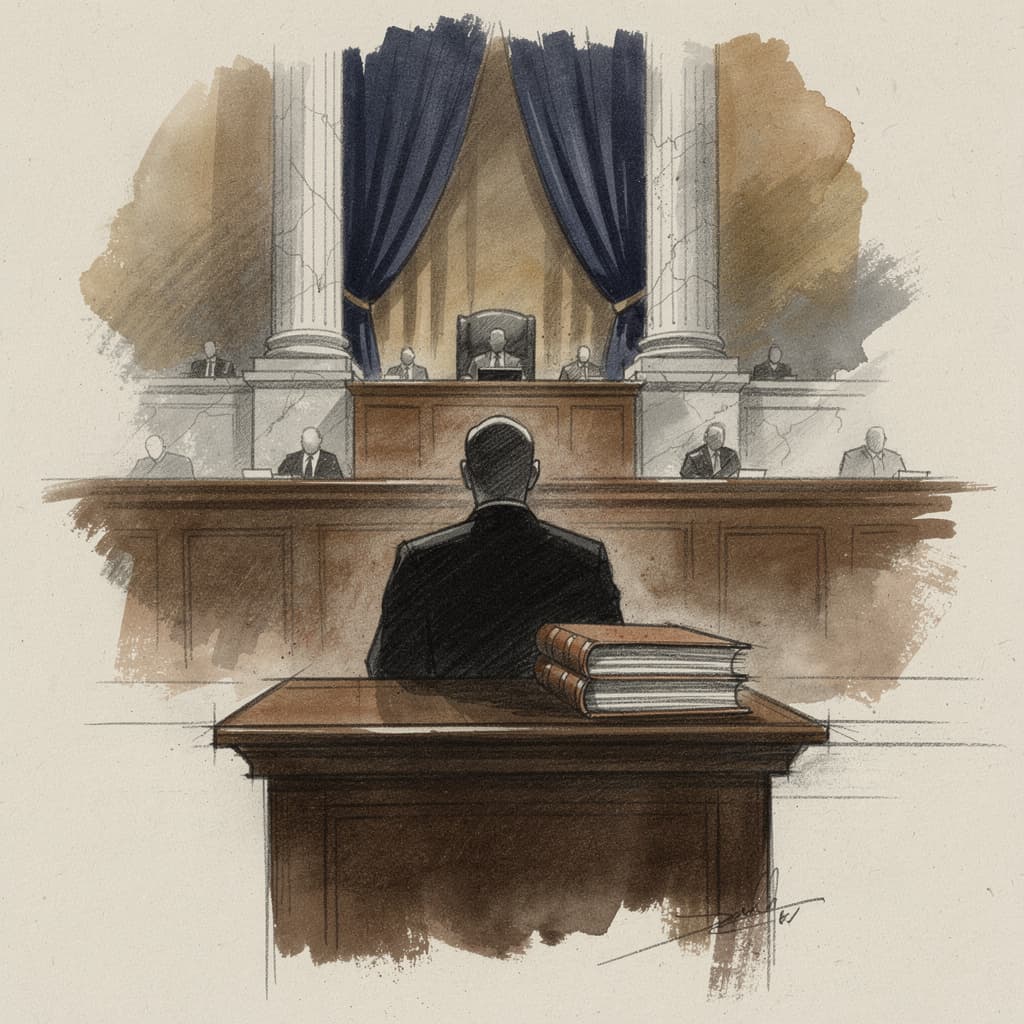
What it's about
The case reached the Supreme Court from the Sixth Circuit after the federal district court and the appeals court dismissed Brown's civil-rights complaint because it did not state a legally valid claim.
Question presented
1. Does the Court of Appeals for the Sixth Circuit erred in dismissing a civil rights complaint for failure to state a claim upon which relief can be granted? 2. Whether the district court erred in dismissing the petitioner's complaint for failure to state a claim?
What the Court decided
Holding
Petition DENIED.
What's next
The Supreme Court's action is finished. The lower-court dismissal remains in place, and no further Supreme Court step is identified.
Documents
Opinions
Key filings
Docket activity
New analysis added
AI analysis generated: Case Briefing
New analysis added
New analysis added
New analysis added
Show 7 moreShow fewer
New analysis added
New analysis added
New analysis added
New analysis added
New analysis added
New analysis added
New analysis added
Sources
Primary materials plus reporting. Best-effort analysis: this explainer relies on a mix of primary materials and trusted secondary sources. Official filings and opinions remain authoritative.