Disability judge appointment challenges
Carr v. Saul
In brief
The Supreme Court rejected the extra requirement, overturned the lower-court ruling (reversed it), and sent the case back to the lower court (remanded it).
- Where it stands
- Decided
Decided 9-0 · April 22, 2021 · Opinion by Justice Breyer
- What it’s about
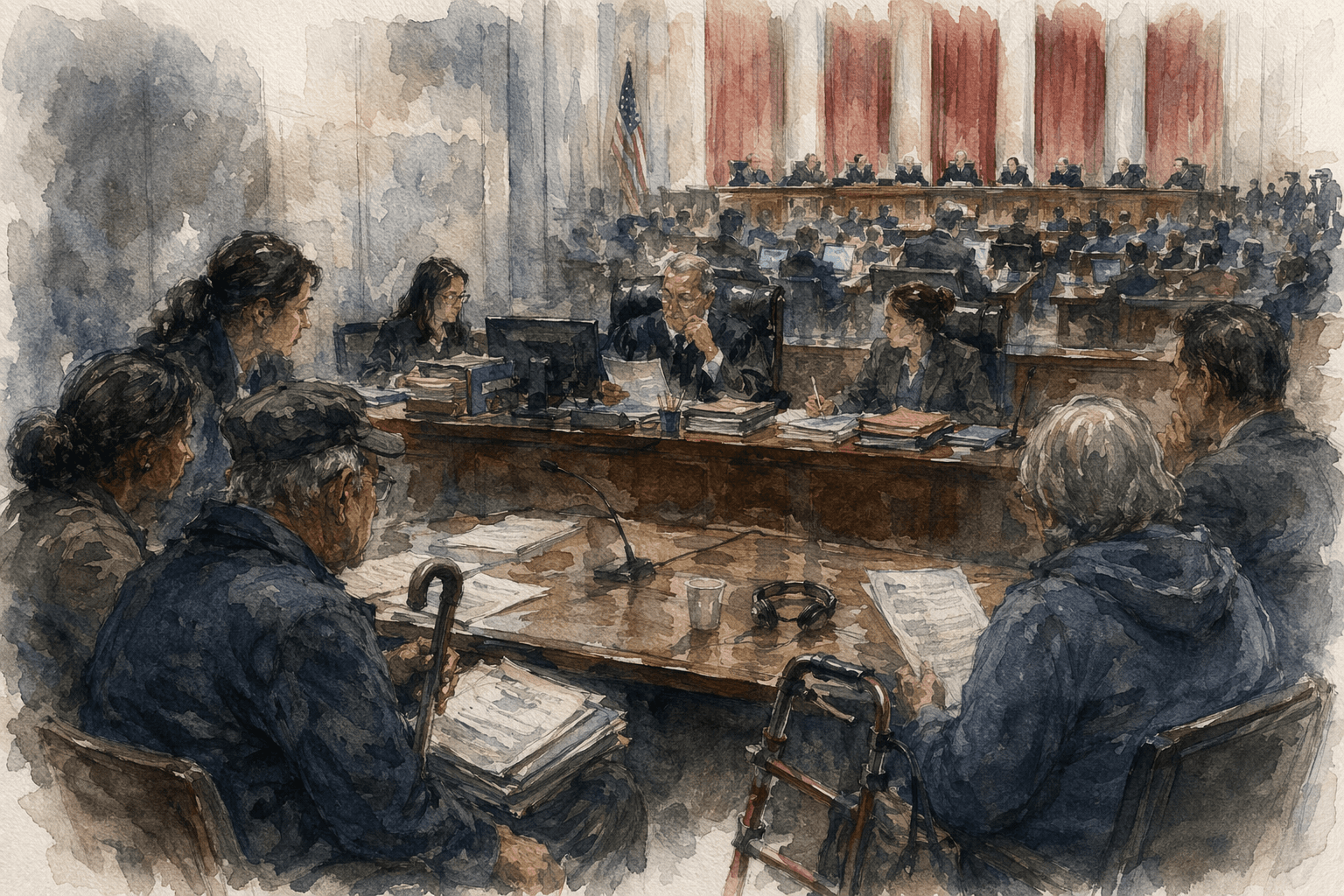
- This case asked whether people seeking Social Security disability benefits can challenge the constitutional appointment of the administrative law judge who denied their claims if they did not raise that issue during the agency process.
- Who it affects
- Failing to raise the appointment challenge before the administrative law judge does not by itself block court review. The judgment did not itself decide whether Carr qualifies for disability benefits.
Summary: written with AI from the case record.
What it's about
The Supreme Court held that they do not lose that argument by failing to present it in their administrative proceedings.
Social Security disability claims move through an agency process before court review, making the timing of constitutional challenges important.
Question presented
Whether claimants seeking disability benefits under the Social Security Act must exhaust Appointments Clause challenges before the Administrative Law Judge as a prerequisite to obtaining judicial review.
What the Court decided
Holding
The Courts of Appeals erred in imposing an issue-exhaustion requirement on petitioners’ Appointments Clause claims. 961 F. 3d 1267 and 963 F. 3d 790, reversed and remanded.
- Result
- Reversed
The vote
What's next
The case was sent back to the lower court (remanded) for further proceedings under the Supreme Court's ruling. The judgment does not say whether Carr ultimately receives disability benefits.
Documents
Docket activity
New analysis added
AI analysis generated: Impact Analysis
AI analysis generated: Opinion Summary
New analysis added
AI analysis generated: Case Briefing
Show 5 moreShow fewer
AI analysis generated: Decision Record
Case data updated: status, opinion_date
Opinion added: opinion
Brief added: Petition
Brief added: Questions Presented
More questions
- What did Carr v. Saul decide?
- The Court decided claimants could raise a constitutional challenge to an administrative law judge's appointment in court without first raising it at the agency.
- Was Carr barred from court review for not raising the challenge before the administrative law judge?
- No. The Court rejected that requirement and said the appeals courts were wrong to impose it on these appointment challenges.
- Did the Court decide whether Carr gets disability benefits?
- No. It overturned the lower-court ruling (reversed it) and sent the case back to the lower court (remanded it). The final benefits outcome was not decided here.
- What happens next in Carr v. Saul?
- The case goes back to the lower court (is remanded) for proceedings under the Supreme Court's ruling.
- Who wrote the Supreme Court's opinion in Carr v. Saul?
- Justice Sotomayor wrote it. Chief Justice Roberts and Justices Alito, Kagan, and Kavanaugh signed on to the full opinion. Thomas, Gorsuch, Barrett, and Breyer signed on only to specified parts.
Sources
Primary materials plus reporting. Best-effort analysis: this explainer relies on a mix of primary materials and trusted secondary sources. Official filings and opinions remain authoritative.