Federal Communications Commission v. AT&T
In brief
The FCC may continue issuing forfeiture orders without a jury, with court review available if the government later sues to collect.
- Where it stands
- Decided
Decided 8-1 · June 4, 2026 · Opinion by Chief Justice Roberts
- What it’s about
- The Court ruled 8–1 for the FCC, holding that its process for assessing monetary forfeitures does not violate the Seventh Amendment.
- Who it affects
- The decision preserves the FCC's current enforcement process for regulated companies, including telecommunications providers facing monetary penalties.
Summary: written with AI from the case record.
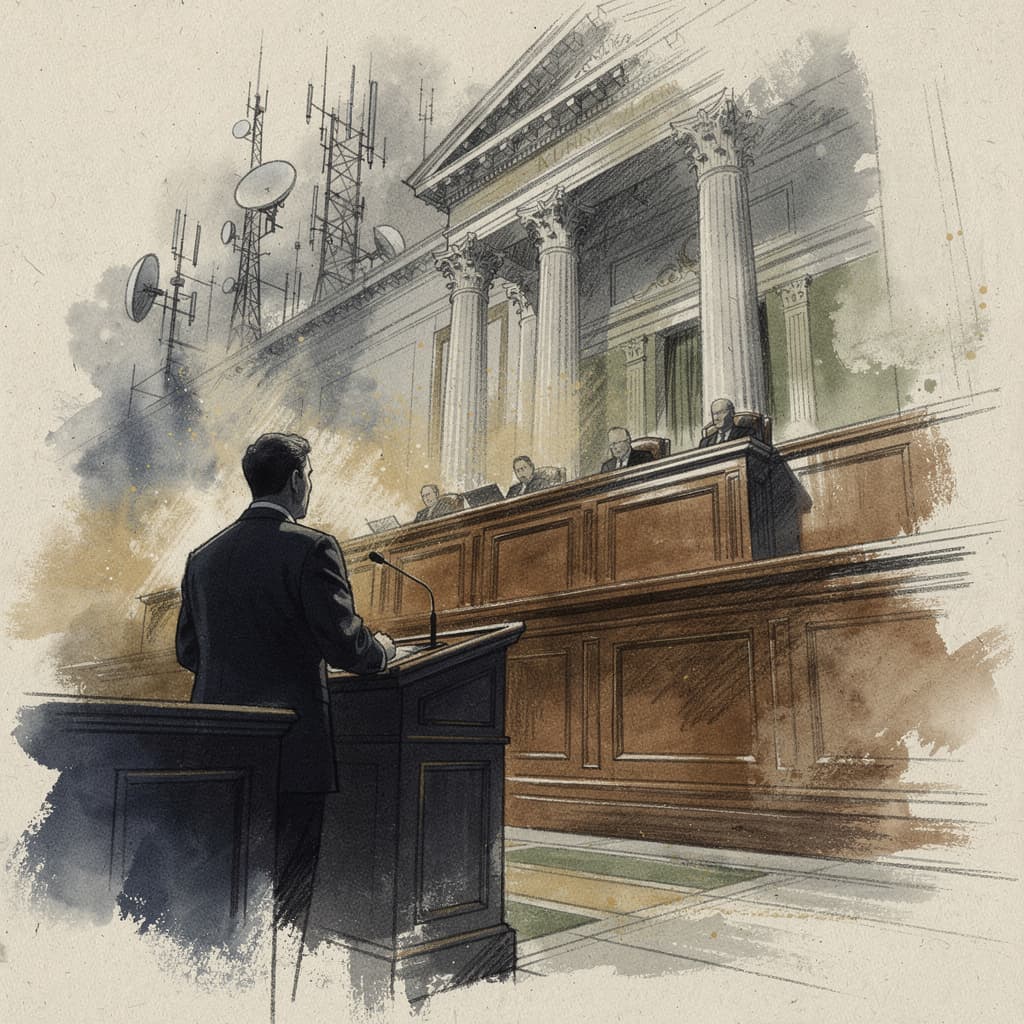
What it's about
An FCC forfeiture order does not by itself create a binding duty to pay, and if the government seeks to collect an unpaid penalty, the company can receive a new jury trial in federal court where the FCC’s earlier factual findings are not binding.
The case addresses how far federal agencies may go in imposing penalties before a court becomes involved.
Question presented
Are provisions of the Communications Act of 1934 that govern the Federal Communications Commission’s assessment and enforcement of monetary forfeitures consistent with the Seventh Amendment and Article III?
What the Court decided
The vote
From the opinions
“The FCC's forfeiture orders do not definitively resolve the parties' legal obligations, and the Commission's factual findings are not conclusive.”
What's next
The Fifth Circuit must carry out the Supreme Court's direction in the reversed case. The FCC and regulated companies will apply the decision in future forfeiture disputes, with collection cases proceeding in court if penalties go unpaid.
Why it matters
A company can still contest a penalty when the government seeks collection, rather than receiving a jury trial during the FCC's initial proceeding.
Docket activity
Case data updated: summary, question_presented, generation_metadata
New analysis added
AI analysis generated: Case Briefing
New analysis added
AI analysis generated: Impact Analysis
Show 7 moreShow fewer
AI analysis generated: Opinion Summary
New analysis added
New analysis added
Case data updated: title
New analysis added
Opinion added: Opinion of the Court - R
Audio Recording added: Oral Arguments - AT&T
More questions
- What did the Supreme Court rule in FCC v. AT&T?
- The Court said the FCC may issue forfeiture orders without a jury. A court case remains available if the government sues to collect an unpaid penalty.
- Who is affected by the FCC v. AT&T decision?
- Telecommunications companies and other FCC-regulated parties facing monetary penalties are affected. The FCC may use its existing initial enforcement process.
- How will lower courts proceed after FCC v. AT&T?
- The Fifth Circuit must follow the Court's directions in the reversed case. Courts handling collection suits cannot treat FCC factual findings as conclusive.
Sources
Primary materials plus reporting. Best-effort analysis: this explainer relies on a mix of primary materials and trusted secondary sources. Official filings and opinions remain authoritative.