Terence Tramaine Andrus v. Texas
In brief
The Supreme Court wiped out (vacated) the Texas ruling and sent Andrus’s case back to that court (remanded) to address whether his claimed lawyer failures harmed him, so the final outcome remains open.
- Where it stands
- Decided
Decided · June 15, 2020 · Per curiam
- What it’s about
- The Court ruled for Andrus, holding that the Texas Court of Criminal Appeals used a prejudice standard stricter than the one required by Strickland v. Washington when it rejected his ineffective-assistance claim.
- Who it affects
- The Texas Court of Criminal Appeals must now address whether the claimed lawyer failures harmed Andrus at sentencing under a standard consistent with the Supreme Court’s opinion. The order leaves his final outcome undecided.
Summary: written with AI from the case record.
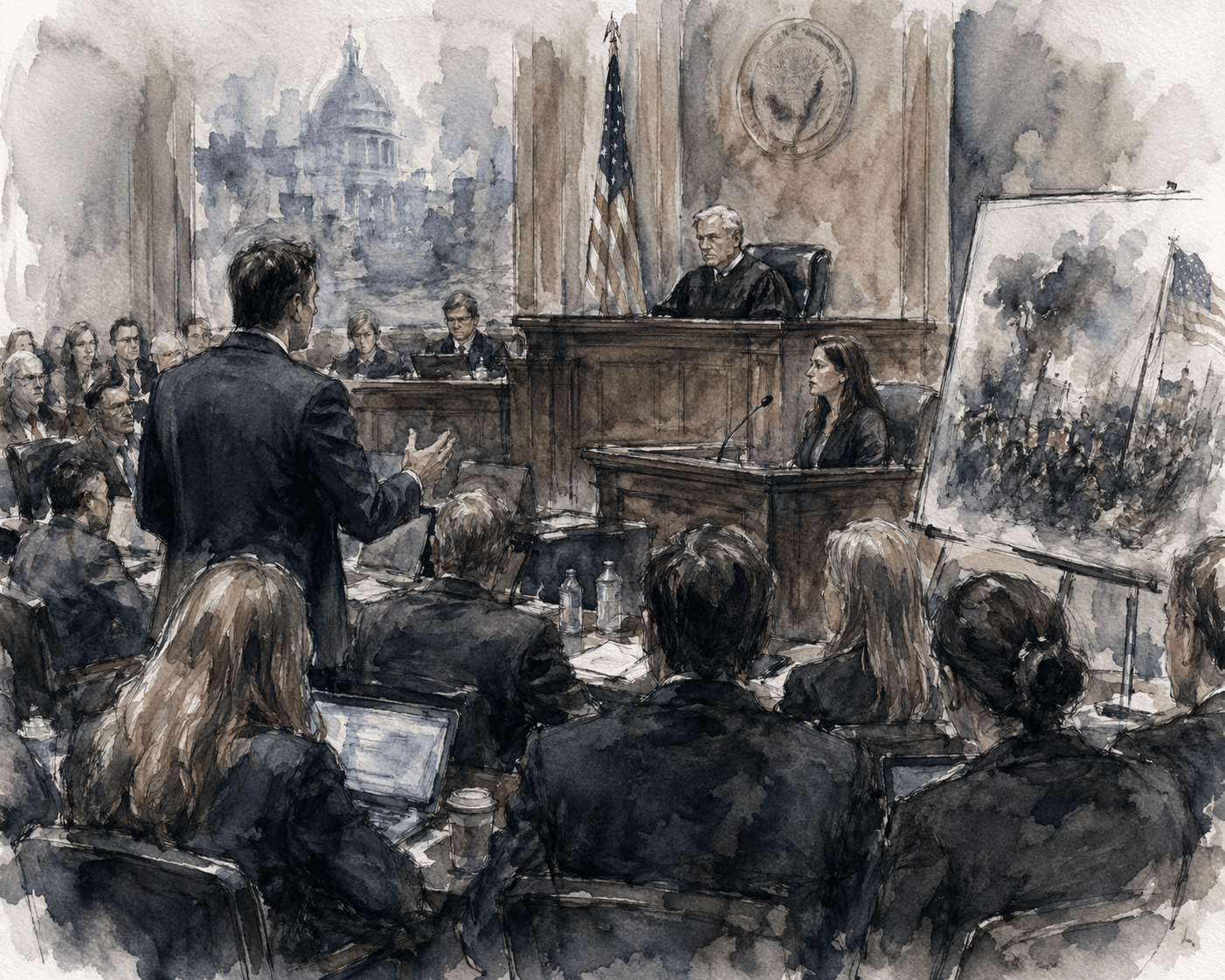
What it's about
The Court vacated the state court’s judgment and sent the case back for a proper assessment of whether his lawyer’s failure to investigate and present mitigating evidence, and to challenge the State’s aggravating case, prejudiced him at sentencing.
The case focuses on how the Strickland test measures harm when a defense lawyer fails to investigate evidence in a death-penalty sentencing.
Question presented
1. Whether a shackling claim under Deck v. Missouri, 544 U.S. 622 (2005), raised for the first time in a capital habeas proceeding and based on evidence only discovered through post-conviction interviews with jurors, can be properly deemed “procedurally barred” based on the conclusion that it could have been raised on direct appeal—even though the State’s capital procedures do not allow for the development or presentation of extra-record evidence on direct appeal? 2. How a Wiggins claim, based on mitigating evidence adduced only during the post-conviction investigation, should be assessed in light of the State’s case in aggravation at trial—where the trial counsel, accused of providing ineffective assistance, admitted under oath during the post-conviction proceeding that: he did not investigate any aspect of the State’s case in aggravation pre-trial or seek to rebut it during trial and in fact conceded to the jury in closing argument that the jury would likely find that the State had proven that his client would be a “future danger”?
What the Court decided
Holding
We thus grant Andrus’ petition for a writ of certiorari and his motion for leave to proceed in forma pauperis , vacate the judgment of the Texas Court of Criminal Appeals, and remand the case for the court to address the prejudice prong of Strickland in a manner not inconsistent with this opinion.
- Result
- Vacated
From the opinions
“The Court clears this case off the docket, but it does so on a ground that is hard to take seriously.”
What's next
The Texas Court of Criminal Appeals must now review the prejudice question (whether the claimed lawyer failures harmed the sentencing result) in a way consistent with the Supreme Court’s opinion. Andrus’s ultimate outcome remains unresolved.
Docket activity
New analysis added
AI analysis generated: Case Briefing
AI analysis generated: Decision Record
New analysis added
Case data updated: summary, question_presented, generation_metadata
Show 2 moreShow fewer
Opinion added: Strickland in a manner not inconsistent with this opinion
Opinion added: Opinion
More questions
- What was Andrus v. Texas about?
- Andrus raised a shackling claim based on juror interviews. He also argued that his lawyer failed to investigate or present evidence that could lessen his sentence or challenge the State’s case for death.
- What did the Supreme Court do in Andrus v. Texas?
- It agreed to hear the case and wiped out the Texas ruling (vacated). It sent the case back to the Texas Court of Criminal Appeals (remanded) to address the prejudice question.
- What remains unresolved in Andrus v. Texas?
- Whether the claimed lawyer failures harmed Andrus at sentencing remains unresolved. The Supreme Court sent the case back to the Texas Court of Criminal Appeals (remanded it) for that review.
- What happens next in Andrus v. Texas?
- The Texas Court of Criminal Appeals will address the prejudice question under a standard consistent with the Supreme Court’s opinion. The final result remains unresolved.
- Who dissented in Andrus v. Texas?
- Justice Alito disagreed with the Court’s action, and Justices Thomas and Gorsuch signed on to his separate opinion. No vote count is provided.
Sources
Primary materials plus reporting. Best-effort analysis: this explainer relies on a mix of primary materials and trusted secondary sources. Official filings and opinions remain authoritative.