Walter Daniel, Individually and as Personal Representative of the Estate of Rebekah Daniel v. United States
In brief
The United States prevailed because the Court left the Ninth Circuit's Feres doctrine decision unchanged without deciding the legal question.
- Where it stands
- Decided
Decided · May 20, 2019
- What it’s about
- The Supreme Court denied review of Walter Daniel’s case, leaving in place the Ninth Circuit’s ruling that the Feres doctrine barred the estate’s Federal Tort Claims Act medical-malpractice claim.
- Who it affects
- The result means service members and their estates may be unable to sue the federal government for medical malpractice when an injury is considered incident to service.
Summary: written with AI from the case record.
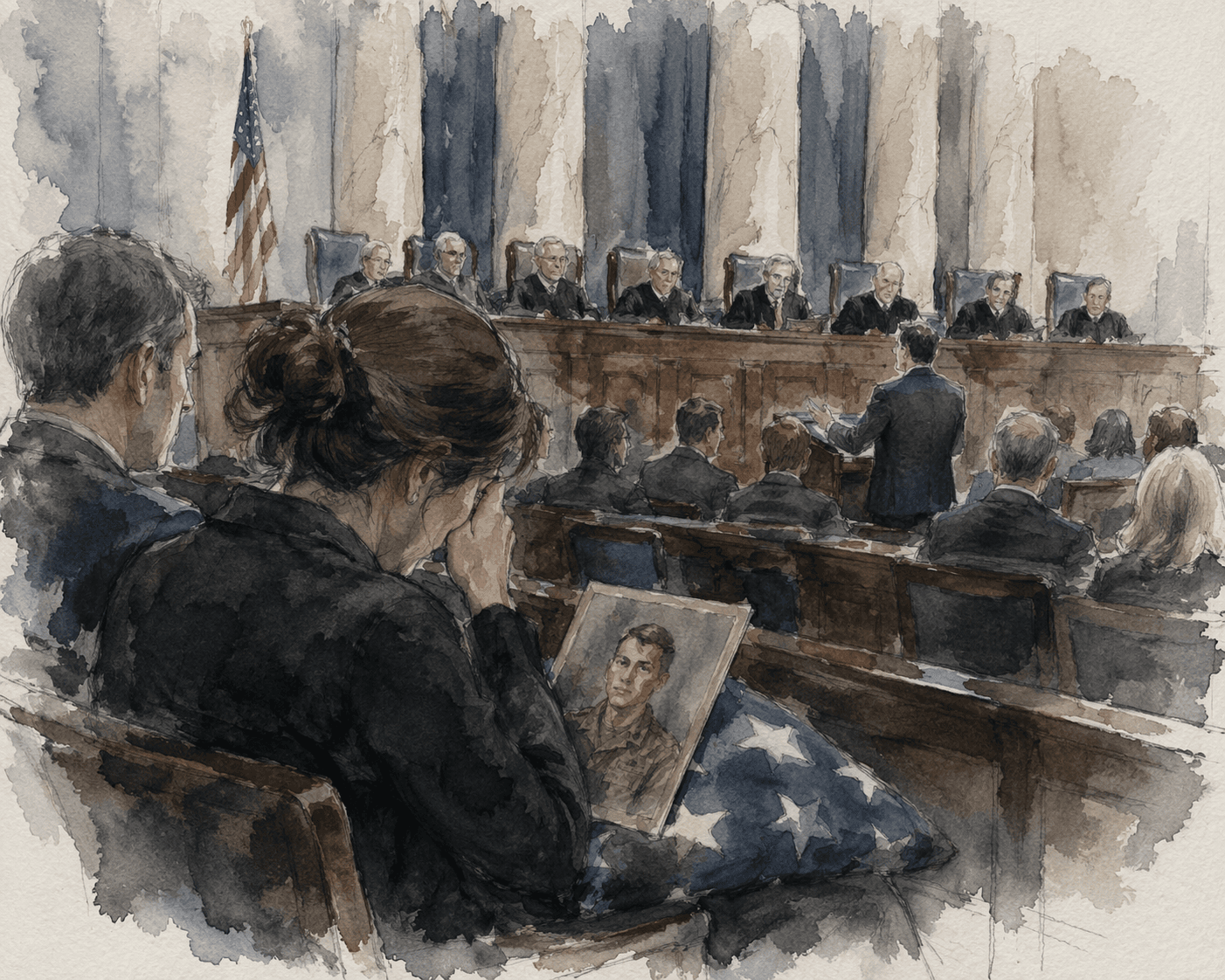
What it's about
As a result, the United States prevailed because the lower court’s conclusion that service members cannot sue the government for injuries incident to service remained unchanged.
The case raised whether the Feres doctrine, which limits lawsuits by service members against the government, should apply to medical malpractice unrelated to military duties or decisions.
Question presented
1. Does the Feres doctrine bar service members, or their estates, from bringing claims for medical malpractice under the Federal Tort Claims Act where the medical treatment did not involve any military exigencies, decisions, or considerations, and where the service member was not engaged in military duty or a military mission at the time of the injury or death? 2. Should Feres be overruled for medical malpractice claims brought under the Federal Tort Claims Act where the medical treatment did not involve any military exigencies, decisions, or considerations, and where the service member was not engaged in military duty or a military mission at the time of the injury or death?
What the Court decided
What's next
The Supreme Court has finished its action on this docket. The Ninth Circuit's result remains in effect for this case.
Why it matters
For example, an estate alleging negligent treatment at a military medical facility remains barred by the Ninth Circuit's decision.
Documents
Opinions
Key filings
Docket activity
New analysis added
AI analysis generated: Case Briefing
Case data updated: summary, question_presented, generation_metadata
New analysis added
New analysis added
Show 2 moreShow fewer
Opinion added: Opinion
Brief added: Petition
More questions
- What did the Supreme Court rule in Daniel v. United States?
- The Court declined to review the case and did not decide its merits. The Ninth Circuit's decision barring the estate's claim remained in place.
- Who is affected by the Daniel v. United States result?
- Service members and their estates bringing Federal Tort Claims Act medical-malpractice claims may be affected. In this case, the estate could not proceed with its claim.
- What happens next in Daniel v. United States?
- The Supreme Court's docket action is complete. The Ninth Circuit's result continues to govern this case.
Sources
Primary materials plus reporting. Best-effort analysis: this explainer relies on a mix of primary materials and trusted secondary sources. Official filings and opinions remain authoritative.