Virginia House of Delegates v. Bethune-Hill
In brief
The House of Delegates could not pursue the appeal alone after the State of Virginia declined to do so.
- Where it stands
- Decided
Decided 5-4 · June 17, 2019 · Opinion by Justice Ginsburg
- What it’s about
- Virginia voters challenged 11 Virginia House of Delegates districts as unconstitutional racial gerrymanders, and a federal district court struck those districts down.
- Who it affects
- The district court's decision striking down the 11 districts remained in place. Voters in those districts were directly affected by how Virginia drew House seats.
Summary: written with AI from the case record.
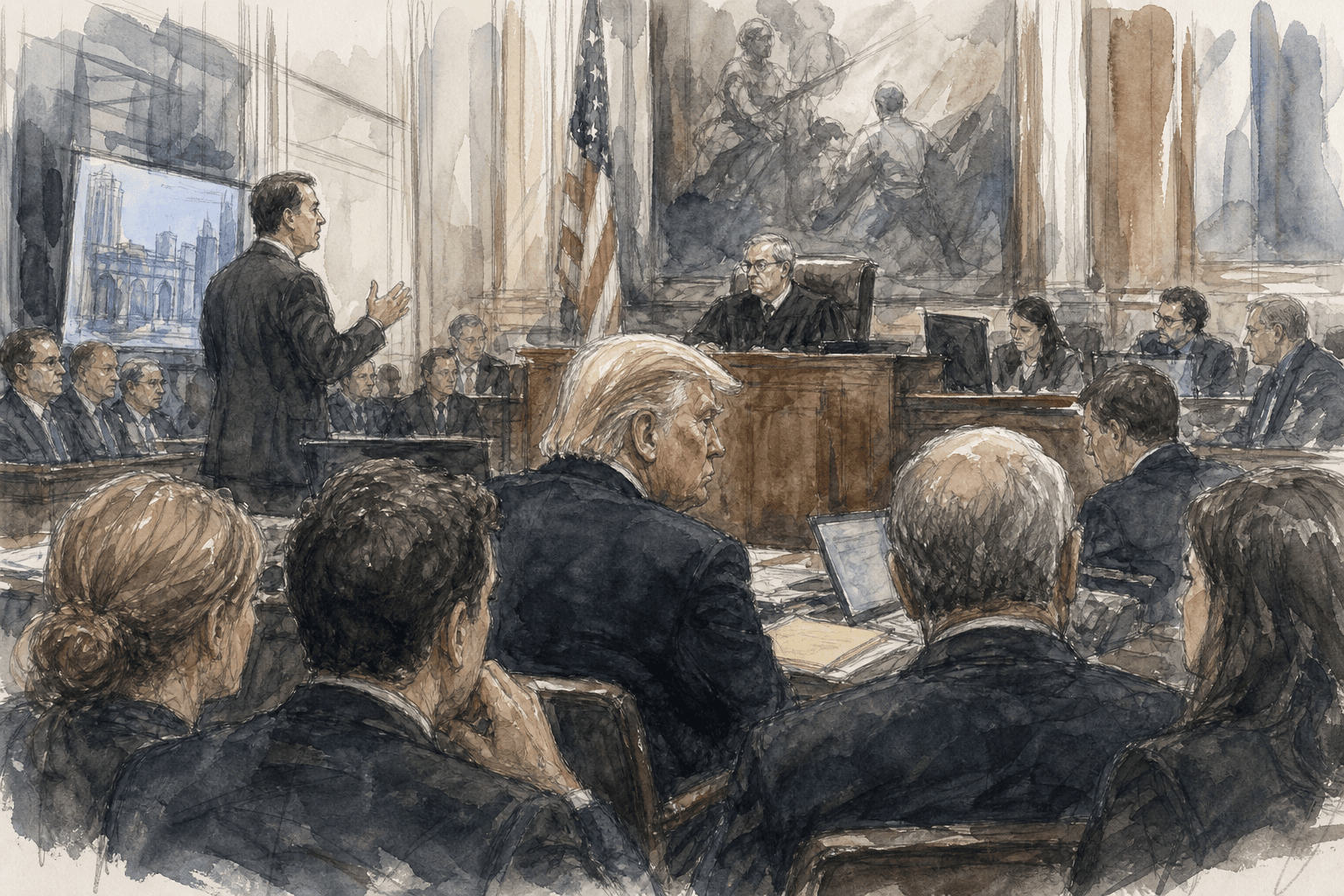
What it's about
The Supreme Court ultimately dismissed the appeal, holding that the Virginia House of Delegates could not continue the case on its own after the State chose not to appeal.
The case concerned when race may be used in drawing voting districts and who may defend a state map in court.
Question presented
1. Whether the district court conducted a proper "holistic" analysis of the majority-minority Virginia House of Delegates districts under the prior decision in this case, Bethune-Hill v. Va. State Bd. of Elections, 137 S. Ct. 788, 799 (2017), even though it ignored a host of evidence, including: a. the overwhelming majority of district lines, which were carried over unchanged from the prior map; b. the geographic location of population disparities, which imposed severe redistricting constraints and directly impacted which voters were moved into and out of the majority-minority districts; and c. the degree of constraint the House's Voting Rights Act compliance goals imposed in implementation, which was minimal. 2. Whether the Bethune-Hill "predominance" test is satisfied merely by a lengthy description of ordinary Voting Rights Act compliance measures. 3. Whether the district court erred in relying on expert analysis it previously rejected as unreliable and irrelevant and expert analysis that lacked any objective or coherent methodology. 4. Whether the district court committed clear error in ignoring the entirety of the House's evidentiary presentation under the guise of credibility determinations unsupported by the record and predicated on expert testimony that should not have been credited or even admitted. 5. Whether Virginia's choice to draw 11 "safe" majority-minority districts of around or above 55% black voting-age population ("BVAP") was narrowly tailored in light of: a. the discretion the Voting Rights Act afforded covered jurisdictions to "choose to create a certain number of 'safe' districts, in which it is highly likely that minority voters will be able to elect the candidate of their choice,"?
What the Court decided
The vote
What's next
The Supreme Court has finished this docket action. The district court's invalidation of the 11 districts remains in place.
Docket activity
New analysis added
AI analysis generated: Case Briefing
Opinion added: opinion
Brief added: Reply
Court Order added: Lower Court Orders/Opinions
Show 2 moreShow fewer
Brief added: Jurisdictional Statement
Brief added: Questions Presented
More questions
- What did the Supreme Court rule in Virginia House of Delegates v. Bethune-Hill?
- The Court dismissed the House of Delegates' appeal because it could not continue the case by itself after Virginia declined to appeal.
- Who was affected by the Bethune-Hill decision?
- Voters in the 11 challenged Virginia House districts were affected because the district court had struck those districts down as unconstitutional racial gerrymanders.
- What happens next after Bethune-Hill?
- The Supreme Court's action is finished. The district court's decision invalidating the 11 districts remains in place.
Sources
Primary materials plus reporting. Best-effort analysis: this explainer relies on a mix of primary materials and trusted secondary sources. Official filings and opinions remain authoritative.