Dutra Group v. Batterton
In brief
The Supreme Court barred punitive damages on an unseaworthiness claim, overturned the Ninth Circuit's judgment, and sent the case back (reversed and remanded).
- Where it stands
- Decided
Decided 6-3 · June 24, 2019 · Opinion by Justice Alito
- What it’s about
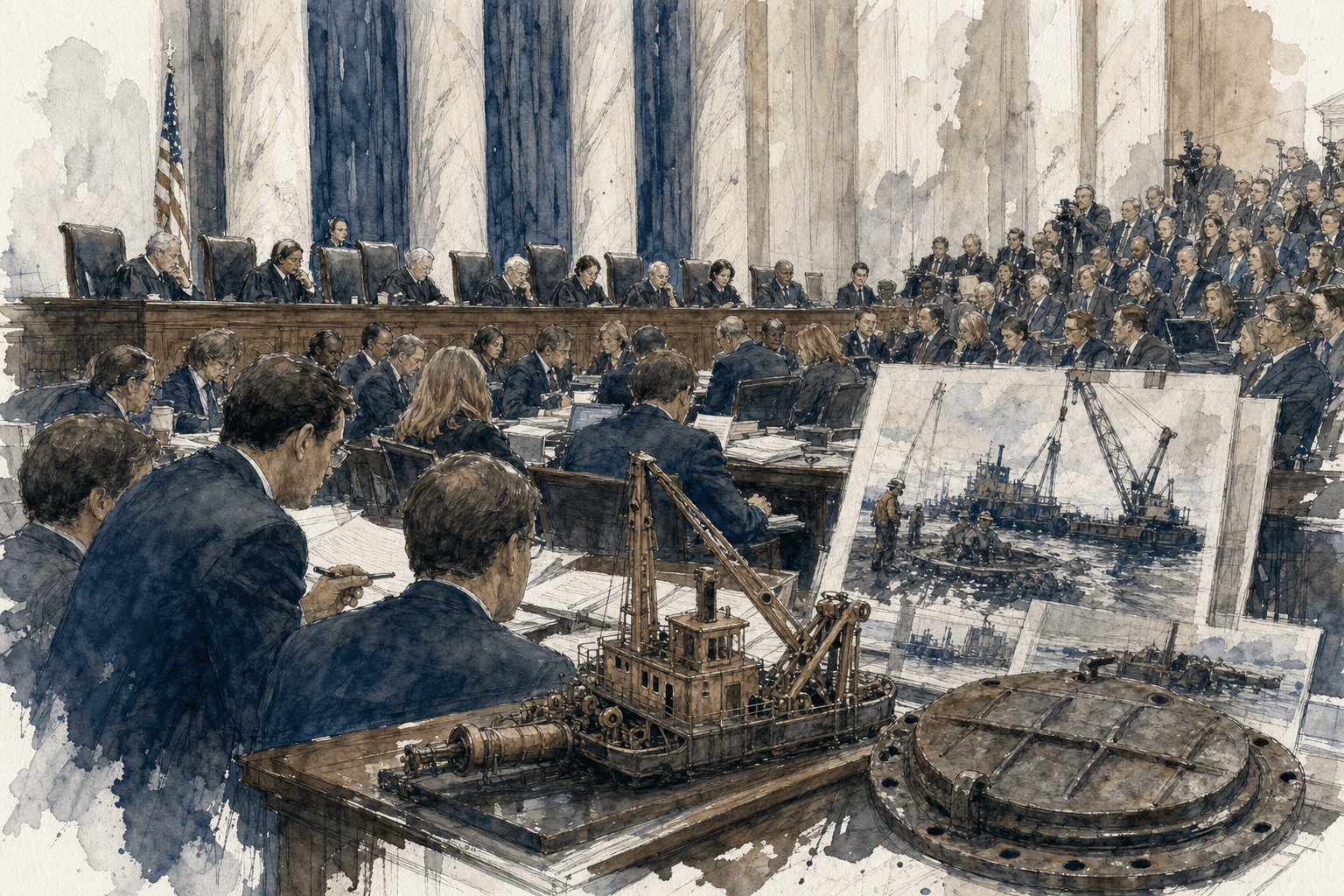
- Christopher Batterton, a deckhand for The Dutra Group, sought punitive damages—extra money meant to punish—after a hatch cover injured his hand, claiming the vessel was unseaworthy (not reasonably fit for service).
- Who it affects
- The ruling bars punitive damages for a Jones Act seaman (a vessel worker covered by that law) who brings a personal-injury claim saying the vessel was not safe and fit for service. The case returns to the lower court for further proceedings.
Summary: written with AI from the case record.
What it's about
The Supreme Court overturned the Ninth Circuit’s ruling (reversed) and sent the case back to the lower court (remanded), deciding that a seaman cannot recover punitive damages on an unseaworthiness claim.
The case tested how earlier Supreme Court decisions about punitive damages in shipping cases fit with the Jones Act and the shipowner's duty to provide safe vessels.
Question presented
Whether punitive damages may be awarded to a Jones Act seaman in a personal injury suit alleging a breach of the general maritime duty to provide a seaworthy vessel.
What the Court decided
Holding
A plaintiff may not recover punitive damages on a claim of unseaworthiness. 880 F. 3d 1089, reversed and remanded.
- Result
- Reversed
The vote
From the opinions
“In my view, the Ninth Circuit correctly determined that Atlantic Sounding is the controlling precedent.”
What's next
The Supreme Court sent the case back to the Ninth Circuit (remanded) for further proceedings under its ruling. The lower court must apply the rule that punitive damages are unavailable on the unseaworthiness claim.
Documents
Docket activity
New analysis added
AI analysis generated: Impact Analysis
AI analysis generated: Opinion Summary
Case data updated: summary, question_presented, generation_metadata
New analysis added
Show 5 moreShow fewer
AI analysis generated: Case Briefing
AI analysis generated: Decision Record
Opinion added: opinion
Brief added: Petition
Brief added: Questions Presented
More questions
- What did the Supreme Court decide in Dutra Group v. Batterton?
- It decided that a plaintiff may not recover punitive damages on an unseaworthiness claim and overturned the Ninth Circuit's ruling.
- What injury led Christopher Batterton to seek punitive damages?
- A hatch blew open while he worked as a deckhand for The Dutra Group, injuring his hand. He sought punitive damages in his injury lawsuit.
- What does the ruling mean for Jones Act seamen?
- A Jones Act seaman cannot recover punitive damages for a personal-injury claim based on the shipowner's duty to provide a seaworthy vessel.
- What happens next in Dutra Group v. Batterton?
- The Supreme Court sent the case back to the Ninth Circuit (remanded) for further proceedings under its ruling.
Sources
Primary materials plus reporting. Best-effort analysis: this explainer relies on a mix of primary materials and trusted secondary sources. Official filings and opinions remain authoritative.