McKinney v. Arizona
In brief
The Supreme Court upheld the Arizona Supreme Court’s decision to reweigh the evidence itself instead of requiring a new jury sentencing.
- Where it stands
- Decided
Decided 5-4 · February 25, 2020 · Opinion by Justice Kavanaugh
- What it’s about
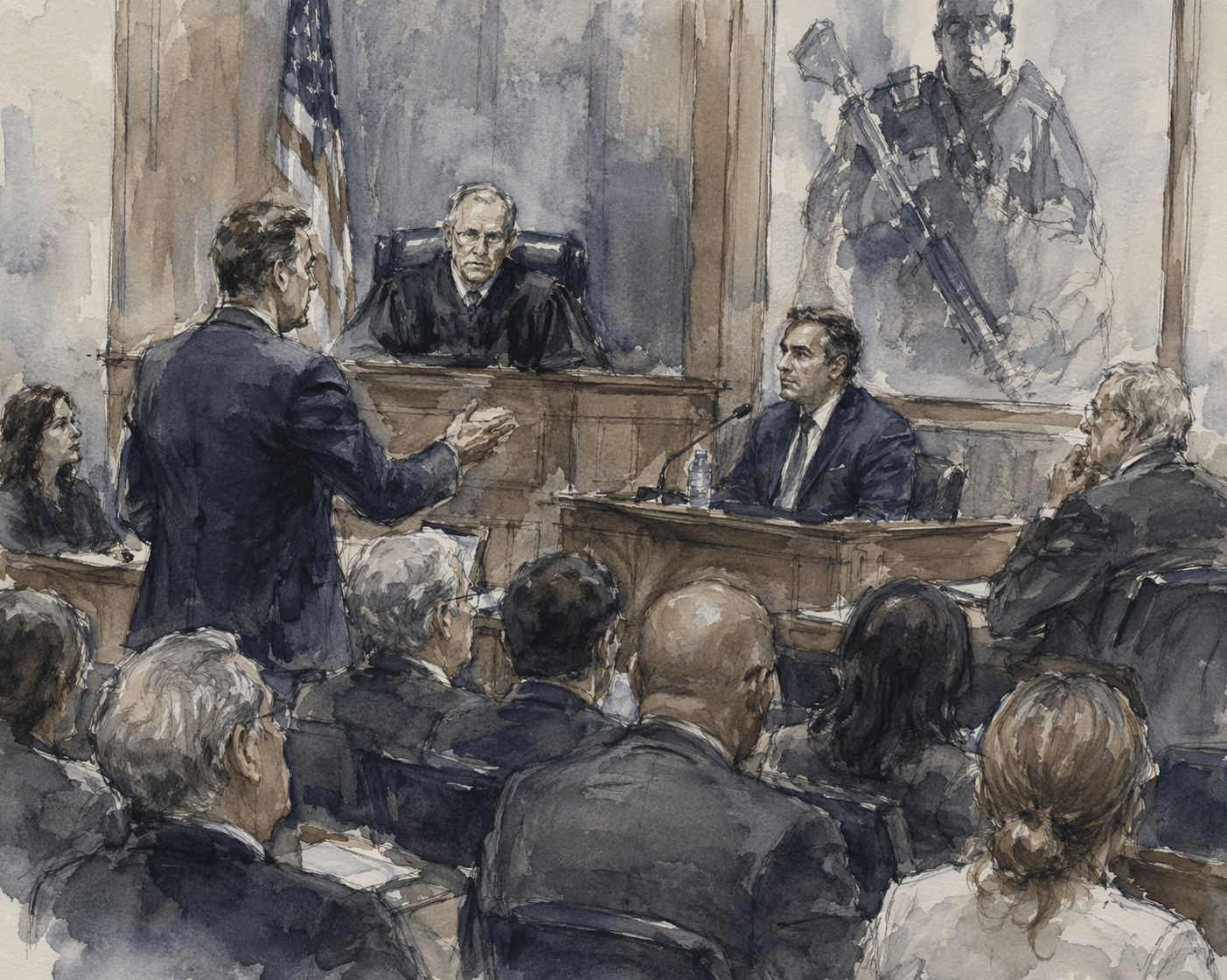
- This death penalty case asked what Arizona had to do after a federal habeas court ruled that the state had failed to properly consider James McKinney’s mitigating evidence, including his PTSD, at sentencing.
- Who it affects
- The ruling allows a state appellate court to correct this sentencing error during a later challenge to a sentence, rather than automatically requiring a new jury. It leaves Arizona’s reweighing approach in place for McKinney.
Summary: written with AI from the case record.
What it's about
The issue was whether the Arizona Supreme Court could fix that error by reweighing the aggravating and mitigating evidence itself, or whether McKinney had to receive a new jury sentencing proceeding under current law.
The case examined who should fix an old death-penalty sentencing mistake—the state appellate court or a new jury—after evidence supporting leniency was ignored.
Question presented
1. Whether the Arizona Supreme Court was required to apply current law when weighing mitigating and aggravating evidence to determine whether a death sentence is warranted? 2. Whether the correction of error under Eddings v. Oklahoma, 455 U.S. 104 (1982), requires resentencing?
What the Court decided
Holding
A Clemons reweighing is a permissible remedy for an Eddings error, and when an Eddings error is found on collateral review, a state appellate court may conduct a Clemons reweighing on collateral review. McKinney’s argument that a jury must resentence him does not square with Clemons , where the Court held that a reweighing of the aggravating and mitigating evidence may be conducted by an appellate court. 494 U. S., at 741. Because Clemons involved an improperly considered aggravating circumstance, McKinney maintains that it is inapposite here, where the case involves an improperly ignored mitigating circumstance. 245 Ariz. 225, 426 P. 3d 1204, affirmed.
- Result
- Affirmed
The vote
From the opinions
“At that time, Arizona assigned capital sentencing to trial judges. To impose a death sentence, the judge had to find at least one aggravating circumstance and “no mitigating circumstances sufficiently substantial to call for leniency.””
What's next
The U.S. Supreme Court’s action is complete. The Arizona Supreme Court’s ruling remains in place, so the state appellate court may reweigh the evidence under current law rather than require a new jury sentencing.
Documents
Docket activity
New analysis added
AI analysis generated: Case Briefing
AI analysis generated: Decision Record
New analysis added
Opinion added: opinion
Show 3 moreShow fewer
Brief added: Petition
Court Order added: Lower Court Orders/Opinions
Brief added: Questions Presented
More questions
- What did the Supreme Court decide in McKinney v. Arizona?
- It upheld the Arizona Supreme Court’s ruling. It said a state appellate court may apply current law and reweigh the evidence instead of requiring a new jury sentencing.
- Why did James McKinney seek a new jury sentencing?
- He argued that Arizona’s failure to consider evidence about his PTSD required a jury to resentence him. The Court rejected that argument.
- Did correcting the error require a new jury sentencing?
- No. The Court said an appellate court may compare the evidence itself, so a new jury sentencing was not automatically required.
- What happens next in McKinney v. Arizona?
- The U.S. Supreme Court’s action is complete. The Arizona Supreme Court’s ruling remains in place, allowing appellate reweighing instead of requiring a new jury sentencing.
Sources
Primary materials plus reporting. Best-effort analysis: this explainer relies on a mix of primary materials and trusted secondary sources. Official filings and opinions remain authoritative.