Kelly v. United States
In brief
The Supreme Court overturned the lower court's ruling and sent the case back to the lower court (reversed and remanded) because the scheme did not target money or property.
- Where it stands
- Decided
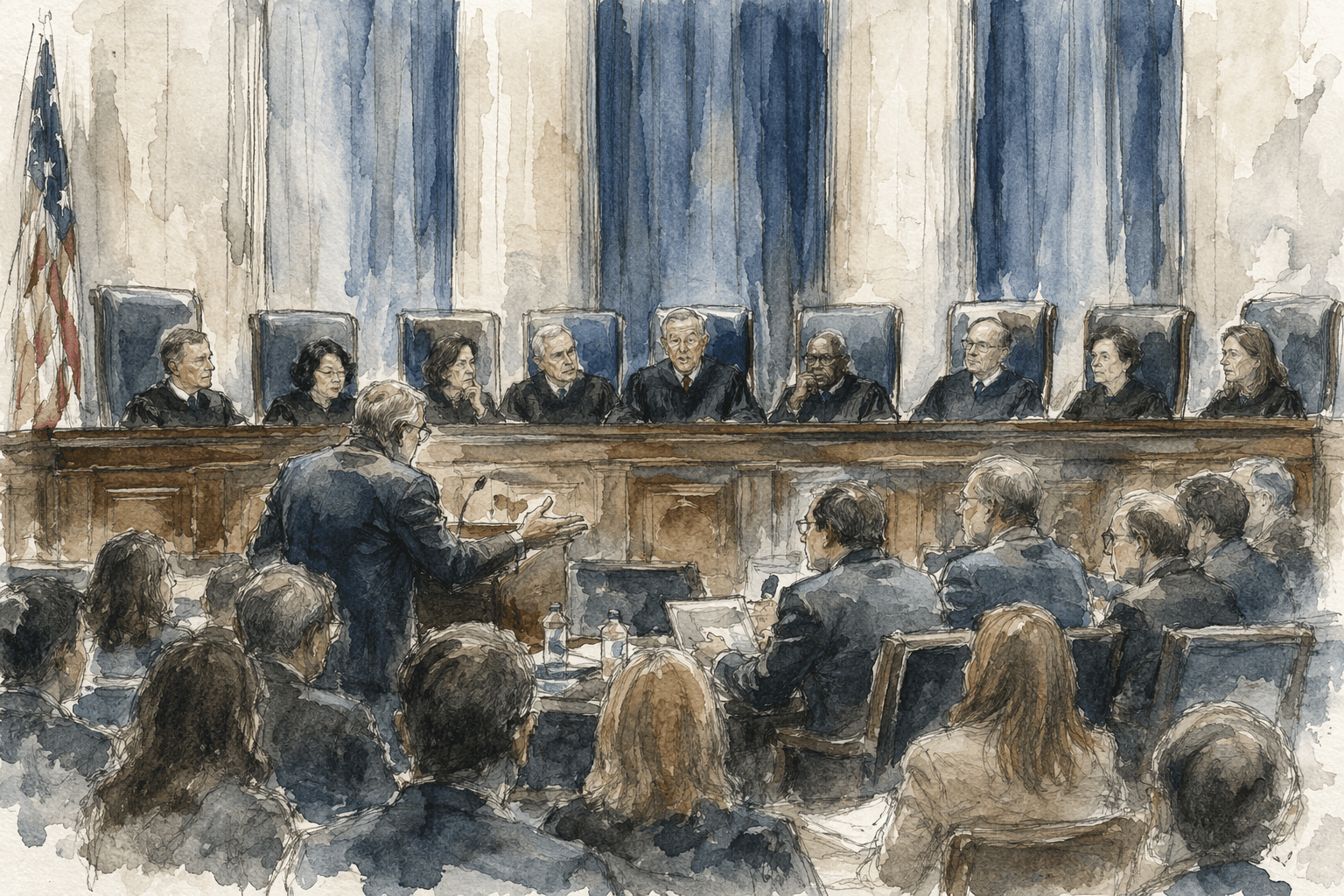
Decided 9-0 · May 7, 2020 · Opinion by Justice Kagan
- What it’s about
- This case arose from the New Jersey “Bridgegate” scandal, in which state officials changed traffic lanes on the George Washington Bridge to punish the mayor of Fort Lee for refusing to endorse Governor Christie.
- Who it affects
- The decision says abusive or deceptive government conduct is not enough for these two federal fraud laws when no money or other property was targeted. The case returns to the lower court for next steps under that rule.
Summary: written with AI from the case record.
What it's about
The Supreme Court held that, although the scheme was abusive and deceptive, it did not violate the federal wire fraud or federal-program fraud laws because it was not aimed at taking the Port Authority’s money or property.
The case drew a line between abusive political retaliation and federal laws aimed at protecting government money and property.
Question presented
Does a public official "defraud" the government of its property by advancing a "public policy reason" for an official decision that is not her subjective "real reason" for making the decision?
What the Court decided
Holding
Because the scheme here did not aim to obtain money or property, Baroni and Kelly could not have violated the federal-program fraud or wire fraud laws. The federal wire fraud statute makes it a crime to effect (with the use of the wires) “any scheme or artifice to defraud, or for obtaining money or property by means of false or fraudulent pretenses, representations, or promises.” 18 U. S. C. §1343. Similarly, the federal - program fraud statute bars “obtain[ing] by fraud” the “property” (including money) of a federally funded program or entity. §666(a)(1)(A). 909 F. 3d 550, reversed and remanded.
- Result
- Reversed
The vote
What's next
The Supreme Court has finished its action. The case was sent back to the lower court (remanded) for further proceedings under the Court's ruling.
Documents
Docket activity
New analysis added
AI analysis generated: Case Briefing
AI analysis generated: Decision Record
New analysis added
Opinion added: opinion
Show 2 moreShow fewer
Brief added: Petition
Brief added: Questions Presented
More questions
- What was the dispute in Kelly v. United States?
- It asked whether officials could violate fraud laws by giving a public-policy reason that was not their real reason for an official decision.
- What did the Supreme Court decide about the federal fraud laws?
- The Court decided Baroni and Kelly could not violate the federal fraud laws because their scheme did not aim to obtain money or property.
- What did the Court do with the Third Circuit's ruling?
- It overturned the ruling and sent the case back to the lower court (reversed and remanded).
- What happens next in Kelly v. United States?
- The case returns to the lower court for further proceedings under the Supreme Court's ruling.
- Was the decision unanimous?
- Yes. Justice Elena Kagan wrote the opinion for a unanimous Court.
Sources
Primary materials plus reporting. Best-effort analysis: this explainer relies on a mix of primary materials and trusted secondary sources. Official filings and opinions remain authoritative.