Trump v. Hawaii
In brief
The Supreme Court sided with the President, found that he lawfully used his authority to suspend entry, overturned the Ninth Circuit's ruling, and sent the case back to the lower court (reversed and remanded).
- Where it stands
- Decided
Decided 5-4 · June 26, 2018 · Opinion by Justice Thomas
- What it’s about
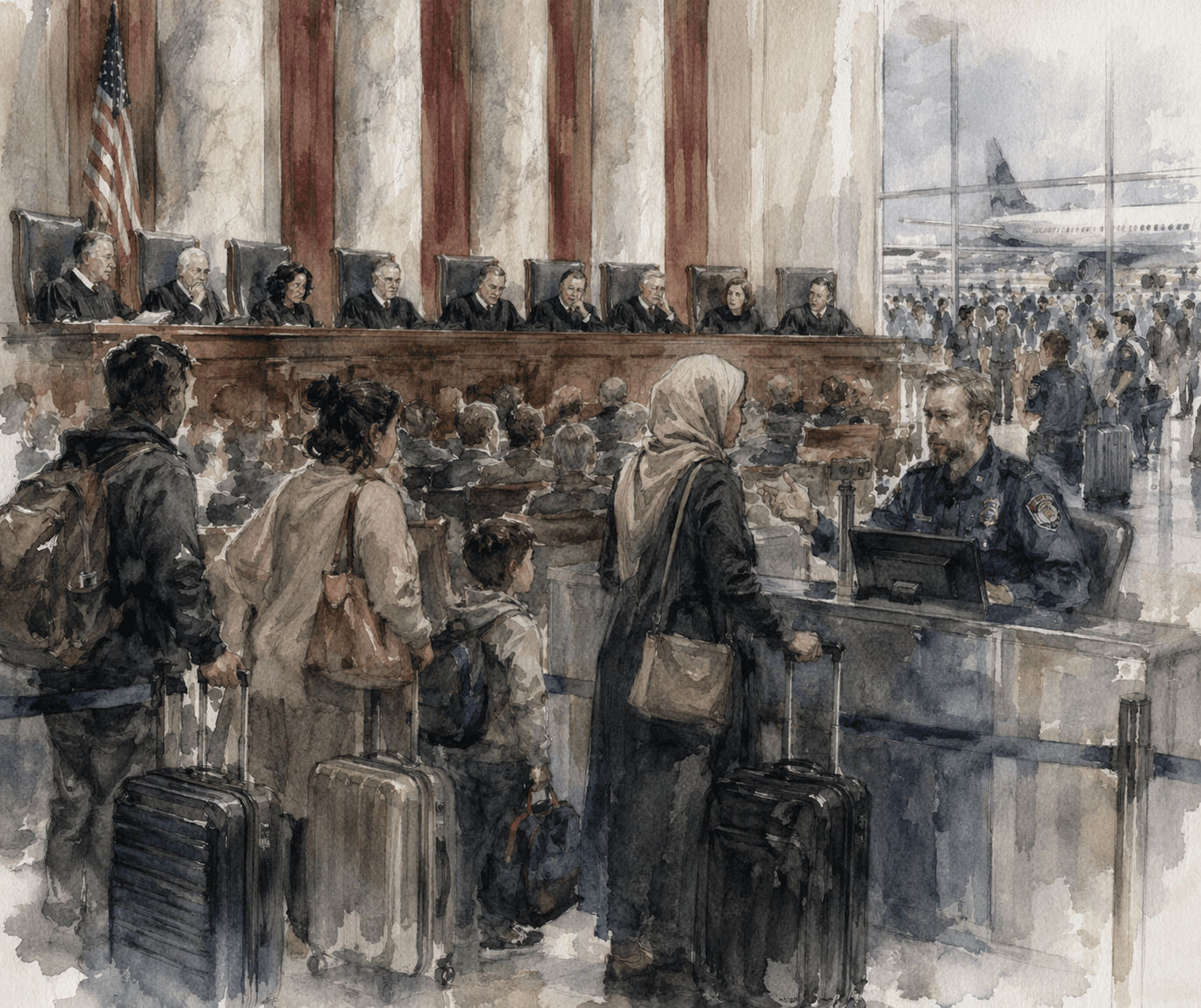
- President Donald Trump’s Proclamation restricting entry from several countries was challenged by Hawaii and other plaintiffs as exceeding his immigration authority and violating the Constitution’s Establishment Clause.
- Who it affects
- The ruling favored the President on his authority to suspend entry and on the religious-discrimination claim. It left open whether federal laws limiting court review could ultimately block the claims.
Summary: written with AI from the case record.
What it's about
The Supreme Court overturned the Ninth Circuit’s ruling and sent the case back to the lower court (reversed and remanded), finding the Proclamation lawful under immigration law and the plaintiffs’ Establishment Clause claim unlikely to succeed; it assumed without deciding that statutory claims could be reviewed and did not decide whether the global injunction was too broad.
The case tested how much power a President has over entry into the United States when national-security concerns conflict with the First Amendment's protection against government religious favoritism.
Question presented
1. Whether respondents' challenge to the President's suspension of entry of aliens abroad is justiciable. 2. Whether the Proclamation is a lawful exercise of the President's authority to suspend entry of aliens abroad. 3. Whether the global injunction is impermissibly overbroad. 4. Whether Proclamation No. 9645 violates the Establishment Clause.
What the Court decided
Holding
1. This Court assumes without deciding that plaintiffs’ statutory claims are reviewable, notwithstanding consular nonreviewability or any other statutory nonreviewability issue. See Sale v. Haitian Centers Council, Inc. , 509 U. S. 155. 2. The President has lawfully exercised the broad discretion granted to him under §1182(f) to suspend the entry of aliens into the United States. 3. Plaintiffs have not demonstrated a likelihood of success on the merits of their claim that the Proclamation violates the Establishment Clause. 878 F. 3d 662, reversed and remanded.
- Result
- Reversed
The vote
- Joined the judgment
- Dissented
- Wrote an opinion
- Majority · 5joined the Court's opinion
From the opinions
“The United States of America is a Nation built upon the promise of religious liberty.”
What's next
The case was sent back to the lower court (remanded) for further proceedings. Whether federal laws limiting court review could ultimately block the claims remained open.
Documents
Docket activity
New analysis added
AI analysis generated: Impact Analysis
AI analysis generated: Opinion Summary
Case data updated: summary, question_presented, generation_metadata
New analysis added
Show 7 moreShow fewer
AI analysis generated: Case Briefing
AI analysis generated: Decision Record
New analysis added
Opinion added: opinion
Brief added: Petition
Brief added: Reply
Brief added: Questions Presented
More questions
- What was Trump v. Hawaii about?
- It challenged President Trump's 2017 proclamation restricting entry for some people from several countries. The challenge argued that the President lacked authority and targeted Muslims.
- What did the Supreme Court decide in Trump v. Hawaii?
- It overturned the Ninth Circuit's ruling and sent the case back to the lower court (reversed and remanded). It found that the President lawfully used his authority and challengers had not shown likely success on their religious-discrimination claim.
- Did the Court decide whether federal courts could review the claims?
- No. It assumed courts could hear the claims for this decision, without deciding whether laws limiting review ultimately applied.
- Was Proclamation No. 9645 found to violate the Establishment Clause?
- No. The Court said challengers had not shown likely success on their Establishment Clause claim.
Sources
Primary materials plus reporting. Best-effort analysis: this explainer relies on a mix of primary materials and trusted secondary sources. Official filings and opinions remain authoritative.