Herrera v. Wyoming
In brief
The Court rejected Wyoming’s view that statehood or the national forest automatically ended the Crow Tribe’s treaty hunting right, then sent the case back for more proceedings.
- Where it stands
- Decided
Decided 5-4 · May 20, 2019 · Opinion by Justice Sotomayor
- What it’s about
- The Supreme Court ruled that Wyoming’s statehood did not end Crow member Clayvin Herrera’s treaty right to hunt on unoccupied federal land, and creating Bighorn National Forest did not make the entire forest occupied.
- Who it affects
- The ruling protects the treaty right from being erased by Wyoming statehood or simply by creating a national forest. It did not decide whether every part of the forest is unoccupied or whether Wyoming may regulate hunting for conservation.
Summary: written with AI from the case record.
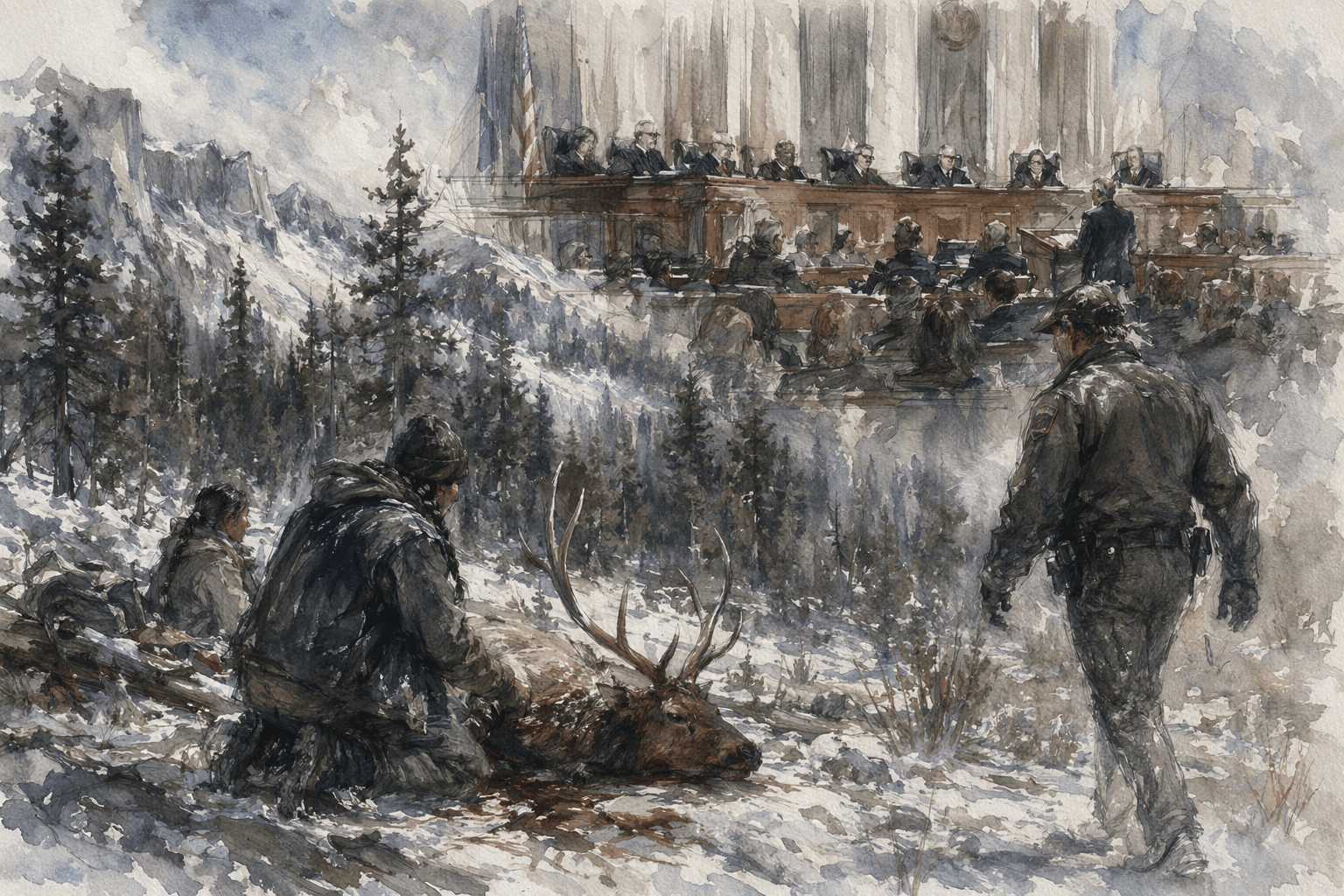
What it's about
It vacated (wiped out) the judgment and remanded (sent the case back to the lower court), leaving unresolved whether Wyoming could regulate treaty hunting for conservation.
The case concerns how courts read treaty promises made by the United States to Native tribes and how those promises apply on federal land today.
Question presented
Whether Wyoming's admission to the Union or the establishment of the Bighorn National Forest abrogated the Crow Tribe of Indians' 1868 federal treaty right to hunt on the "unoccupied lands of the United States," thereby permitting the present-day criminal conviction of a Crow member who engaged in subsistence hunting for his family.
What the Court decided
Holding
The Crow Tribe’s hunting rights under the 1868 Treaty did not expire upon Wyoming’s statehood. This decision is limited in two ways. First, the Court holds that Bighorn National Forest is not categorically occupied, not that all areas within the forest are unoccupied. Second, the state trial court decided that Wyoming could regulate the exercise of the 1868 Treaty right “in the interest of conservation,” an issue not reached by the appellate court. The Court also does not address the viability of the State’s arguments on this issue. Vacated and remanded.
- Result
- Vacated
The vote
From the opinions
“The Court holds that members of the Crow Tribe retain a virtually unqualified right under the Treaty Between the United States of America and the Crow Tribe of Indians (1868 Treaty) to hunt on land that is now part of the Bighorn National Forest.”
What's next
State courts must reconsider the case under the Court’s ruling. They may still address whether the specific area was unoccupied and Wyoming’s conservation arguments.
Documents
Docket activity
New analysis added
AI analysis generated: Impact Analysis
AI analysis generated: Opinion Summary
AI analysis generated: Decision Record
Case data updated: summary, question_presented, generation_metadata
Show 5 moreShow fewer
New analysis added
AI analysis generated: Case Briefing
New analysis added
Opinion added: opinion
Brief added: Questions Presented
More questions
- What did Herrera v. Wyoming decide?
- The Court decided that Wyoming statehood did not end the Crow Tribe’s 1868 treaty hunting right. It also said creating Bighorn National Forest did not automatically make all forest land occupied.
- Did the Court erase Wyoming’s judgment?
- Yes. The Court wiped out the judgment (vacated) and sent the case back to the lower court (remanded).】【”】【},{
- What remains unresolved in Herrera v. Wyoming?
- The Court did not decide whether every area in Bighorn National Forest is unoccupied. It also did not decide whether Wyoming may regulate treaty hunting for conservation.
- Who won the Supreme Court vote?
- The Crow Tribe member’s position prevailed by a 5-4 vote. Justice Sotomayor wrote the opinion for five justices.
- What happens next in the case?
- The state courts must reconsider the case using the Supreme Court’s treaty interpretation. They can address the unresolved forest-location and conservation issues.
Sources
Primary materials plus reporting. Best-effort analysis: this explainer relies on a mix of primary materials and trusted secondary sources. Official filings and opinions remain authoritative.