Washington v. United States
In brief
The Supreme Court split evenly, so the Ninth Circuit's judgment remained in place.
- Where it stands
- Decided
Decided 8-0 · June 11, 2018 · Per curiam
- What it’s about
- This case is about whether treaties guaranteeing Northwest tribes the right to fish at their usual places require Washington to fix or replace state road culverts that block salmon from reaching tribal fishing grounds.
- Who it affects
- The split left the Ninth Circuit's judgment in place in this case. That judgment addressed Washington's duty to replace culverts under state roads that restrict salmon passage.
Summary: written with AI from the case record.
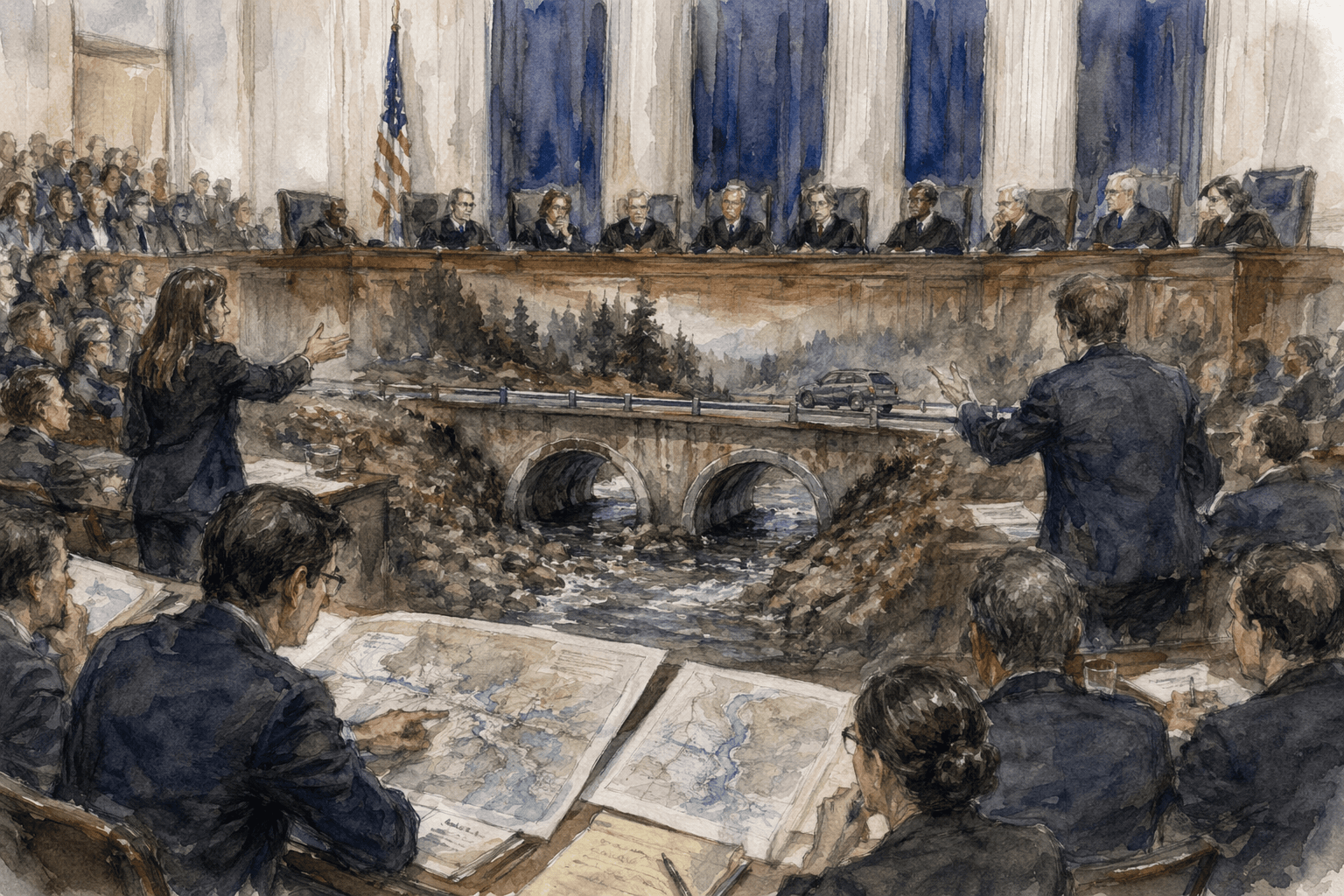
What it's about
The Ninth Circuit said the treaties protect enough fish to provide the tribes a moderate living, and the Supreme Court later affirmed that ruling by an equally divided Court.
The dispute turns on 1850s treaties that protected Northwest tribes' right to fish at their usual and accustomed fishing places.
Question presented
1. Whether the treaty "right of taking fish, at all usual and accustomed grounds and stations . . . in common with all citizens" guaranteed "that the number of fish would always be sufficient to provide a 'moderate living' to the Tribes."? 2. Whether the district court erred in dismissing the State's equitable defenses against the federal government where the federal government signed these treaties in the 1850's, for decades told the State to design culverts a particular way, and then filed suit in 2001 claiming that the culvert design it provided violated the treaties it signed. 3. Whether the district court's injunction violates federalism and comity principles by requiring Washington to replace hundreds of culverts, at a cost of several billion dollars, when many of the replacements will have no impact on salmon and Plaintiffs showed no clear connection between culvert replacement and tribal fisheries.
What the Court decided
Holding
The judgment is affirmed by an equally divided Court.
- Result
- Affirmed
The vote
What's next
The Supreme Court has finished work on this docket. The Ninth Circuit's judgment remains in place following the evenly divided decision.
Documents
Docket activity
New analysis added
AI analysis generated: Case Briefing
AI analysis generated: Decision Record
New analysis added
Opinion added: Opinion
Show 1 moreShow fewer
Brief added: Questions Presented
More questions
- What happened in Washington v. United States?
- The justices split evenly, so they left the Ninth Circuit's judgment in place. Justice Kennedy did not take part in the case.
- What was Washington v. United States about?
- The case concerned whether treaty fishing rights require Washington to replace road culverts that restrict salmon from reaching tribal fishing grounds.
- What did the evenly divided Court leave unresolved?
- The Court gave no majority explanation of the treaty question. Its decision reported only that the Court was evenly divided and left the judgment in place.
- What happens next in the culvert case?
- The Supreme Court has completed this docket action. The Ninth Circuit's judgment remains in place in this case.
Sources
Primary materials plus reporting. Best-effort analysis: this explainer relies on a mix of primary materials and trusted secondary sources. Official filings and opinions remain authoritative.