Air & Liquid Systems v. DeVries
In brief
The Court left the Third Circuit’s ruling in place and said maritime manufacturers can sometimes have a duty to warn about dangerous third-party parts.
- Where it stands
- Decided
Decided 6-3 · March 19, 2019 · Opinion by Justice Kavanaugh
- What it’s about
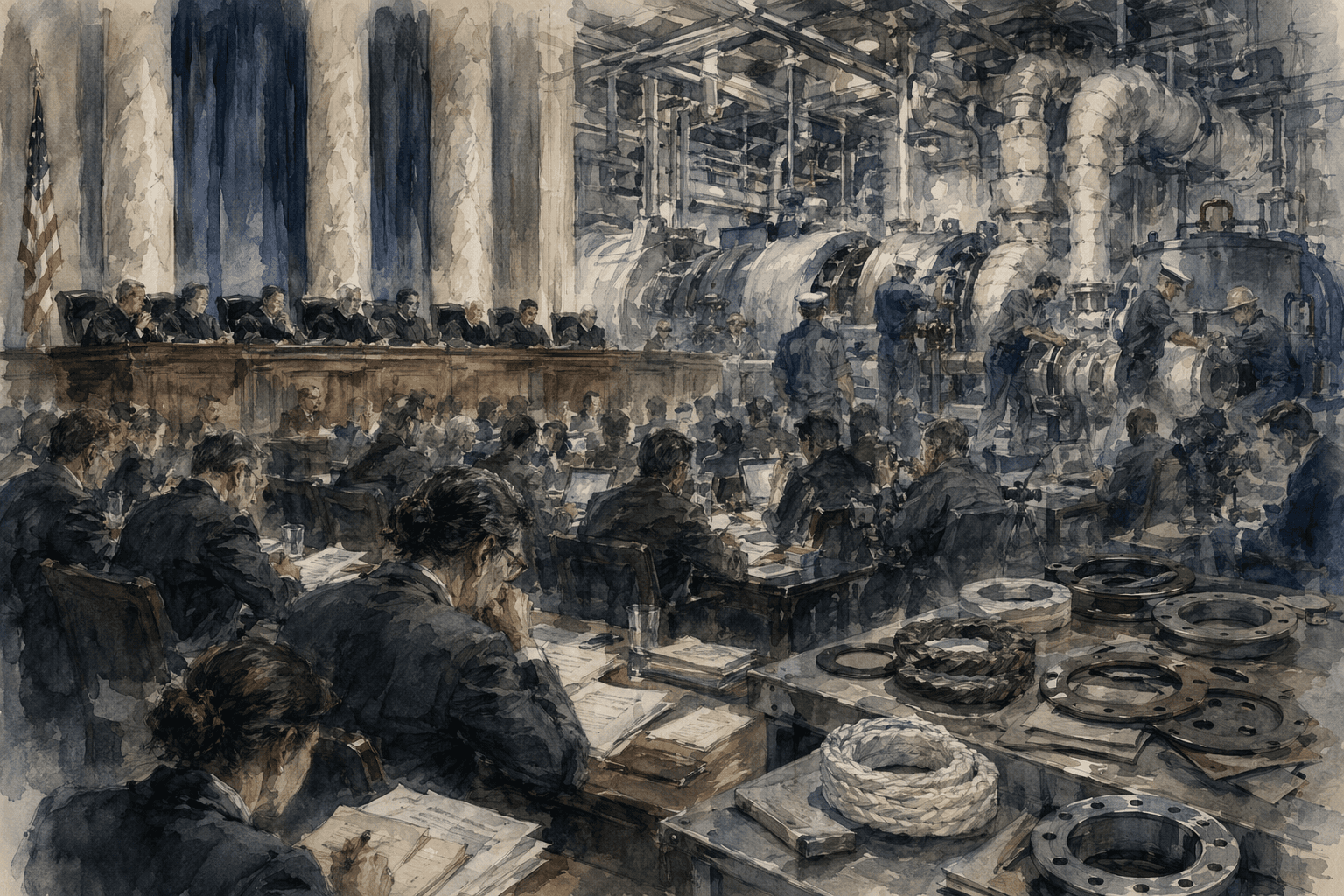
- This case was about when, under maritime law, equipment manufacturers must warn users about the dangers of asbestos in insulation or replacement parts that were later added by the Navy or other third parties.
- Who it affects
- The ruling means a manufacturer may have to warn users about a dangerous third-party part even if it did not make or sell that part. The rule applies only when the Court’s stated conditions are met.
Summary: written with AI from the case record.
What it's about
The Court held that a manufacturer has that duty to warn when its product requires the later-added part to work as intended, the finished product is likely dangerous, and the manufacturer has no reason to think users would already know about the danger.
The case set a rule under maritime law for asbestos-related claims involving Navy equipment and later-added insulation or replacement parts.
Question presented
Can products-liability defendants be held liable under maritime law for injuries caused by products that they did not make, sell, or distribute?
What the Court decided
Holding
In the maritime tort context, a product manufacturer has a duty to warn when its product requires incorporation of a part, the manufacturer knows or has reason to know that the integrated product is likely to be dangerous for its intended uses, and the manufacturer has no reason to believe that the product’s users will realize that danger. 873 F. 3d 232, affirmed.
- Result
- Affirmed
The vote
From the opinions
“Did these manufacturers have to warn users about the dangers of asbestos that someone else later chose to add to or wrap around their products as insulation?”
What's next
The Supreme Court has finished this case. The Third Circuit’s ruling remains in place.
Documents
Docket activity
New analysis added
AI analysis generated: Case Briefing
AI analysis generated: Decision Record
New analysis added
Opinion added: opinion
Show 3 moreShow fewer
Brief added: Petition
Court Order added: Lower Court Orders/Opinions
Brief added: Questions Presented
More questions
- What did the Supreme Court decide in Air & Liquid Systems Corp. v. DeVries?
- The Court upheld the Third Circuit’s ruling. It set conditions for when a maritime manufacturer must warn about a dangerous part added by another company.
- What rule did the Court set for maritime manufacturers?
- A warning duty may apply when the product requires the added part, the combined product is likely dangerous, and users may not know the danger.
- Who disagreed with the Court in DeVries?
- Justice Gorsuch wrote the dissent, signed on to by Justices Thomas and Alito. They disagreed with the Court’s approach to warning duties.
- What happens next in the DeVries case?
- The Supreme Court has completed its action. The Third Circuit ruling remains in place.
Sources
Primary materials plus reporting. Best-effort analysis: this explainer relies on a mix of primary materials and trusted secondary sources. Official filings and opinions remain authoritative.