No. 25-7494October Term 2025Petition PendingUpdated Sep 3, 2026
Willie Dwayne Mickey v. United States
Case status
Where it stands
Awaiting an order on the petition
- Next
- No decision timeline until the Court agrees to hear the case.
What it's about
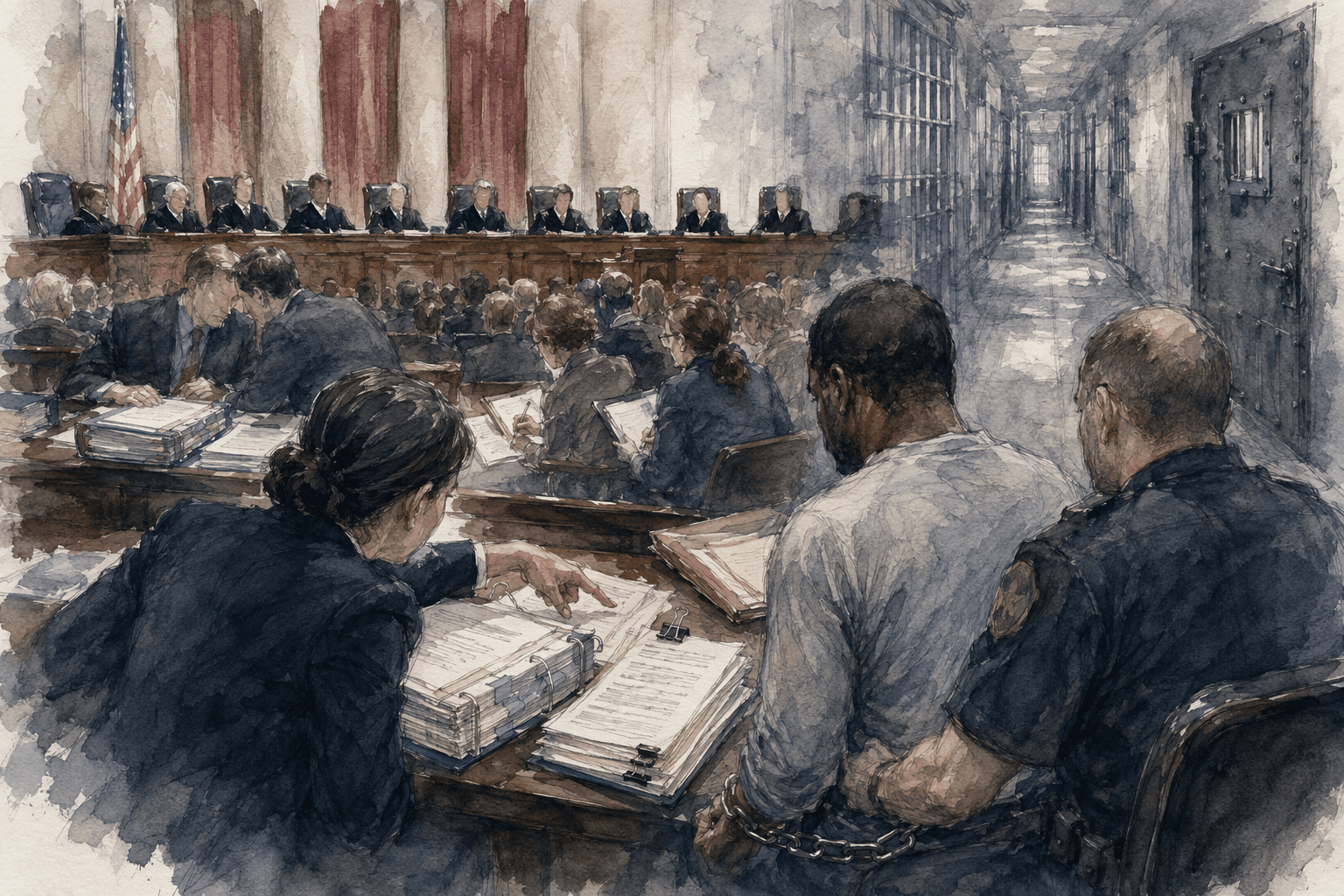
Willie Dwayne Mickey asks the Supreme Court to review whether the U.S. Sentencing Commission can use commentary to its sentencing guidelines to make him ineligible for a retroactive reduction in his sentence. The case comes from the Ninth Circuit and is pending as a petition for review.
Question presented
Whether, under 18 U.S.C. § 3582(c)(2), the Sentencing Commission may render a defendant ineligible for a retroactive sentencing reduction through commentary to U.S.S.G. § 1B1.10, where Congress specified that such determinations must be made by policy statement, and where the Commission lacks independent authority to impose substantive limitations not grounded in statute?
What happens next
The next step is a Court scheduling move, which could include action on the petition or setting oral argument. No decision window is available yet.
Why it matters
The case could affect people seeking lower sentences after a guideline change is made retroactive. For example, a prisoner otherwise eligible for a reduction could be excluded under the challenged commentary.
The dispute concerns the limits of the Sentencing Commission's authority when it sets rules for retroactive sentence reductions.
Case file
- Docket
- 25-7494
- Status
- Petition Pending
- From
- United States Court of Appeals for the Ninth Circuit
- Issue
- Documents
- 1
Documents
Related cases
 Geofence warrantsOkello T. Chatrie, Petitioner v. United StatesDecided25-112Decided
 Munson P. Hunter, III, Petitioner v. United StatesDecided24-1063Decided
 Ahmad Abouammo v. United StatesDecided25-5146Decided
 Terry Pitchford, Petitioner v. Burl Cain, Commissioner, Mississippi Department of Corrections, et al.Decided24-7351
Docket activity
AI analysis generated: Case Briefing
Brief added: Petition
More questions
- What is the core dispute in Mickey v. United States?
- Mickey challenges whether guideline commentary can make someone ineligible for a retroactive sentencing reduction when Congress referred to a policy statement.
- Who could be affected by Mickey's case?
- People seeking reduced sentences after a retroactive guideline change could be affected if commentary excludes them from eligibility.
- What happens next in Mickey v. United States?
- The Court may act on the petition for certiorari or take another scheduling step. Oral argument has not been scheduled.
Sources
Primary materials plus reporting. Best-effort analysis: this explainer relies on a mix of primary materials and trusted secondary sources. Official filings and opinions remain authoritative.