No. 25-1347October Term 2025Petition PendingUpdated Sep 2, 2026
Miguel Angel Delgado, Jr. v. United States
Case status
Where it stands
Awaiting an order on the petition
- Next
- No decision timeline until the Court agrees to hear the case.
What it's about
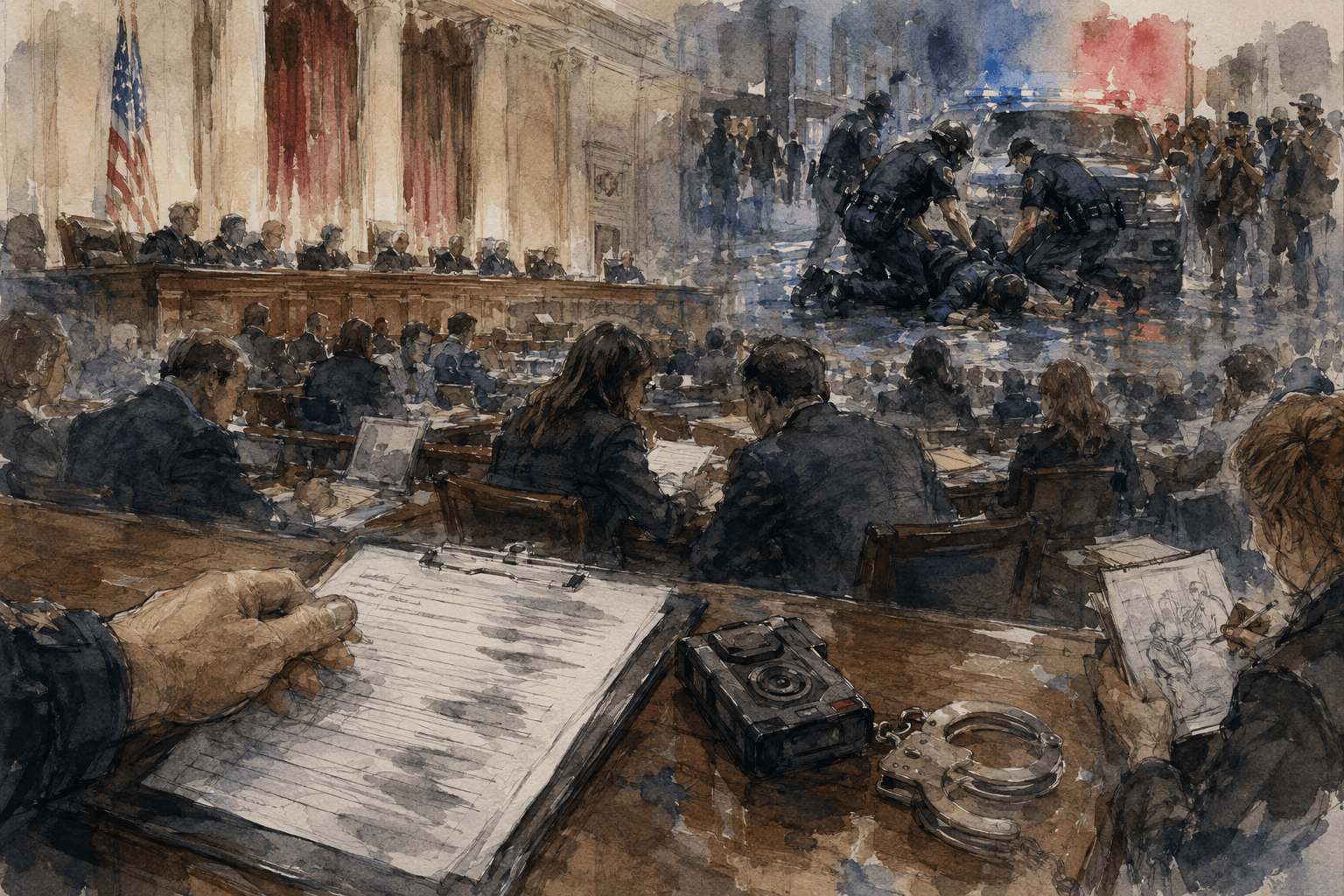
Miguel Angel Delgado, Jr. asks the Supreme Court to review his federal convictions involving alleged excessive force under 18 U.S.C. § 242 and an allegedly falsified use-of-force report under § 1519. He argues that the lower courts used the wrong standards for assessing excessive force, willfulness, bodily injury, and contemplation of a federal investigation.
Question presented
1. Whether a court applying the Fourth Amendment’s totality-of-the-circumstances framework to a prosecution under 18 U.S.C. § 242 may effectively confine its excessive-force analysis to the moments immediately surrounding the application of force while considering the broader factual context only in connection with the separate mens rea inquiry, notwithstanding this Court’s rejection of temporally constrained excessive-force analysis in Barnes v. Felix? 2. Whether the “willfulness” element of 18 U.S.C. § 242, as construed in Screws v. United States, requires proof of subjective criminal culpability, or whether a conviction may instead rest on evidence probative only of objective unreasonableness, such as training violations, policy deviations, emotional demeanor, and post-incident concealment? 3. Whether the phrase “bodily injury” in 18 U.S.C. § 242 requires injury greater than de minimis before a misdemeanor constitutional violation may be elevated into federal felony liability? 4. Whether a conviction under 18 U.S.C. § 1519 for falsifying a use-of-force report “in contemplation” of a federal investigation may be sustained where the inference that the defendant contemplated a federal investigation depends entirely upon predicate findings of unconstitutional and willful force reached through analytically defective Fourth Amendment and mens rea determinations?
What happens next
The Court may decide whether to grant review or take another scheduling step. No decision window is available yet, so readers should watch for an order or oral-argument scheduling.
Why it matters
The case could affect federal prosecutions of officers accused of using excessive force or filing false reports. For example, it could shape what prosecutors must prove about an officer's intent and a person's injuries.
The petition raises questions about how Fourth Amendment standards and federal criminal-law requirements apply in civil-rights prosecutions.
Case file
- Docket
- 25-1347
- Status
- Petition Pending
- From
- United States Court of Appeals for the Fifth Circuit
- Issue
- Documents
- 1
Documents
Related cases
 Geofence warrantsOkello T. Chatrie, Petitioner v. United StatesDecided25-112Decided
 Munson P. Hunter, III, Petitioner v. United StatesDecided24-1063Decided
 Ahmad Abouammo v. United StatesDecided25-5146Decided
 Terry Pitchford, Petitioner v. Burl Cain, Commissioner, Mississippi Department of Corrections, et al.Decided24-7351
Docket activity
AI analysis generated: Case Briefing
Brief added: Petition
More questions
- What is at stake in Delgado v. United States?
- The petition asks what proof is needed for federal excessive-force and false-report convictions. It also questions whether minor injuries can trigger felony liability.
- Who could be affected by Delgado's case?
- Federal prosecutors, defendants charged under civil-rights laws, and people alleging excessive force could be affected. The case concerns the evidence needed to prove intent and injury.
- What happens next in Delgado v. United States?
- The Supreme Court will decide whether to grant certiorari (agree to hear the case) or issue another order. Oral argument has not been scheduled.
Sources
Primary materials plus reporting. Best-effort analysis: this explainer relies on a mix of primary materials and trusted secondary sources. Official filings and opinions remain authoritative.