Generic .com trademarks
Patent and Trademark Office v. Booking.com B. V.
In brief
The Court upheld the Fourth Circuit’s ruling and said consumer understanding—not the “.com” ending alone—determines whether the combined name is generic.
- Where it stands
- Decided
Decided 8-1 · June 30, 2020 · Opinion by Justice Ginsburg
- What it’s about
- The Supreme Court agreed with the lower court (affirmed) that adding “.com” to a generic word does not automatically make the combined name generic.
- Who it affects
- The decision means a “.com” ending does not automatically decide whether a name is generic. Similar names will depend on how consumers understand the complete term.
Summary: written with AI from the case record.
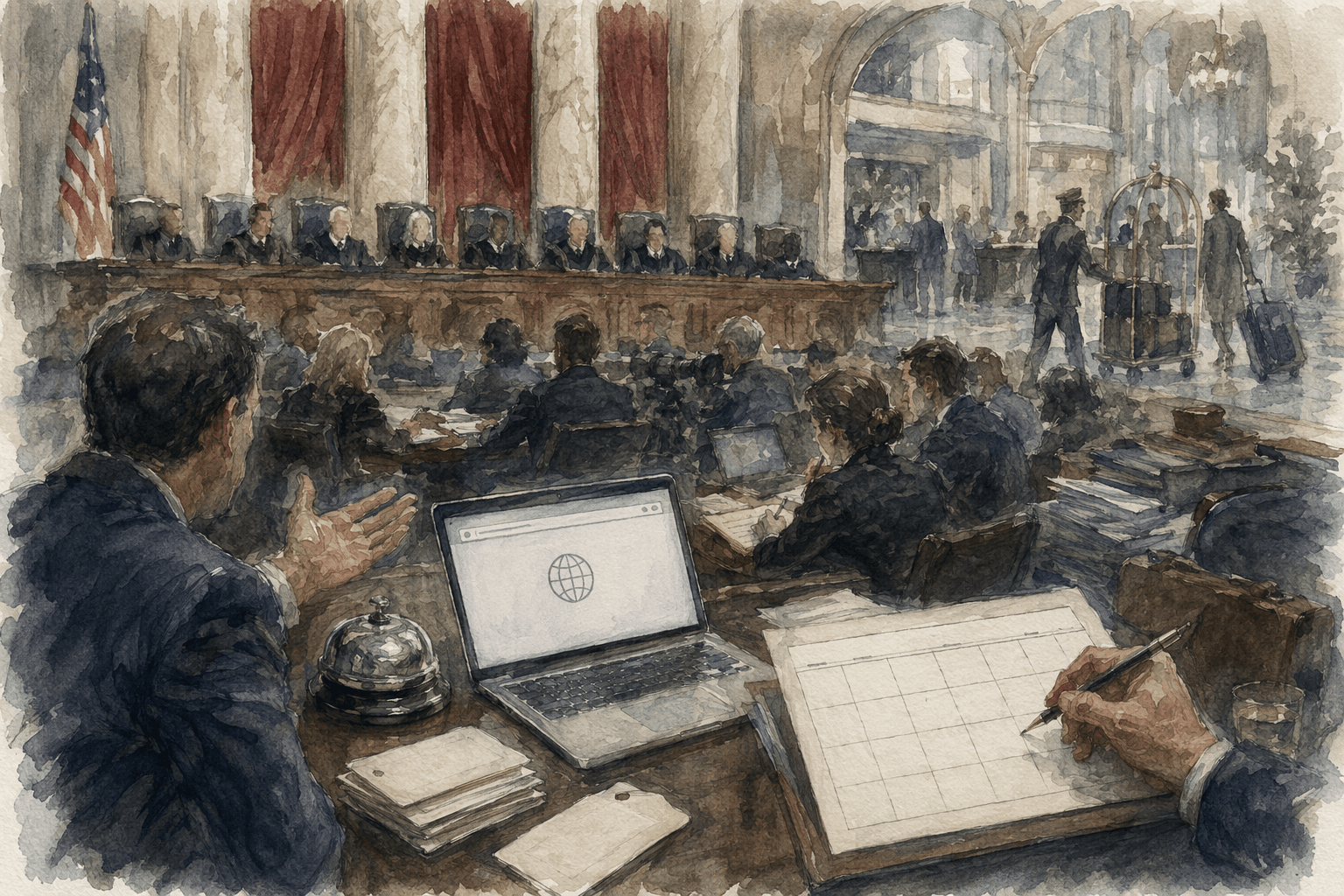
What it's about
It decided that BOOKING.COM is generic only if consumers understand it as the name of a class of services, not as identifying a particular business.
Trademark law protects brand names, but generally leaves generic words available for everyone who needs to describe a type of service.
Question presented
Whether the addition by an online business of a generic top-level domain (".com") to an otherwise generic term can create a protectable trademark.
What the Court decided
Holding
A term styled “generic.com” is a generic name for a class of goods or services only if the term has that meaning to consumers. 915 F. 3d 171, affirmed.
- Result
- Affirmed
The vote
From the opinions
“Today, the Court holds that the addition of “.com” to an otherwise generic term, such as “booking,” can yield a protectable trademark.”
What's next
The Supreme Court’s review is finished. The Fourth Circuit’s ruling remains in place, and similar trademark questions will focus on evidence of consumer understanding.
Documents
Docket activity
New analysis added
AI analysis generated: Impact Analysis
AI analysis generated: Opinion Summary
Case data updated: summary, question_presented, generation_metadata
New analysis added
Show 6 moreShow fewer
AI analysis generated: Case Briefing
AI analysis generated: Decision Record
Case data updated: status, opinion_date
Opinion added: opinion
Brief added: Petition
Brief added: Questions Presented
More questions
- What did the Supreme Court decide in Booking.com?
- It upheld the Fourth Circuit’s ruling. It said a “generic.com” term is generic only if consumers understand it as naming a class of goods or services.
- How does “.com” affect a generic term’s trademark status?
- The ending alone does not decide the issue. Consumer understanding determines whether the combined term is generic.
- What did Justice Breyer argue in Booking.com?
- He argued that trademark law should not let one business claim a generic term that competitors need to describe their services. He disagreed with allowing “.com” to make such a term protectable.
- What happens next in Booking.com?
- The Supreme Court’s review is finished. The Fourth Circuit’s ruling remains in place, and similar cases will turn on consumer understanding of the full term.
Sources
Primary materials plus reporting. Best-effort analysis: this explainer relies on a mix of primary materials and trusted secondary sources. Official filings and opinions remain authoritative.