Party balance on state courts
Carney v. Adams
In brief
Adams lost because he did not show a near-term plan to apply for a Delaware judgeship, so the Court left the constitutional question unanswered.
- Where it stands
- Decided
Decided 8-0 · December 10, 2020 · Opinion by Justice Breyer
- What it’s about
- James Adams challenged Delaware rules requiring political balance on certain state courts. The Court ruled that Adams lacked standing (the legal right to sue) because he had not shown he was ready to seek a judicial vacancy soon.
- Who it affects
- The Court did not decide whether Delaware’s political-balance rules violate the First Amendment. It said Adams had not shown he was able and ready to seek a judicial vacancy soon enough to suffer a concrete injury.
Summary: written with AI from the case record.
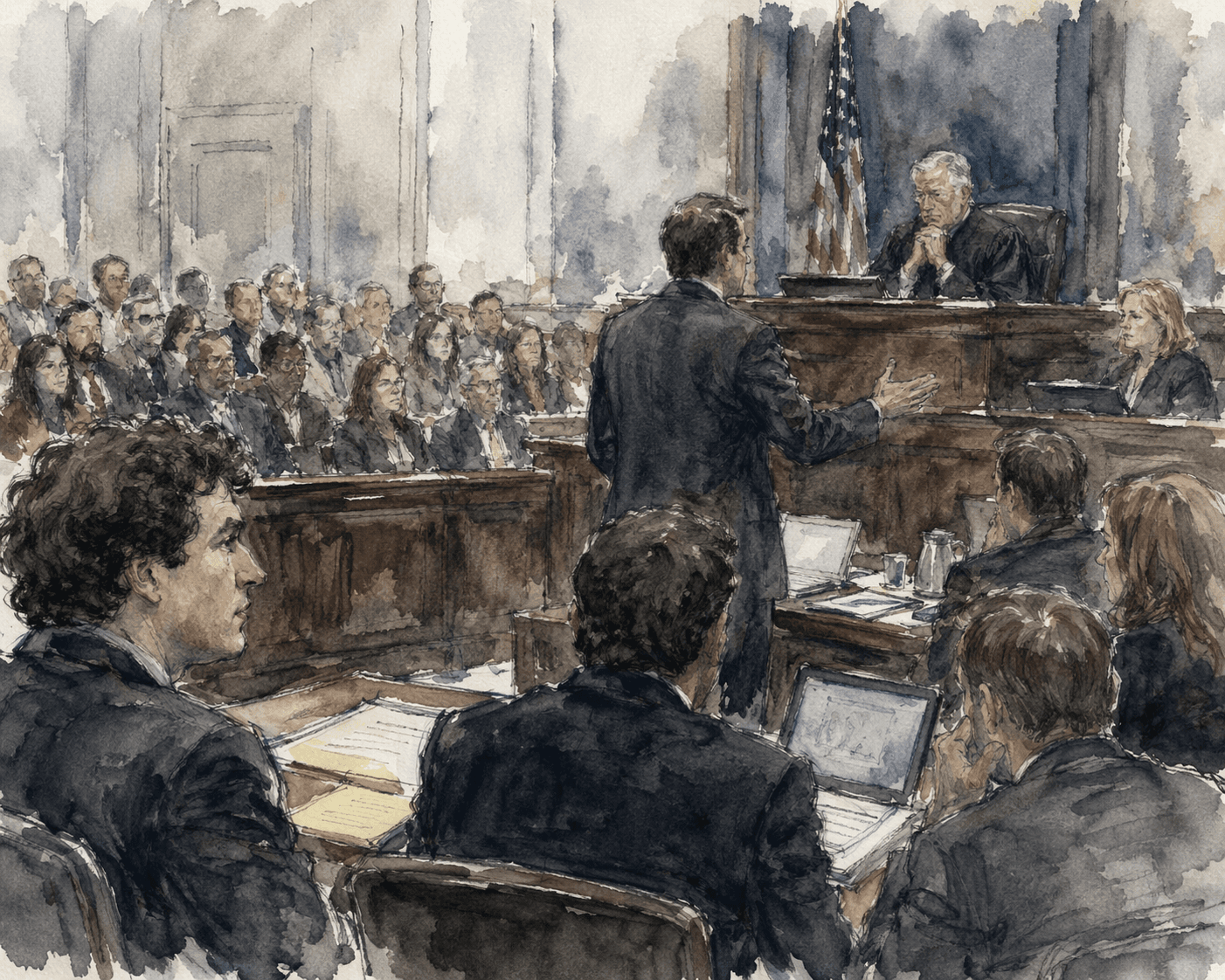
What it's about
It wiped out the Third Circuit’s judgment (vacated) and sent the case back (remanded) without deciding the rules’ constitutionality.
The case concerns whether states may use political-party rules to limit how many judges from one party can sit on certain courts.
Question presented
1. WHETHER RESPONDENT HAS DEMONSTRATED ARTICLE III STANDING. 2. Does the First Amendment invalidate a longstanding state constitutional provision that limits judges affiliated with any one political party to no more than a "bare majority" on the State's three highest courts, with the other seats reserved for judges affiliated with the "other major political party''? 3. Did the Third Circuit err in holding that a provision of the Delaware Constitution requiring that no more than a "bare majority" of three of the state courts may be made up of judges affiliated with any one political party is not severable from a provision that judges who are not members of the majority party on those courts must be members of the other "major political party," when the former requirement existed for more than fifty years without the latter, and the former requirement, without the latter, continues to govern appointments to two other courts?
What the Court decided
Holding
Because Adams has not shown that he was “able and ready” to apply for a judicial vacancy in the imminent future, he has failed to show a “personal,” “concrete,” and “imminent” injury necessary for Article III standing. 166, vacated and remanded.
- Result
- Vacated
The vote
What's next
The case returns to the lower court after the Supreme Court wiped out its earlier judgment (vacated) and sent it back (remanded). Any future challenge would need to satisfy the Court’s standing requirement.
Documents
Docket activity
New analysis added
AI analysis generated: Impact Analysis
AI analysis generated: Opinion Summary
New analysis added
AI analysis generated: Case Briefing
Show 6 moreShow fewer
AI analysis generated: Decision Record
Case data updated: summary, question_presented, generation_metadata
Case data updated: status, opinion_date
Opinion added: opinion
Brief added: Petition
Brief added: Questions Presented
More questions
- What happened in Carney v. Adams?
- The Supreme Court found that James Adams lacked standing to sue. It wiped out the Third Circuit’s judgment and sent the case back for further action.
- Why did Adams lack standing?
- Adams did not show that he was able and ready to apply for a judicial vacancy in the imminent future. The Court said that meant he lacked a personal, concrete, and imminent injury.
- Did the Court uphold Delaware’s judicial political-balance rules?
- No. The Court did not decide whether the rules are constitutional because it resolved the case on standing.
- What happens next in Carney v. Adams?
- The lower court receives the case again after the remand. The Supreme Court’s ruling requires it to account for Adams’s lack of standing.
Sources
Primary materials plus reporting. Best-effort analysis: this explainer relies on a mix of primary materials and trusted secondary sources. Official filings and opinions remain authoritative.