National Republican Senatorial Committee v. Federal Election Commission
In brief
Federal limits on political parties' coordinated expenditures are unconstitutional under the First Amendment.
- Where it stands
- Decided
Decided 6-3 · June 30, 2026 · Opinion by Justice Kavanaugh
- What it’s about
- Challengers seek to overturn limits on coordinated campaign spending by political parties, arguing the restrictions violate First Amendment protections for political speech. A ruling could fundamentally alter how parties and candidates coordinate spending.
- Who it affects
- Party committees can now spend beyond the former federal caps when working with their candidates. For example, a national party committee may fund candidate-connected campaign communications without those coordinated-spending limits.
Summary: written with AI from the case record.
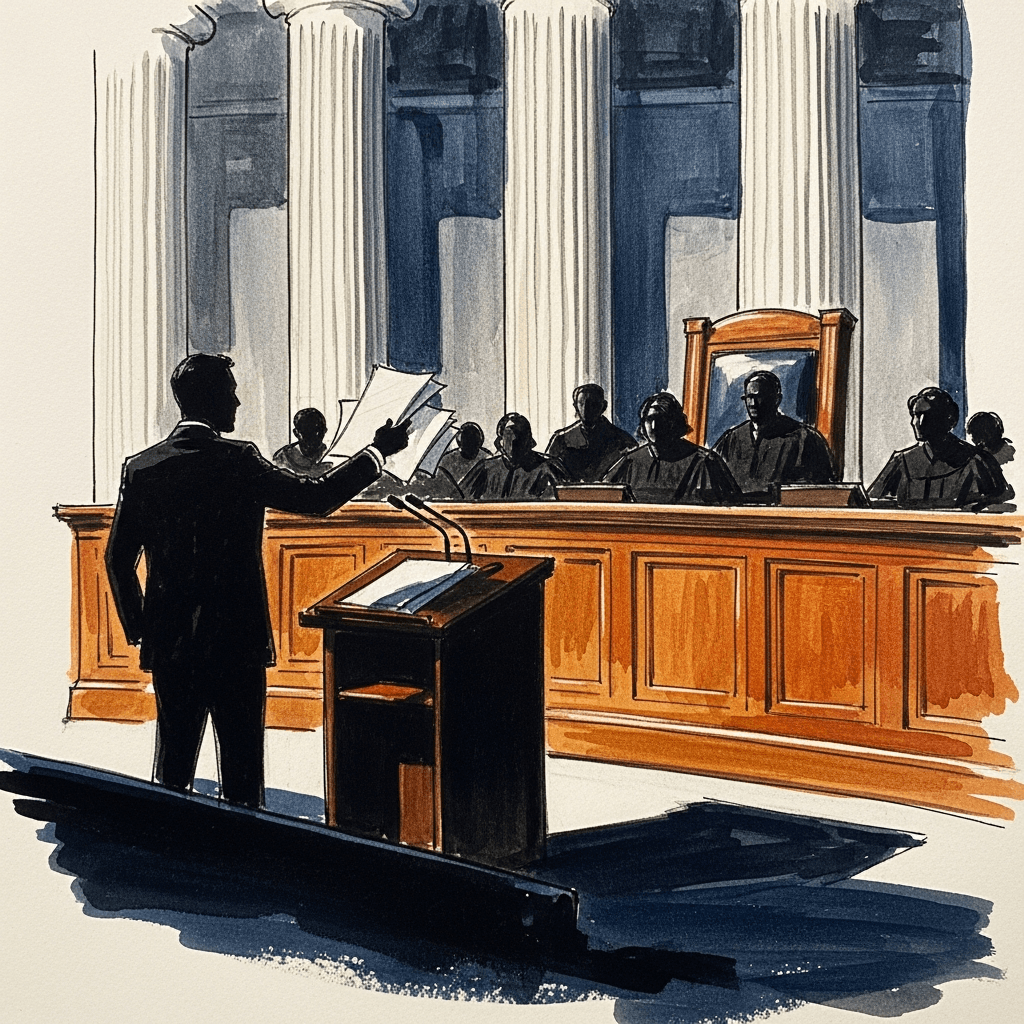
What it's about
The decision reshapes federal campaign-finance rules by giving political parties greater freedom to work directly with candidates on spending.
Question presented
Do FECA limits on coordinated party expenditures in 52 U.S.C. § 30116 violate the First Amendment, either on their face or as applied to party spending in connection with “party coordinated communications”?
What the Court decided
The vote
What's next
The case returns to the lower courts for proceedings consistent with the Supreme Court's decision. Political parties, candidates, and the Federal Election Commission must apply campaign-finance rules without the invalidated coordinated-expenditure limits.
Docket activity
New analysis added
AI analysis generated: Case Briefing
New analysis added
AI analysis generated: Impact Analysis
AI analysis generated: Opinion Summary
Show 7 moreShow fewer
New analysis added
New analysis added
New analysis added
New analysis added
New analysis added
Opinion added: Opinion of the Court - BK
Audio Recording added: Oral Arguments - NRSC
More questions
- What did the Supreme Court rule in NRSC v. FEC?
- The Court struck down federal limits on political parties' spending coordinated with candidates. It ruled that those limits violate the First Amendment.
- Who is affected by the NRSC v. FEC decision?
- National and state party committees, candidates, and the Federal Election Commission are directly affected. Parties may coordinate more campaign spending with their candidates.
- What happens next in NRSC v. FEC?
- The case goes back to the lower courts after the Supreme Court's reversal. Election officials and political parties must follow the decision in future enforcement and campaign planning.
Sources
Primary materials plus reporting. Best-effort analysis: this explainer relies on a mix of primary materials and trusted secondary sources. Official filings and opinions remain authoritative.