Doyle Lee Hamm v. Dunn
In brief
The Supreme Court declined to hear Hamm’s case and denied review, leaving his Eighth Amendment challenge undecided by the Court.
- Where it stands
- Decided
Decided · February 22, 2018
- What it’s about
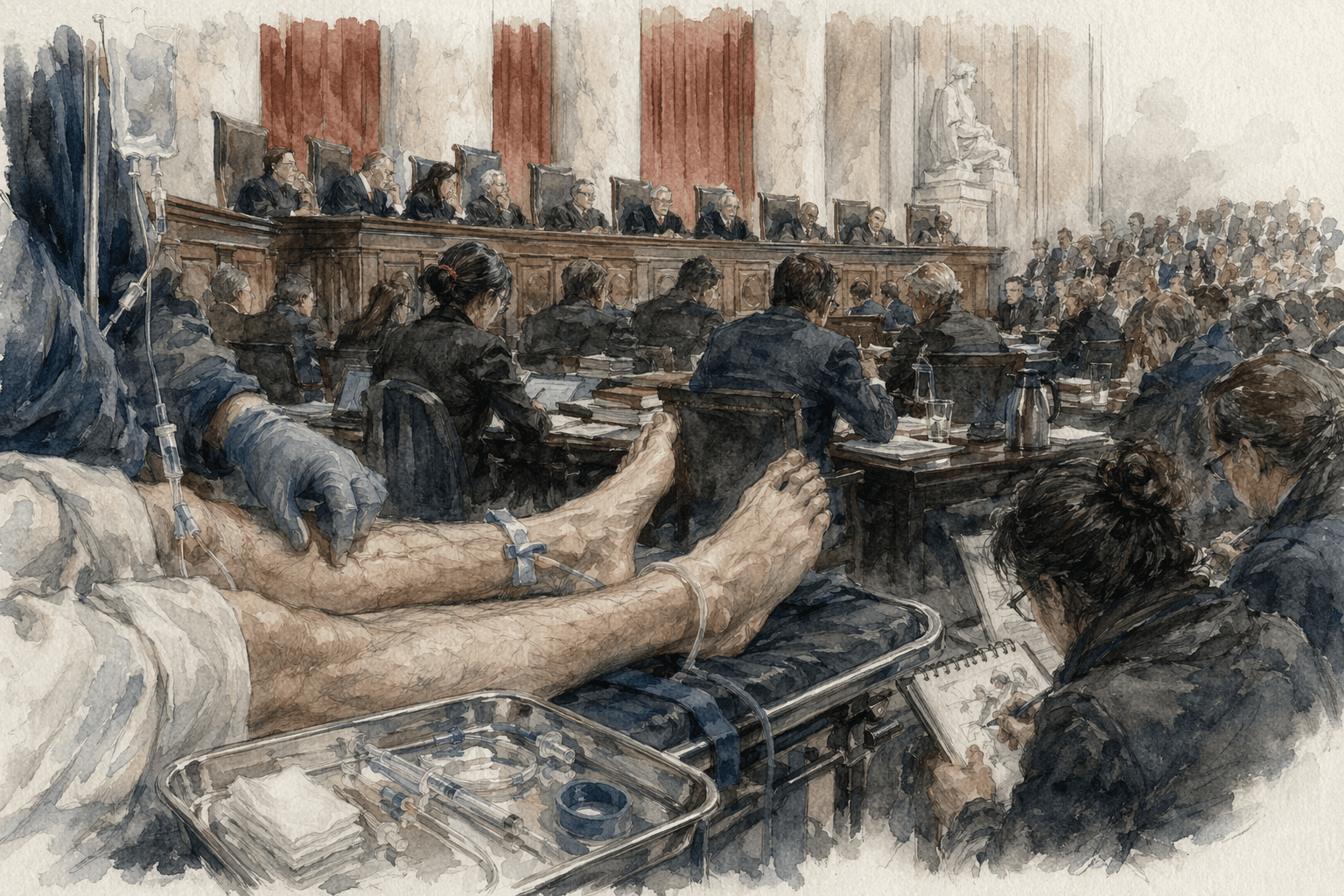
- Hamm challenged Alabama’s planned execution method under the Eighth Amendment, arguing that his medical condition made intravenous access unsafe and unusually painful.
- Who it affects
- The denial of review ended the Supreme Court’s action without deciding whether Hamm’s medical condition made Alabama’s method unconstitutional. The Court also denied his request for a temporary pause (stay).
Summary: written with AI from the case record.
What it's about
The Supreme Court vacated an earlier interim order entered by Justice Thomas, without resolving Hamm’s underlying Eighth Amendment claim on the merits.
The case shows that refusing Supreme Court review is not the same as deciding whether a challenged execution method violates the Eighth Amendment.
Question presented
Did the district court abuse its discretion in finding that Hamm failed to demonstrate a significant likelihood of success on the merits of his as-applied Eighth Amendment claim pertaining to his alleged compromised veins where an independent medical expert found that Hamm had suitable peripheral veins in his lower extremities sufficient for intravenous access?
What the Court decided
Holding
The motion for leave to file documents under seal with redacted copies for the public record is granted. The petition for a writ of certiorari is denied. Statement of Justice Breyer respecting the denial of the application for stay and the denial of certiorari. (Detached opinion ). Statement of Justice Ginsburg, with whom Justice Sotomayor joins, dissenting from the denial of the application for stay and the denial of certiorari. (Detached opinion ).
What's next
The Supreme Court’s action in this case is complete. The order contains no ruling on the main constitutional question.
Docket activity
New analysis added
AI analysis generated: Case Briefing
AI analysis generated: Decision Record
New analysis added
Case data updated: summary, question_presented, generation_metadata
Show 2 moreShow fewer
New analysis added
Opinion added: opinion
More questions
- What did Hamm challenge about Alabama’s execution method?
- Hamm argued that his medical condition could make intravenous access unsafe and unusually painful during Alabama’s planned execution.
- Did the Supreme Court decide Hamm’s Eighth Amendment claim?
- No. It declined to hear Hamm’s case and denied review, so it did not decide whether Alabama’s method violated the Eighth Amendment.
- What happened to Hamm’s request for a temporary pause?
- The Court denied Hamm’s request for a temporary pause (stay). That denial did not decide whether the execution method violated the Eighth Amendment.
Sources
Primary materials plus reporting. Best-effort analysis: this explainer relies on a mix of primary materials and trusted secondary sources. Official filings and opinions remain authoritative.