Emergency statements to police
Michigan v. Bryant
In brief
The Court ruled that admitting Covington’s statements did not violate Bryant’s right to question witnesses against him, wiped out the Michigan Supreme Court’s ruling, and sent the case back.
- Where it stands
- Decided
Decided 6-2 · February 28, 2011 · Opinion by Justice Sotomayor
- What it’s about
- Bryant challenged using a wounded man's statements identifying the shooter and shooting location at trial.
- Who it affects
- For Bryant, the Court ruled that using Covington’s statements at trial did not violate his right to question witnesses against him.
Summary: written with AI from the case record.
What it's about
The Supreme Court ruled police questions aimed to address an ongoing emergency, so admitting the statements did not violate his right to confront witnesses; it wiped out the Michigan Supreme Court's ruling (vacated it) and sent the case back (remanded it).
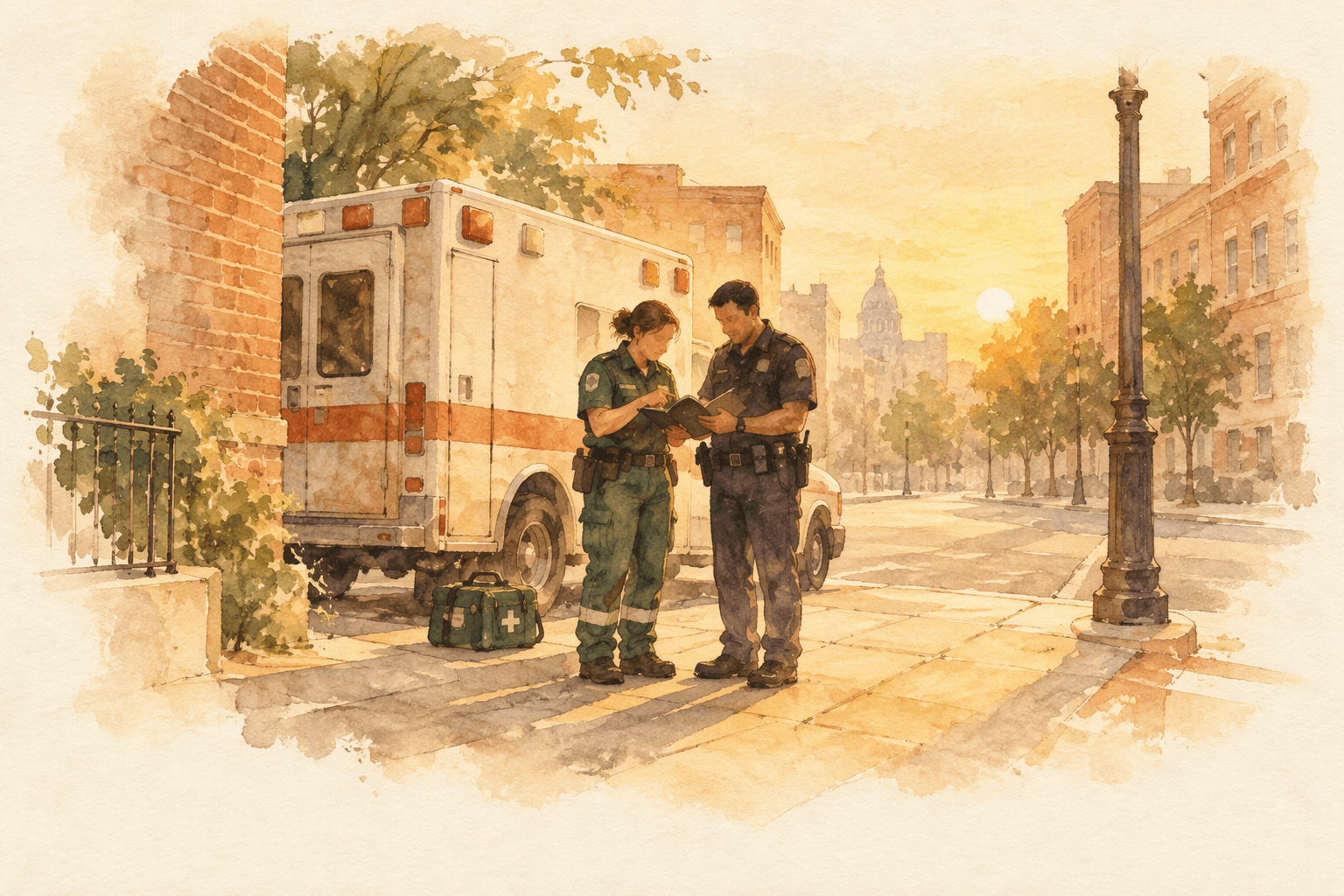
Covington was wounded when he spoke with police.
The case asked when a person’s statements to police outside court count as testimony a criminal defendant has a right to challenge at trial.
Question presented
Are inquiries of wounded victims concerning the perpetrator non-testimonial if they objectively indicate that the purpose of the interrogation is to enable police assistance to meet an ongoing emergency, and, thus, not afforded heightened protection under Crawford v. Washington ?
What the Court decided
Holding
Covington’s identification and description of the shooter and the location of the shooting were not testimonial statements because they had a “primary purpose... to enable police assistance to meet an ongoing emergency.” Davis, 547 U. S., at 822. Therefore, their admission at Bryant’s trial did not violate the Confrontation Clause. Pp. 5– 32. 483 Mich. 132, 768 N. W. 2d 65, vacated and remanded.
- Result
- Vacated
The Court's reasoning
The Court said the questions’ main purpose was to help police address an ongoing emergency. It therefore treated Covington’s statements as non-testimonial (not trial testimony Bryant had a right to challenge).
The vote
- Joined the judgment
- Concurred in a separate opinion
- Dissented
- Wrote an opinion
- Concurring · 1agreed with the result, wrote separately
- Thomaswrote separately
- Dissenting · 2disagreed with the result
- Scaliawrote a dissent
- Ginsburgwrote a dissent
From the opinions
“Instead of clarifying the law, the Court makes itself the obfuscator of last resort.”
What's next
The case returns to the Michigan courts for further proceedings under the Supreme Court’s ruling.
Documents
Opinions
Audio
Docket activity
New analysis added
AI analysis generated: Impact Analysis
New analysis added
AI analysis generated: Case Briefing
AI analysis generated: Opinion Summary
Show 5 moreShow fewer
AI analysis generated: Decision Record
Case data updated: summary, question_presented, generation_metadata
Case data updated: question_presented, extraction_metadata
Audio Recording added: Oral Arguments - Bryant
Opinion added: Bryant
More questions
- How did Justice Thomas explain his agreement with the result?
- He said the police questioning lacked enough formality and solemnity for Covington’s statements to count as testimonial.
Sources
Primary materials plus reporting. Best-effort analysis: this explainer relies on a mix of primary materials and trusted secondary sources. Official filings and opinions remain authoritative.