No. 25-1105October Term 2025Petition PendingUpdated Sep 1, 2026
Thompson v. Wilson
Frank Thompson, Petitioner v. Carl Wilson, Commissioner, Maine Department of Marine Resources
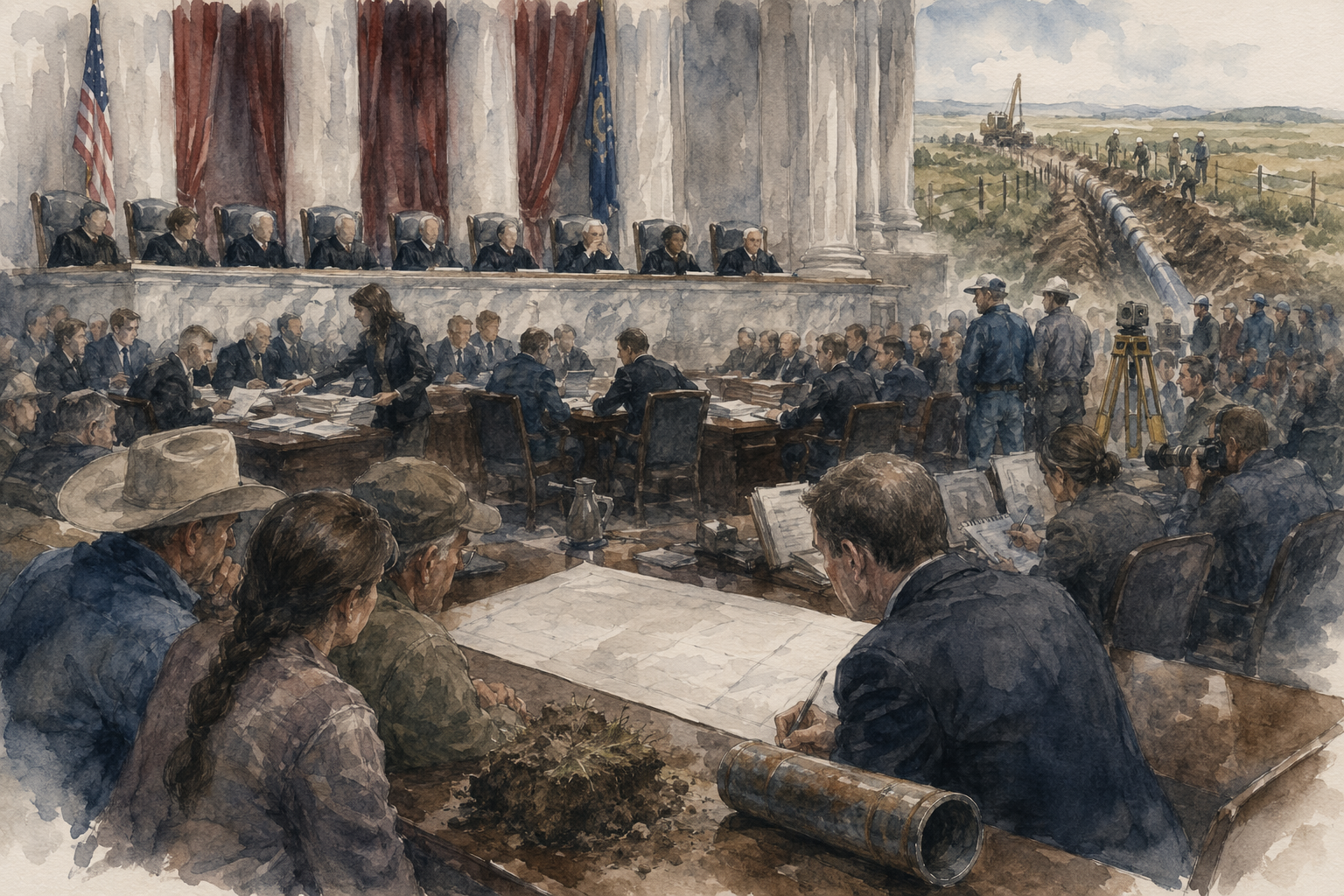
Frank Thompson challenges Maine’s requirement that federally permitted lobstermen install GPS trackers on their private fishing boats and allow continuous location monitoring as a condition of keeping a fishing license.
Case status
- Current stage
- Petition Pending
- Latest event
- Petition pending
- Next
- Awaiting an order on the petitionNo decision timeline until the Court agrees to hear the case.
- What it's about
Frank Thompson challenges Maine’s requirement that federally permitted lobstermen install GPS trackers on their private fishing boats and allow continuous location monitoring as a condition of keeping a fishing license. The First Circuit held that the requirement was allowed under the Fourth Amendment’s administrative-search doctrine, including when a boat was not being used commercially.
Question presented
1. Whether Jones and Carpenter apply beyond criminal cases to administrative searches? 2. Whether Jones property-based protections inform reasonableness of a warrantless administrative search?
- Case path
United States Court of Appeals for the First Circuit / Petition pending
- Area
Petition for review pending
Briefing
What it's about
Frank Thompson challenges Maine's requirement that federally permitted lobstermen install GPS trackers on private fishing boats as a condition of keeping a fishing license. The petition asks whether Fourth Amendment protections recognized in past criminal cases also limit warrantless administrative searches (government regulatory inspections).
Argument
The petition was submitted to Justice Jackson, and oral argument has not been scheduled. No Supreme Court vote or merits decision is available.
Impact
The case could affect lobstermen whose boat locations may be tracked around the clock, including when they are not using the boats commercially. It could also shape when regulators may place tracking devices on private property without a warrant.
What's next
The next development would be a Court scheduling move or a decision on certiorari (whether the Court will hear the case). No decision window is available yet.
What is at stake in Thompson v. Wilson?
The case concerns whether Maine may require GPS tracking on lobstermen's private boats without a warrant as a license condition.
Who could be affected by Maine's GPS-tracking requirement?
Federally permitted lobstermen in Maine are directly affected. The case could also guide regulators and other licensed businesses facing property searches.
When will the Supreme Court act in Thompson v. Wilson?
No argument date or decision window is available. Watch for an order on whether the Court will hear the case or another scheduling move.
Documents
Activity
Docket activity3
AI analysis generated: Case Briefing
Sep 1, 2026 | Generated
Brief added: Petition
Mar 19, 2026 | Court records
Court Order added: Lower Court Orders/Opinions
Dec 18, 2025 | Court records
Related cases



Grounding
- Grounding
- Primary materials plus reporting.
- Note
- Best-effort analysis: this explainer relies on a mix of primary materials and trusted secondary sources. Official filings and opinions remain authoritative.
- Checked
- Sep 1, 2026
- Method
- Methodology