Appeals before final judgment
The GEO Group v. Menocal
In brief
GEO Group must wait until final judgment before appealing the rejection of its Yearsley defense.
- Where it stands
- Decided
Decided 9-0 · February 25, 2026 · Opinion by Justice Kagan
- What it’s about
- The Supreme Court held that a private company operating an immigration detention facility cannot take an immediate appeal from an order denying its defense under Yearsley v. W.
- Who it affects
- People suing GEO and other federal contractors can continue their cases without waiting for a separate appeal. For example, a contractor operating a detention facility must generally litigate through final judgment before appealing this defense.
Summary: written with AI from the case record.
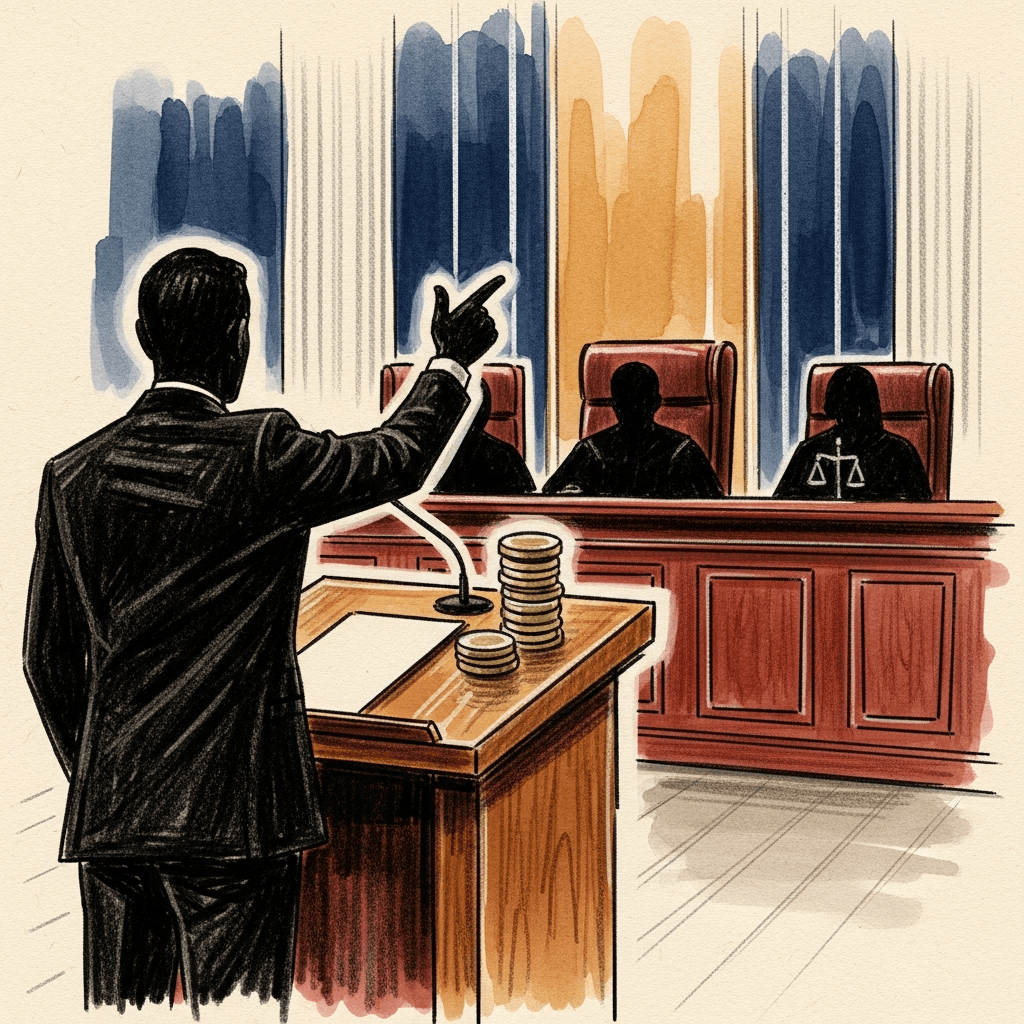
What it's about
A. Ross Construction Co. Justice Kagan wrote for the Court, ruling that Yearsley provides a defense to liability, not immunity from suit, so GEO Group must await final judgment before appealing.
The case draws a line between a defense against liability and immunity from suit, which can allow an immediate appeal.
Question presented
Is a pretrial order denying a government contractor's claim to protection under Yearsley v. W.A. Ross Construction Co. immediately appealable under the collateral-order doctrine?
What the Court decided
The vote
From the opinions
“Yearsley provides a defense to liability, not immunity from suit.”
What's next
The underlying case can proceed in the normal course in lower court. GEO may raise its Yearsley defense in an appeal after final judgment.
Docket activity
New analysis added
AI analysis generated: Impact Analysis
AI analysis generated: Opinion Summary
New analysis added
AI analysis generated: Case Briefing
Show 7 moreShow fewer
New analysis added
New analysis added
Status changed from argued to decided
Judgment is AFFIRMED and case REMANDED. Kagan, J., delivered the opinion of the Court, in which Roberts, C. J., and Sotomayor, Gorsuch, Kavanaugh, Barrett, and Jackson, JJ., joined, and in which Thomas, J., joined as to Parts I and III. Thomas, J., filed an opinion concurring in part and concurring in the judgment. Alito, J., filed an opinion concurring in the judgment.
Opinion added: opinion
Opinion added: Opinion of the Court - EK
Audio Recording added: Oral Arguments - Menocal
More questions
- What did the Supreme Court rule in GEO Group v. Menocal?
- The Court said GEO cannot immediately appeal the denial of its Yearsley defense. It must wait for final judgment before appealing.
- Who is affected by the GEO Group v. Menocal decision?
- Federal contractors and people suing them are affected. Contractors generally cannot pause a case for an immediate appeal after a Yearsley defense is rejected.
- What happens next in GEO Group v. Menocal?
- The underlying lawsuit proceeds in lower court. GEO can seek review of its Yearsley defense after final judgment.
Sources
Primary materials plus reporting. Best-effort analysis: this explainer relies on a mix of primary materials and trusted secondary sources. Official filings and opinions remain authoritative.