Railroad yard safety
LeDure v. Union Pacific Railroad
In brief
The Supreme Court kept the Seventh Circuit's ruling in place, but its tie did not answer the two legal questions in LeDure's case.
- Where it stands
- Decided
Decided · April 28, 2022 · Per curiam
- What it’s about
- Bradley LeDure, a Union Pacific Railroad employee, said he was injured after slipping on oil on a locomotive walkway during a freight train’s temporary stop in a railyard.
- Who it affects
- The Seventh Circuit's ruling remains in effect. The tie leaves unresolved whether federal locomotive-safety rules covered the locomotive and whether a jury could hear LeDure's claim that the railroad should have foreseen harm from oil.
Summary: written with AI from the case record.
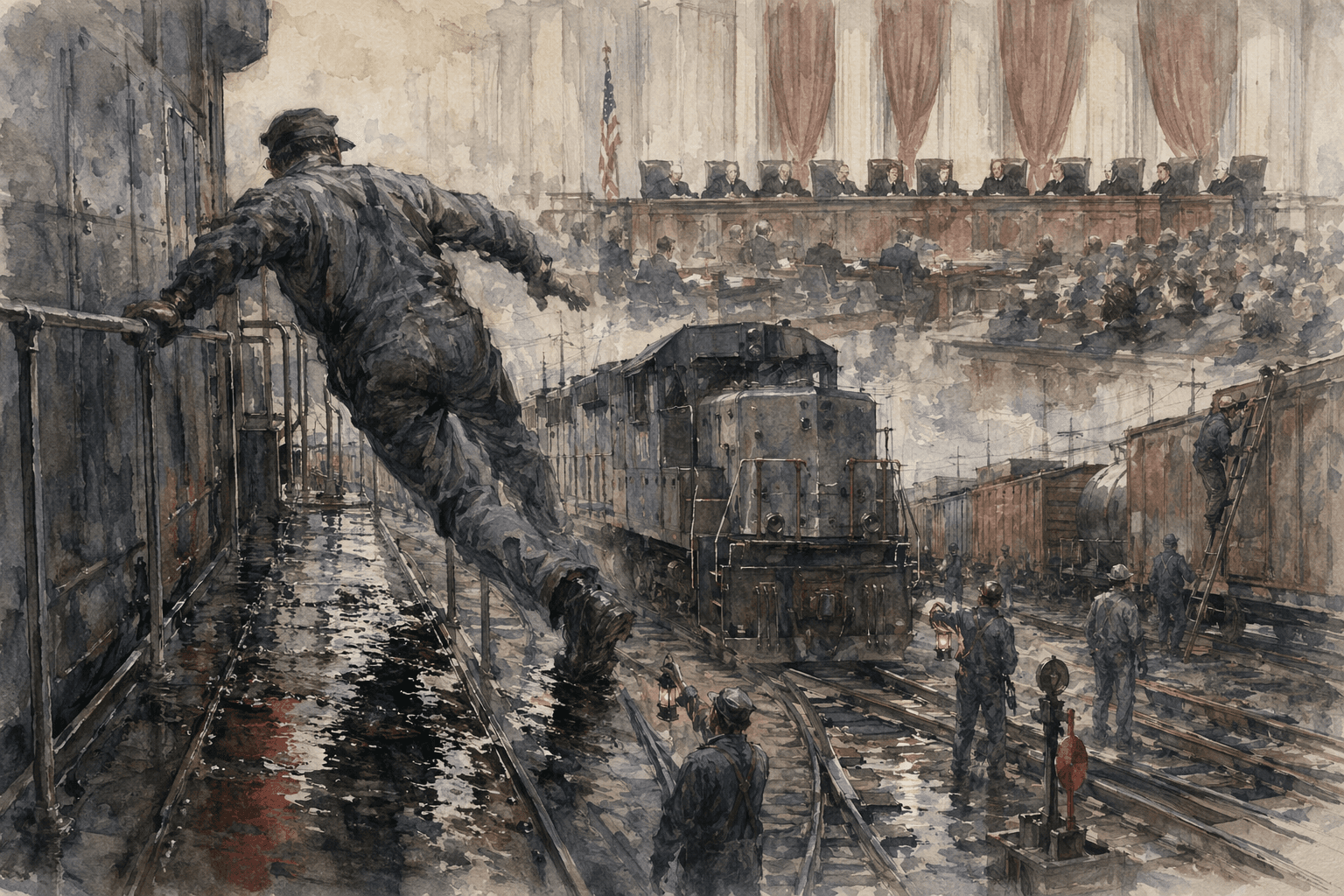
What it's about
The Supreme Court left the Seventh Circuit’s judgment in place (affirmed it) by an equally divided vote, with Justice Barrett not participating, so it did not settle whether the Locomotive Inspection Act covered the locomotive or whether a jury could hear LeDure’s claim that the railroad was careless.
The case sits at the intersection of federal railroad-safety rules and an injured worker's claim that the railroad was careless.
Question presented
1. Whether a locomotive is in use on a railroad's line and subject to the LIA and its safety regulations when its train makes a temporary stop in a railyard as part of its unitary journey in interstate commerce, or whether such use does not resume until the locomotive has left the yard as part of a fully assembled train, as held by the Seventh Circuit below, contrary to the decisions of this Court and other circuits. 2. Whether the FELA allows a jury determination on the issue of foreseeability of harm from oil on a locomotive passageway when the railroad failed to conduct federally mandated daily safety inspections intended to discover and cure such hazards in the days before the injury incident, contrary to the longstanding decisions of this Court.
What the Court decided
Holding
The judgment is affirmed by an equally divided Court.
- Result
- Affirmed
What's next
The Seventh Circuit's ruling remains in effect, so the parties proceed under that result. A future case would be needed for the Supreme Court to resolve the unanswered questions.
Documents
Docket activity
New analysis added
AI analysis generated: Case Briefing
Case data updated: summary, question_presented, generation_metadata
New analysis added
AI analysis generated: Impact Analysis
Show 6 moreShow fewer
AI analysis generated: Opinion Summary
AI analysis generated: Decision Record
Case data updated: status, opinion_date
Opinion added: Opinion
Brief added: Petition
Brief added: Questions Presented
More questions
- What did LeDure v. Union Pacific decide?
- The Supreme Court left the Seventh Circuit's ruling in place after the participating justices split evenly. It did not settle the legal questions.
- What legal issues remain open in LeDure?
- The Court did not decide whether federal safety rules covered the locomotive. It also did not decide whether a jury could hear LeDure's claim that the railroad should have foreseen harm from oil.
- Did Justice Barrett participate in the decision?
- No. Justice Barrett took no part in the consideration or decision, and the participating justices split evenly.
- What happens next for LeDure and Union Pacific?
- The Seventh Circuit's ruling remains in effect, so the parties proceed under that ruling. A future case would be needed for a Supreme Court answer to the unresolved questions.
Sources
Primary materials plus reporting. Best-effort analysis: this explainer relies on a mix of primary materials and trusted secondary sources. Official filings and opinions remain authoritative.