Tribal COVID relief eligibility
Yellen v. Confederated Tribes of Chehalis Reservation
In brief
Alaska Native regional and village corporations qualify as Indian tribes for Title V CARES Act funding, and the Supreme Court overturned the lower court's contrary decision.
- Where it stands
- Decided
Decided 6-3 · July 28, 2021 · Opinion by Justice Sotomayor
- What it’s about
- This case asked whether Alaska Native regional and village corporations could share in the CARES Act money Congress set aside for "Tribal governments" to cover COVID-19 costs.
- Who it affects
- The decision makes these corporations eligible for money Congress set aside for Tribal governments to cover COVID-19 costs. The lower court must now apply that rule to the case.
Summary: written with AI from the case record.
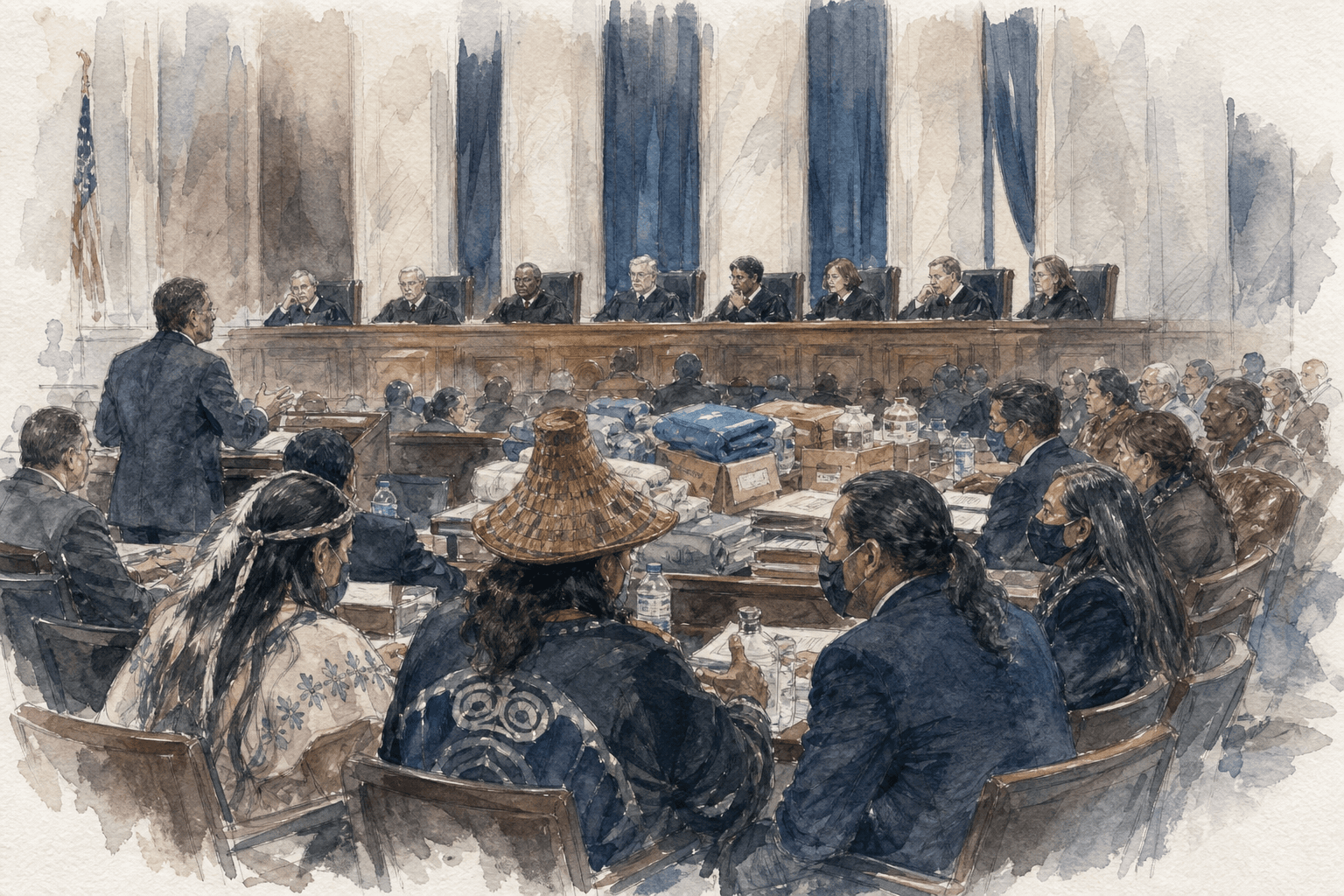
What it's about
The Supreme Court held that these corporations count as "Indian tribes" under the statute Congress incorporated, so they are eligible for that funding.
The case connected a nationwide COVID-19 relief program with the separate federal rules that define eligible tribal entities.
Question presented
Whether Alaska Native regional and village corporations established pursuant to the Alaska Native Claims Settlement Act are “Indian Tribe[s]” for purposes of the CARES Act, 42 U.S.C. 801(g)(1).
What the Court decided
Holding
ANCs are “Indian tribe[s]” under ISDA and thus eligible for funding under Title V of the CARES Act. 976 F. 3d 15, reversed and remanded.
- Result
- Reversed
The vote
From the opinions
“Respectfully, I find neither persuasive and would affirm.”
What's next
The D.C. Circuit will apply the Supreme Court's ruling in further proceedings after the case returns. The Title V funding process can now include these corporations as eligible recipients.
Documents
Docket activity
New analysis added
AI analysis generated: Case Briefing
New analysis added
AI analysis generated: Impact Analysis
AI analysis generated: Opinion Summary
Show 6 moreShow fewer
AI analysis generated: Decision Record
New analysis added
Case data updated: status, opinion_date
Opinion added: opinion
Brief added: Petition
Brief added: Questions Presented
More questions
- What did Yellen v. Confederated Tribes of Chehalis Reservation decide?
- The Court decided that Alaska Native regional and village corporations are “Indian tribes” under ISDA and eligible for Title V CARES Act funding.
- Who can qualify for the CARES Act funds under the ruling?
- Alaska Native regional and village corporations established under the Alaska Native Claims Settlement Act qualify for Title V CARES Act funding.
- What happened to the D.C. Circuit's ruling?
- The Supreme Court overturned the D.C. Circuit's ruling and sent the case back to that court (reversed and remanded).
- What happens next in Yellen?
- The D.C. Circuit will apply the eligibility ruling in further proceedings after the case returns. The Title V funding process can now include these corporations as eligible recipients.
Sources
Primary materials plus reporting. Best-effort analysis: this explainer relies on a mix of primary materials and trusted secondary sources. Official filings and opinions remain authoritative.