When crimes count separately
Wooden v. United States
In brief
Wooden’s 10 burglary convictions from one criminal episode count as one prior conviction under the ACCA, so the Supreme Court overturned the Sixth Circuit’s contrary ruling.
- Where it stands
- Decided
Decided 9-0 · March 7, 2022 · Opinion by Justice Barrett
- What it’s about
- This case asked whether William Wooden’s 10 burglary convictions, all arising from one night of breaking into multiple units in a single storage facility, counted as separate crimes for a federal sentencing enhancement under the Armed Career Criminal Act.
- Who it affects
- The ruling means Wooden’s 10 burglary convictions cannot be counted as 10 separate prior convictions for the ACCA sentencing rule; they count only once.
Summary: written with AI from the case record.
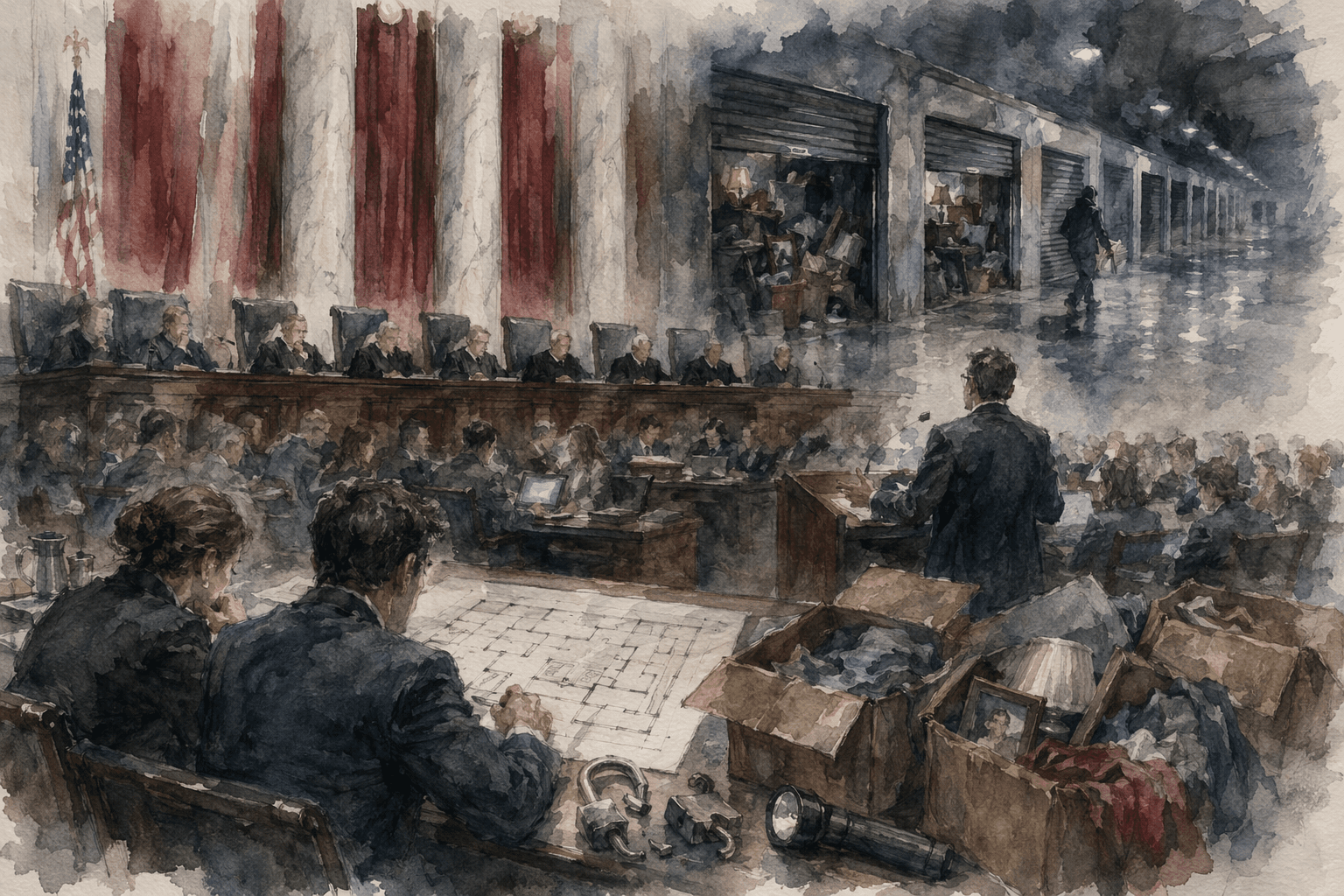
What it's about
The Supreme Court held that crimes committed during one continuous criminal episode like Wooden’s were not committed on different "occasions" and therefore counted only once under ACCA.
The case focused on how courts should read the ACCA phrase "committed on occasions different from one another" when several crimes happen during one episode.
Question presented
DID THE SIXTH CIRCUIT ERR BY EXPANDING THE SCOPE OF 18 U.S.C. § 924(e)(1) IN THE ABSENCE OF CLEAR STATUTORY DEFINITION WITH REGARD TO THE VAGUE TERM "COMMITTED ON OCCASIONS DIFFERENT FROM ONE ANOTHER”?
What the Court decided
Holding
Wooden’s ten burglary offenses arising from a single criminal episode did not occur on different “occasions” and thus count as only one prior conviction for purposes of ACCA. 945 F. 3d 498, reversed.
- Result
- Reversed
The vote
- Joined the judgment
- Concurred in a separate opinion
- Wrote an opinion
- Majority · 8joined the Court's opinion
- Concurring · 1agreed with the result, wrote separately
- Gorsuchwrote separately
What's next
Lower courts handling Wooden’s ACCA sentencing issue must count the 10 burglaries as one prior conviction, not 10 separate ones.
Documents
Docket activity
New analysis added
AI analysis generated: Case Briefing
New analysis added
AI analysis generated: Impact Analysis
AI analysis generated: Opinion Summary
Show 5 moreShow fewer
AI analysis generated: Decision Record
Case data updated: status, opinion_date
Opinion added: opinion
Brief added: Petition
Brief added: Questions Presented
More questions
- What did the Supreme Court decide in Wooden v. United States?
- It decided that Wooden’s 10 burglaries during one criminal episode counted as one prior conviction under the Armed Career Criminal Act.
- Why did Wooden’s burglaries count only once?
- The Court said the offenses came from one criminal episode, not occasions different from one another, so they counted once under the ACCA.
- What practical effect does the Wooden ruling have?
- Wooden’s 10 burglary convictions count only once for the ACCA sentencing rule, rather than as 10 separate prior convictions.
- What happens next for Wooden’s sentencing issue?
- Lower courts must apply the ruling to Wooden’s ACCA sentencing issue and count the burglaries as one prior conviction.
Sources
Primary materials plus reporting. Best-effort analysis: this explainer relies on a mix of primary materials and trusted secondary sources. Official filings and opinions remain authoritative.