Military pensions and Social Security
Babcock v. Kijakazi
In brief
The Supreme Court upheld the lower court and ruled that a dual-status technician’s civil-service pension is based on civilian employment, not wholly on uniformed service.
- Where it stands
- Decided
Decided 8-1 · January 13, 2022 · Opinion by Justice Barrett
- What it’s about
- The case asked whether a retired National Guard dual-status technician’s civil-service pension should be treated as a pension based entirely on military service, which would prevent the Social Security Administration from reducing his benefits under the windfall elimination provision.
- Who it affects
- The Social Security Administration can treat this pension as a separate pension when applying the windfall-elimination rule, instead of treating it as wholly military-service based. That can reduce the retiree’s Social Security benefits.
Summary: written with AI from the case record.
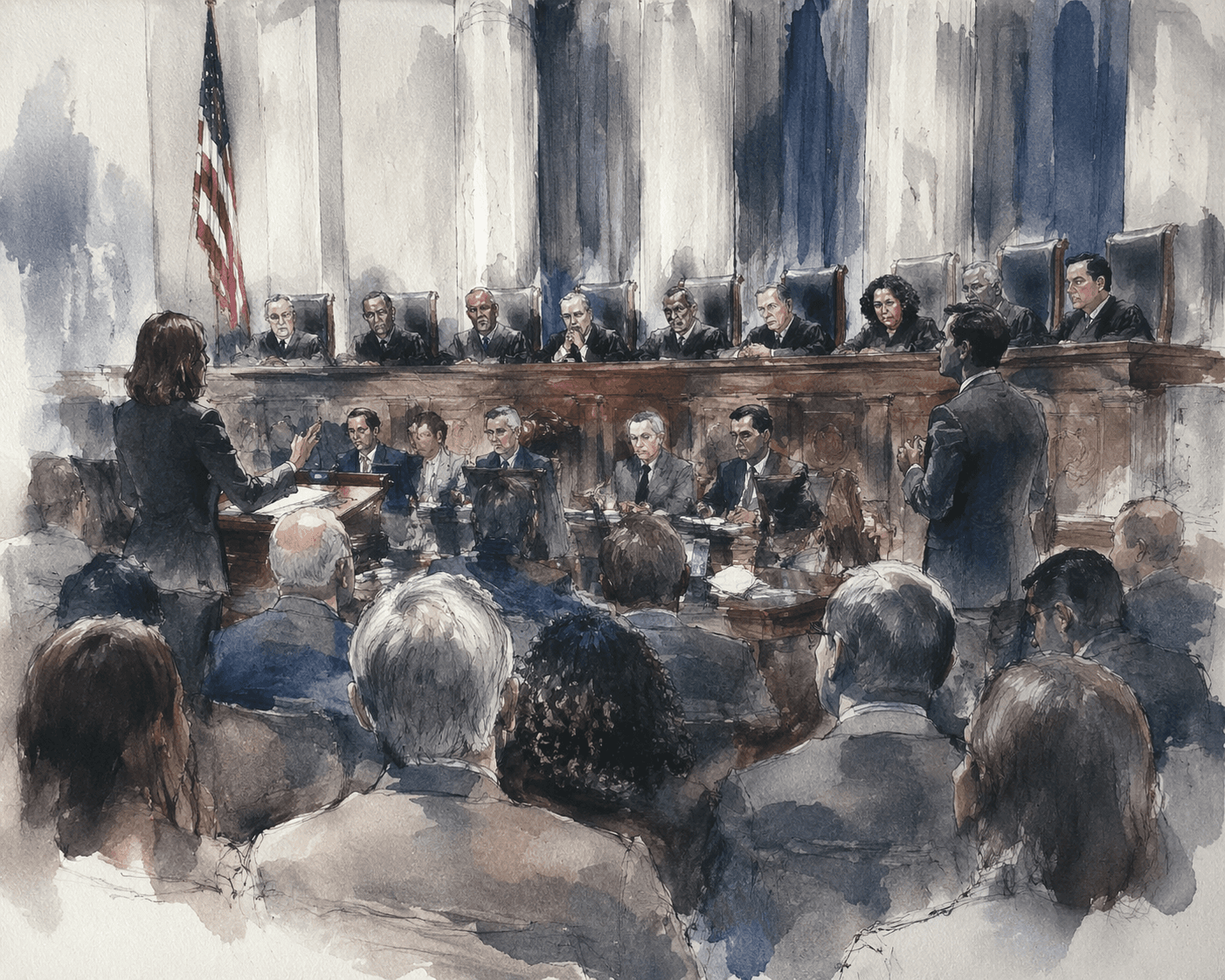
What it's about
The Supreme Court held that this kind of pension is based on civilian employment, not wholly on service as a member of a uniformed service.
Congress created the windfall-elimination provision to reduce Social Security benefits when a retiree also receives a pension from work that did not pay Social Security taxes.
Question presented
Is a civil-service pension payment based on dual-status military technician service to the National Guard a payment based wholly on service as a member of a uniformed service?
What the Court decided
Holding
Civil-service pension payments based on employment as a dualstatus military technician are not payments based on “service as a member of a uniformed service” under 42 U. S. C. §415(a)(7)(A)(III). Retirees receive Social Security benefits based on a progressive formula that awards a percentage of average past earnings. §415(a)(1)(A). The formula originally did not account for earnings from jobs exempt from Social Security taxes, many of which provide separate pensions. In response to this potential windfall, Congress modified the formula to reduce benefits when a retiree receives such a separate pension payment. 959 F. 3d 210, affirmed.
- Result
- Affirmed
The vote
From the opinions
“Given these features of their employment, I would hold that dual-status technicians “serv[e] as” members of the National Guard in all the work they perform for this country day in and day out.”
What's next
The Sixth Circuit’s ruling remains in place. Lower courts and the Social Security Administration will apply this interpretation to similar pension claims.
Documents
Docket activity
New analysis added
AI analysis generated: Case Briefing
New analysis added
AI analysis generated: Impact Analysis
AI analysis generated: Opinion Summary
Show 5 moreShow fewer
AI analysis generated: Decision Record
Case data updated: status, opinion_date
Opinion added: opinion
Brief added: Petition
Brief added: Questions Presented
More questions
- What did the Supreme Court decide in Babcock v. Kijakazi?
- It upheld the Sixth Circuit and decided that a dual-status technician’s civil-service pension is based on civilian employment, not wholly on uniformed service.
- How does the ruling affect Social Security benefits?
- The Social Security Administration may apply the windfall-elimination reduction because this pension is not treated as wholly based on uniformed-service work.
- Who wrote the Supreme Court’s opinion, and who disagreed?
- Justice Barrett wrote it, and the other named justices signed onto it. Justice Gorsuch filed a dissent (a written disagreement).
- What happens next in Babcock v. Kijakazi?
- The Sixth Circuit’s ruling remains in place. Lower courts and the Social Security Administration will apply the same interpretation to similar claims.
Sources
Primary materials plus reporting. Best-effort analysis: this explainer relies on a mix of primary materials and trusted secondary sources. Official filings and opinions remain authoritative.