Challenges to deportation orders
United States v. Palomar-Santiago
In brief
The Court said defendants must meet all three §1326(d) requirements and sent Palomar-Santiago's case back to the lower court.
- Where it stands
- Decided
Decided 9-0 · June 1, 2021 · Opinion by Justice Sotomayor
- What it’s about
- This case asked whether a person charged with illegally returning to the United States can attack the validity of an earlier deportation order without meeting all of the statutory requirements for that kind of challenge.
- Who it affects
- Defendants cannot skip any §1326(d) requirement merely because current circuit law no longer treats the earlier offense as removable. Palomar-Santiago's individual challenge remains for the lower court to resolve.
Summary: written with AI from the case record.
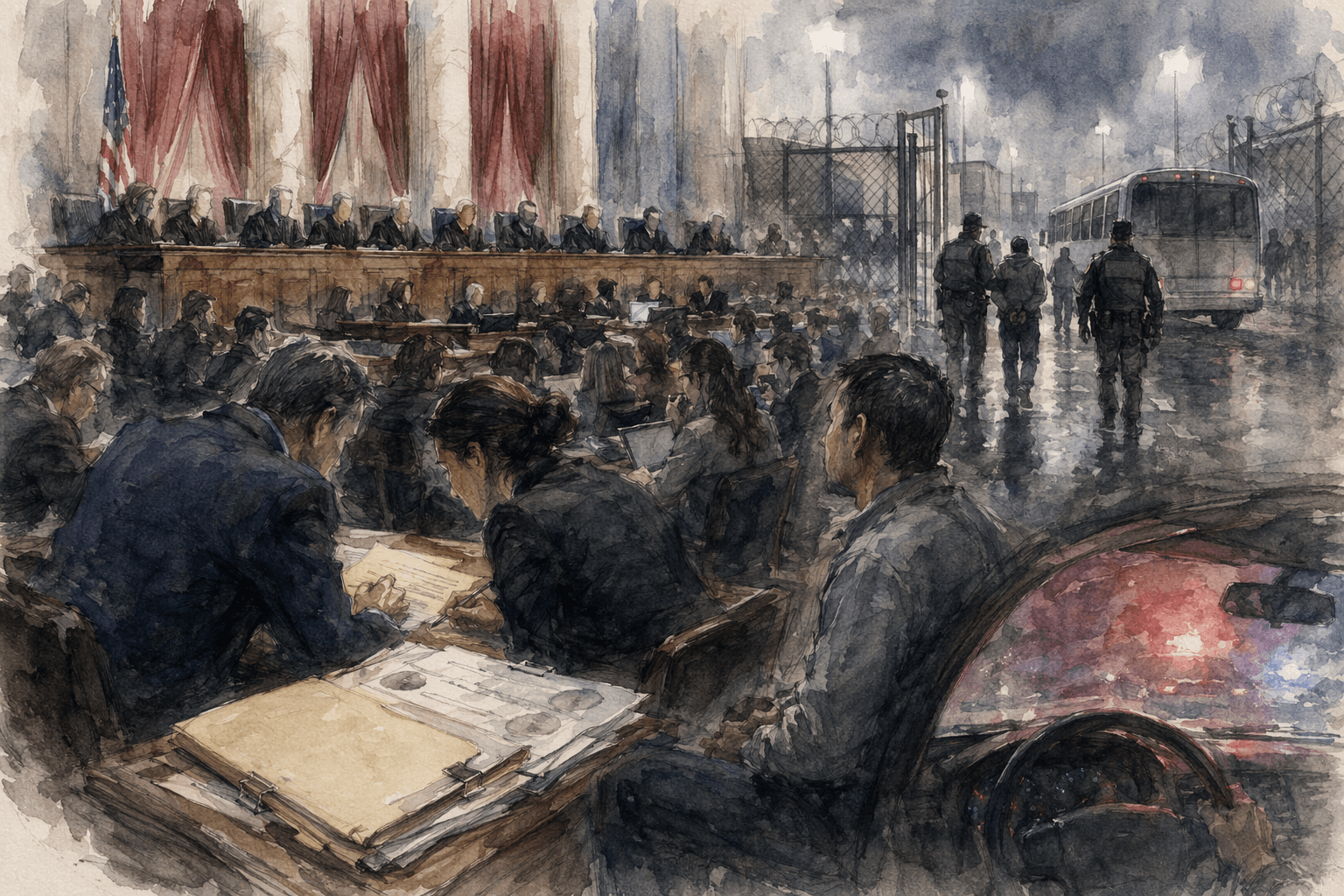
What it's about
It arose after Palomar-Santiago argued that his original removal was invalid because the drunk-driving conviction used to deport him was later held not to be a removable aggravated felony.
The case shows that a later change in how immigration law classifies a crime does not automatically satisfy every requirement for challenging an earlier removal order.
Question presented
The question presented is whether a defendant automatically satisfies all three of those prerequisites solely by showing that he was removed for a crime that would not be considered a removable offense under current circuit law, even if he cannot independently demonstrate administrative exhaustion or deprivation of the opportunity for judicial review.
What the Court decided
Holding
Each of the statutory requirements of §1326(d) is mandatory. 282, reversed and remanded.
- Result
- Reversed
The vote
What's next
The lower court must apply §1326(d)'s rule that all three requirements are mandatory. The Supreme Court did not decide whether Palomar-Santiago's individual challenge will succeed.
Documents
Docket activity
New analysis added
AI analysis generated: Case Briefing
New analysis added
AI analysis generated: Impact Analysis
AI analysis generated: Opinion Summary
Show 5 moreShow fewer
AI analysis generated: Decision Record
Case data updated: status, opinion_date
Opinion added: opinion
Brief added: Petition
Brief added: Questions Presented
More questions
- What was United States v. Palomar-Santiago about?
- Palomar-Santiago was charged with illegally returning to the United States and challenged an earlier removal order based on a drunk-driving conviction. He argued the conviction was later found not to be a crime that immigration law treats as grounds for removal.
- What did the Supreme Court decide in Palomar-Santiago?
- The Court decided that all three requirements in 8 U.S.C. §1326(d) are mandatory. A defendant cannot bypass them by showing only that the earlier offense is no longer removable.
- What happened to the Ninth Circuit's ruling?
- The Supreme Court overturned the judgment and sent the case back to the lower court (reversed and remanded).
Sources
Primary materials plus reporting. Best-effort analysis: this explainer relies on a mix of primary materials and trusted secondary sources. Official filings and opinions remain authoritative.