Appeal cost awards
Antonio v. Hotels.com, L. P.
In brief
The Supreme Court’s unanimous decision means the district court must honor the appeals court’s allocation of Rule 39(e) costs.
- Where it stands
- Decided
Decided 9-0 · May 27, 2021 · Opinion by Justice Alito
- What it’s about
- After online travel companies won an appeal in a tax dispute with San Antonio and other Texas cities, they sought more than $2.3 million in appellate costs for supersedeas-bond premiums.
- Who it affects
- District courts cannot reduce or deny costs that an appeals court has assigned under Rule 39(e). Lower courts must follow that assignment instead of revisiting it.
Summary: written with AI from the case record.
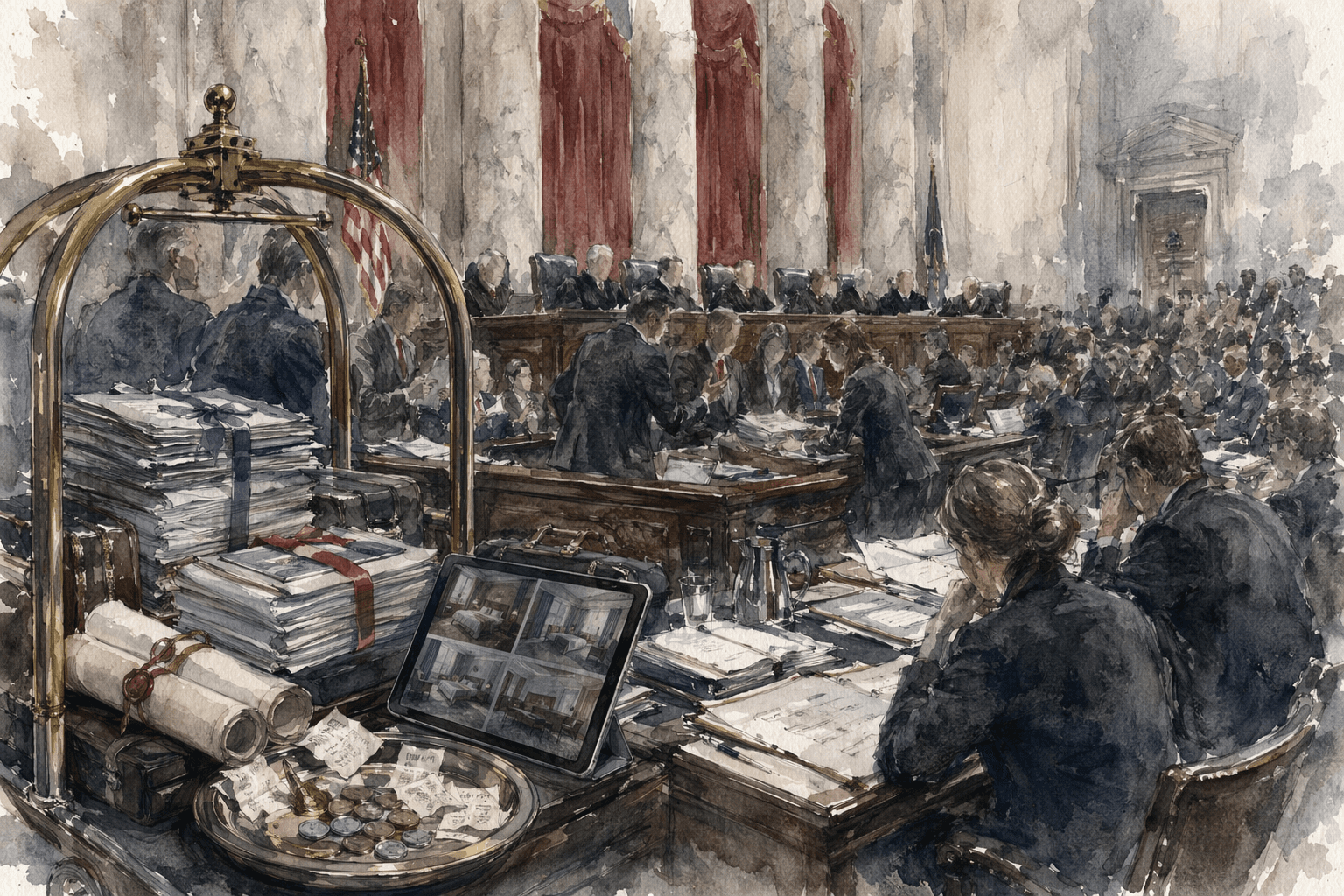
What it's about
The case asked who decides whether those appeal-related costs must be awarded under Federal Rule of Appellate Procedure 39(e): the district court or the court of appeals.
The ruling clarified which federal court controls appeal-related cost awards after an appeal.
Question presented
Whether, as the Fifth Circuit alone has held, district courts “lack[] discretion to deny or reduce” appellate costs deemed “taxable” in district court under Fed. R. App. P. 39(e).
What the Court decided
Holding
Rule 39 does not permit a district court to alter a court of appeals’ allocation of the costs listed in subdivision 959 F. 3d 159, affirmed.
- Result
- Affirmed
The vote
What's next
The district court must apply the appeals court’s allocation of Rule 39(e) costs rather than reduce or deny that allocation. San Antonio, the other Texas cities, and the online travel companies can proceed under that rule.
Documents
Docket activity
New analysis added
AI analysis generated: Case Briefing
New analysis added
AI analysis generated: Impact Analysis
AI analysis generated: Opinion Summary
Show 5 moreShow fewer
AI analysis generated: Decision Record
Case data updated: status, opinion_date
Opinion added: opinion
Brief added: Petition
Brief added: Questions Presented
More questions
- What did San Antonio v. Hotels.com decide?
- The Supreme Court upheld the Fifth Circuit’s ruling (affirmed it): Rule 39(e) does not let a district court change an appeals court’s cost allocation.
- Who controls Rule 39(e) appellate costs?
- The court of appeals controls the allocation of listed Rule 39(e) costs. The district court cannot change that allocation by reducing or denying it.
- What costs were at issue in San Antonio v. Hotels.com?
- Online travel companies sought more than $2.3 million in appeal costs, including premiums for an appeal bond called a supersedeas bond.
- What happens next after the Supreme Court’s decision?
- The district court must apply the appeals court’s allocation of Rule 39(e) costs and cannot revisit it by reducing or denying those costs.
Sources
Primary materials plus reporting. Best-effort analysis: this explainer relies on a mix of primary materials and trusted secondary sources. Official filings and opinions remain authoritative.