Damages for emotional harm
Cummings v. Premier Rehab Keller
In brief
The Supreme Court upheld the Fifth Circuit's ruling: people bringing private suits under the Rehabilitation Act or Affordable Care Act cannot recover money for emotional distress.
- Where it stands
- Decided
Decided 6-3 · April 28, 2022 · Opinion by Justice Kavanaugh
- What it’s about
- This case asked whether a patient who was denied an American Sign Language interpreter by a federally funded physical therapy provider could recover money for emotional harm under the Rehabilitation Act and the Affordable Care Act.
- Who it affects
- The ruling limits money compensation in private discrimination suits under these laws by barring recovery for emotional distress.
Summary: written with AI from the case record.
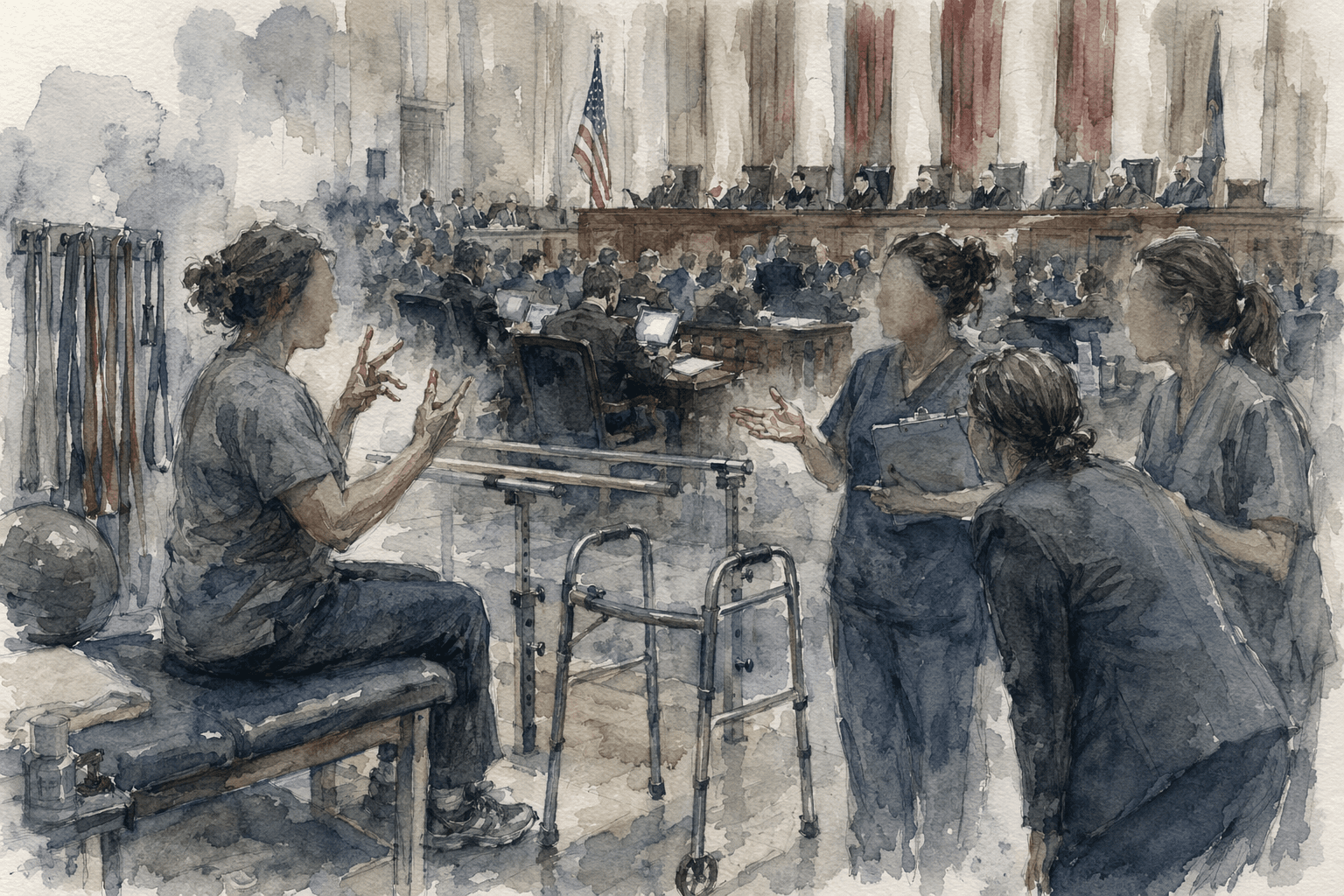
What it's about
The Supreme Court held that emotional distress damages are not available in private suits enforcing those statutes.
It concerns federal civil-rights laws that bar discrimination by organizations accepting federal money.
Question presented
Whether the compensatory damages available under Title VI and the statutes that incorporate its remedies include compensation for emotional distress.
What the Court decided
Holding
Emotional distress damages are not recoverable in a private action to enforce either the Rehabilitation Act of 1973 or the Affordable Care Act. 948 F. 3d 673, affirmed.
- Result
- Affirmed
The vote
From the opinions
“Today, the Court holds that the compensatory damages available under these statutes cannot include compensation for emotional suffering.”
What's next
The Fifth Circuit's ruling remains in place. Lower courts will apply this rule when deciding money compensation in similar private suits under these statutes.
Documents
Docket activity
New analysis added
AI analysis generated: Case Briefing
New analysis added
AI analysis generated: Impact Analysis
AI analysis generated: Opinion Summary
Show 5 moreShow fewer
AI analysis generated: Decision Record
Case data updated: status, opinion_date
Opinion added: opinion
Brief added: Petition
Brief added: Questions Presented
More questions
- What was the dispute in Cummings v. Premier Rehab Keller?
- A patient said a federally funded physical-therapy provider denied an American Sign Language interpreter. The patient sought emotional-distress compensation under the Rehabilitation Act and Affordable Care Act.
- What did the Supreme Court decide in Cummings?
- It upheld the Fifth Circuit's ruling. Emotional-distress damages are unavailable in private suits enforcing either the Rehabilitation Act or Affordable Care Act.
- How does the decision affect private discrimination suits?
- People bringing such suits under these laws cannot recover money for emotional distress.
- What happens next after the decision?
- The Fifth Circuit's ruling remains in place. Lower courts will apply the same limit in similar private suits under these statutes.
Sources
Primary materials plus reporting. Best-effort analysis: this explainer relies on a mix of primary materials and trusted secondary sources. Official filings and opinions remain authoritative.