Federal courts and new evidence
Shinn v. Ramirez
In brief
The Supreme Court overturned the Ninth Circuit’s ruling and said Martinez v. Ryan does not remove §2254(e)(2)’s limit on federal courts’ use of evidence outside the state-court record.
- Where it stands
- Decided
Decided 6-3 · May 23, 2022 · Opinion by Justice Thomas
- What it’s about
- In David Ramirez’s federal challenge to his imprisonment, the Supreme Court overturned the Ninth Circuit’s ruling and decided that a federal court may not hold an evidentiary hearing or consider evidence outside the state-court record because of mistakes by his state post-conviction lawyer.
- Who it affects
- Federal courts must enforce this evidence limit even when a state post-conviction lawyer failed to develop the facts. The decision does not state what final outcome Ramirez receives.
Summary: written with AI from the case record.
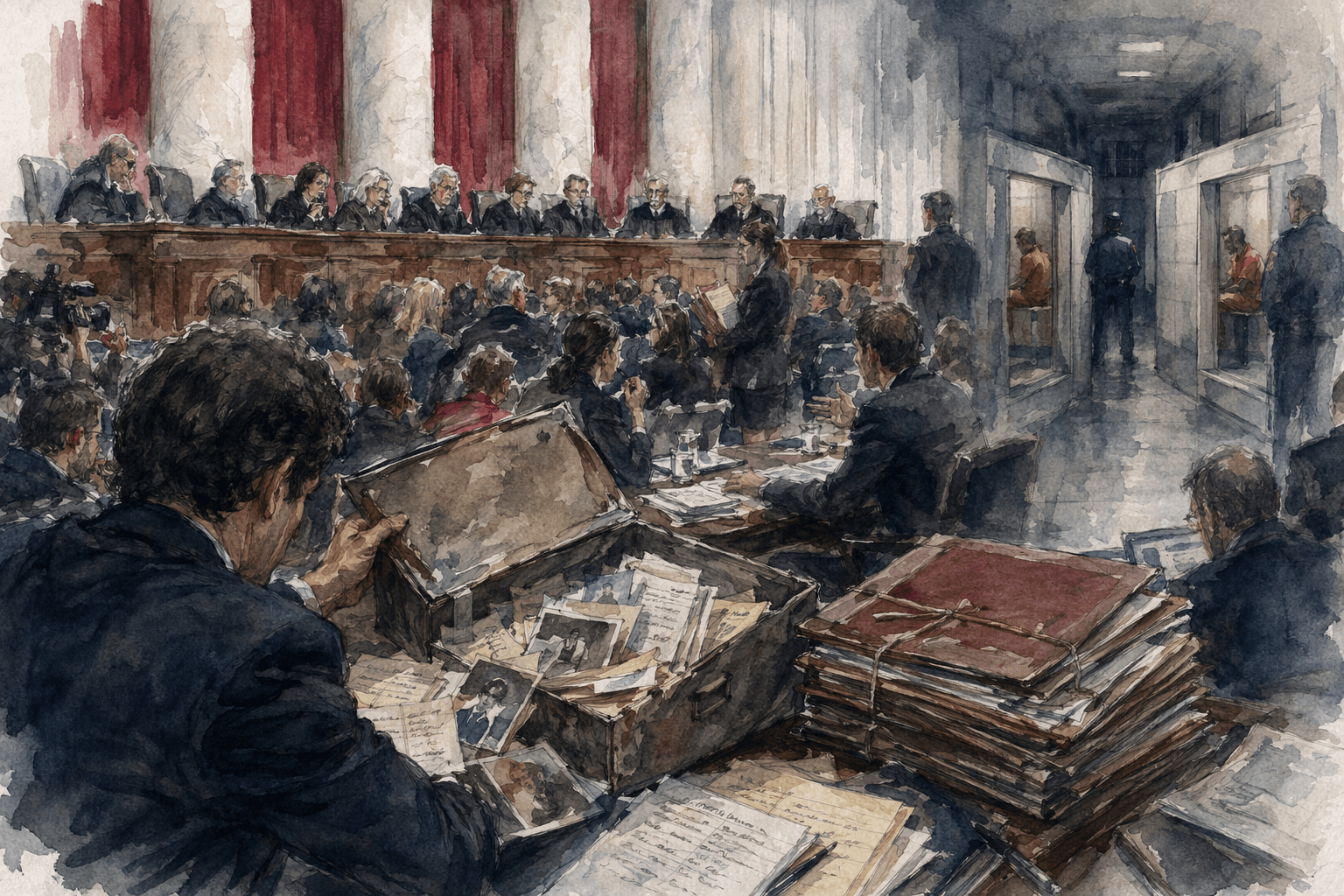
What it's about
The Court also decided that Martinez v. Ryan does not remove this limit under the Antiterrorism and Effective Death Penalty Act (AEDPA).
More broadly, the federal Antiterrorism and Effective Death Penalty Act (AEDPA) limits when federal courts may consider new evidence in challenges to state convictions.
Question presented
Does application of the equitable rule this Court announced in Martinez v. Ryan render 28 U.S.C. § 2254(e)(2) inapplicable to a federal court's merits review of a claim for habeas relief?
What the Court decided
Holding
Under §2254(e)(2), a federal habeas court may not conduct an evidentiary hearing or otherwise consider evidence beyond the state-court record based on the ineffective assistance of state postconviction counsel. 937 F. 3d 1230 and 943 F. 3d 1211, reversed.
- Result
- Reversed
The vote
From the opinions
“Today, however, the Court hamstrings the federal courts’ authority to safeguard that right.”
What's next
Lower courts must apply this evidence limit when prisoners seek to add facts to federal challenges because of state post-conviction lawyers’ mistakes. The decision does not specify what further proceeding occurs or what final outcome Ramirez receives.
Documents
Docket activity
New analysis added
AI analysis generated: Case Briefing
New analysis added
AI analysis generated: Impact Analysis
AI analysis generated: Opinion Summary
Show 6 moreShow fewer
AI analysis generated: Decision Record
Case data updated: summary, question_presented, generation_metadata
Case data updated: status, opinion_date
Opinion added: opinion
Brief added: Petition
Brief added: Questions Presented
More questions
- What did Shinn v. Martinez Ramirez decide?
- It overturned the Ninth Circuit and said §2254(e)(2) bars a federal court from holding a hearing to take new evidence. The statute also bars federal courts from considering evidence outside the state-court record because of state post-conviction counsel’s mistakes.
- How did Martinez v. Ryan affect the result?
- It did not cancel §2254(e)(2)’s evidence limit. That limit still applies when a request rests on mistakes by state post-conviction counsel.
- Who disagreed with the Court’s opinion?
- Justice Sotomayor wrote a dissent (a separate opinion disagreeing with the result), signed by Justices Breyer and Kagan.
- What happens next for Ramirez?
- Lower courts must apply the Supreme Court’s evidence rule. The decision does not specify what further proceeding occurs or what final outcome Ramirez receives.
Sources
Primary materials plus reporting. Best-effort analysis: this explainer relies on a mix of primary materials and trusted secondary sources. Official filings and opinions remain authoritative.