Health insurance mandate
California v. Texas
In brief
The Supreme Court said the challengers lacked the legal right to sue over the mandate, overturned the Fifth Circuit's judgment, and sent the case back to the lower court (remanded).
- Where it stands
- Decided
Decided 7-2 · July 8, 2021 · Opinion by Justice Breyer
- What it’s about
- This case asked whether challengers to the Affordable Care Act could attack the law’s individual mandate after Congress reduced the penalty for not having insurance to $0, and if so, whether that made the mandate unconstitutional and required the rest of the ACA to fall with it.
- Who it affects
- The Court did not strike down the ACA in this case. It found the challengers had no past or future injury tied to enforcing the challenged rule, leaving unresolved whether the mandate violated the Constitution or could stand apart from the rest of the law.
Summary: written with AI from the case record.
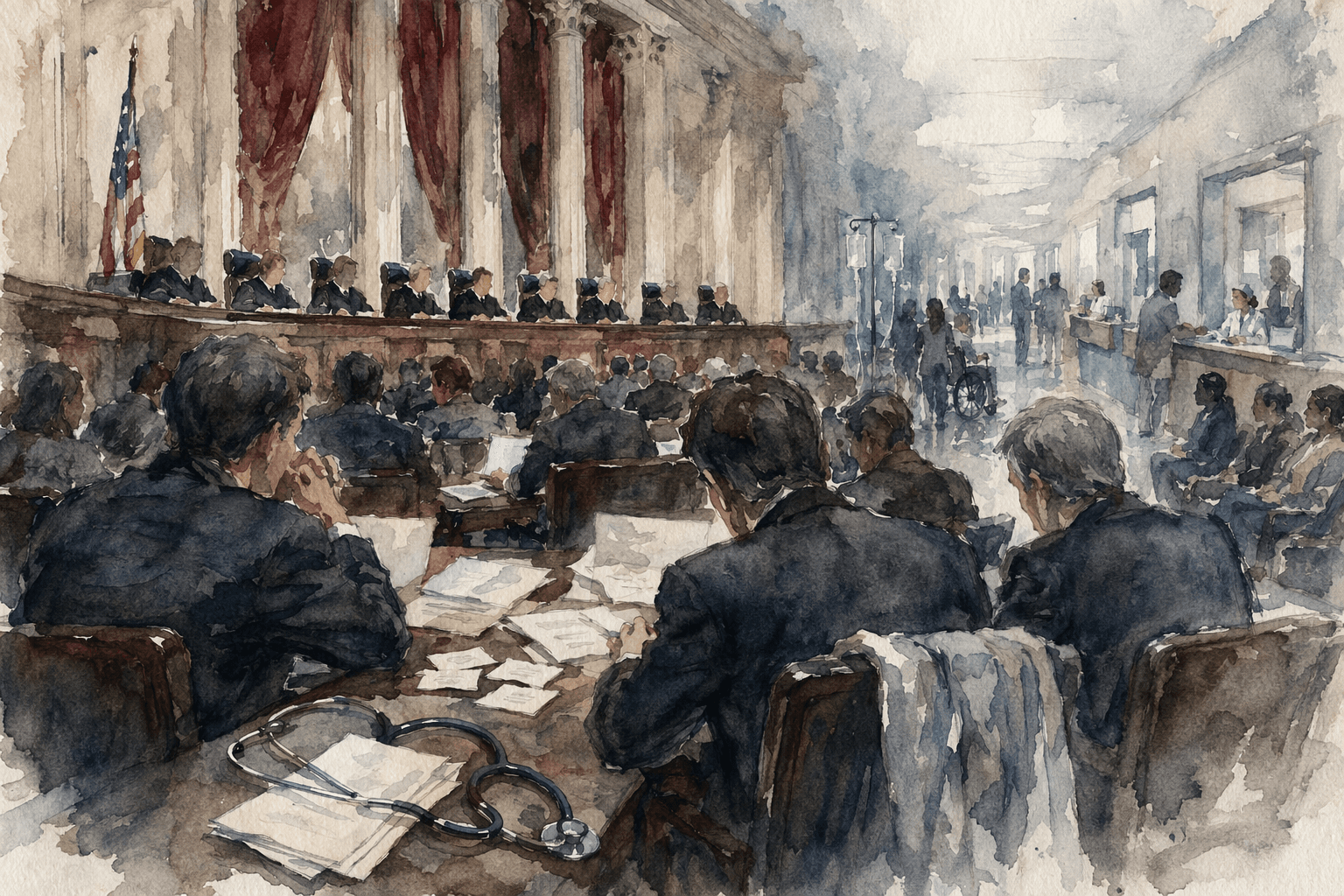
What it's about
The Supreme Court ultimately held that the plaintiffs lacked standing to bring the case.
California v. Texas was part of a continuing Supreme Court dispute over the Affordable Care Act, but the Court decided who could bring the challenge rather than whether the mandate violated the Constitution.
Question presented
1. Whether the individual and state plaintiffs in this case have established Article III standing to challenge the minimum coverage provision in Section 5000A(a). 2. Whether reducing the amount specified in Section 5000A(c) to zero rendered the minimum coverage provision unconstitutional. 3. If so, whether the minimum coverage provision is severable from the rest of the ACA.
What the Court decided
Holding
Plaintiffs do not have standing to challenge §5000A(a)’s minimum essential coverage provision because they have not shown a past or future injury fairly traceable to defendants’ conduct enforcing the specific statutory provision they attack as unconstitutional. 355, vacated and remanded.
- Result
- Vacated
The vote
From the opinions
“Today’s decision is the third installment in our epic Affordable Care Act trilogy, and it follows the same pattern as installments one and two.”
What's next
The case returns to the lower court (remanded), which must apply the Supreme Court's ruling on the challengers' legal right to sue. The ruling leaves unanswered whether the mandate violated the Constitution or could stand apart from the rest of the ACA.
Documents
Docket activity
New analysis added
AI analysis generated: Case Briefing
New analysis added
AI analysis generated: Impact Analysis
AI analysis generated: Opinion Summary
Show 5 moreShow fewer
AI analysis generated: Decision Record
Case data updated: status, opinion_date
Opinion added: opinion
Brief added: Petition
Brief added: Questions Presented
More questions
- What was California v. Texas about?
- It challenged the ACA mandate after Congress set the penalty for going without insurance at $0, raising questions about whether the rest could survive.
- What did the Supreme Court say about the challengers' right to sue?
- The Court said the challengers lacked the legal right to sue because they had not shown an injury tied to enforcing that rule.
- Did the Court decide whether the mandate violated the Constitution?
- No; the Court decided the challengers could not sue. It did not decide whether the zero penalty violated the Constitution or whether the mandate could stand apart from the ACA.
- What happens next in California v. Texas?
- The case returns to the lower court (remanded), which must apply the Supreme Court's ruling on the challengers' legal right to sue.
Sources
Primary materials plus reporting. Best-effort analysis: this explainer relies on a mix of primary materials and trusted secondary sources. Official filings and opinions remain authoritative.