Corporate liability for overseas abuses
Nestlé USA v. Doe
In brief
The Supreme Court overturned the Ninth Circuit's ruling and sent the case back (reversed and remanded), but it did not decide whether domestic corporations (U.S.-based companies) can be sued under the ATS.
- Where it stands
- Decided
Decided 8-1 · June 17, 2021 · Opinion by Justice Thomas
- What it’s about
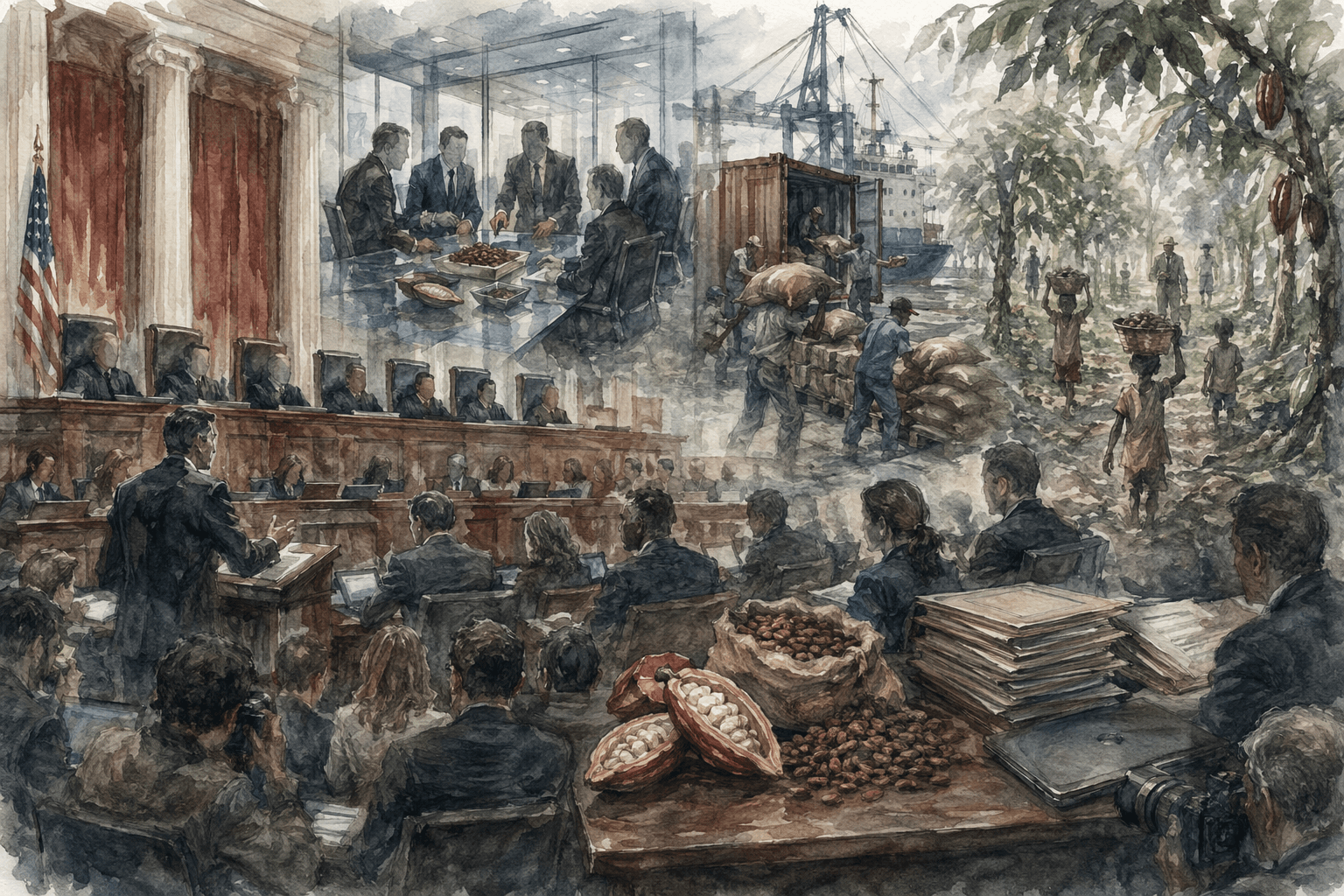
- People who said they were forced to work as children on cocoa farms in Côte d’Ivoire accused Nestlé USA of aiding forced labor and sued under the Alien Tort Statute (a federal law allowing certain foreign citizens to bring international-law claims in U.S. courts).
- Who it affects
- The Court's action sent the case back for more proceedings (remanded). It left unanswered whether domestic corporations (U.S.-based companies) can face liability under the Alien Tort Statute.
Summary: written with AI from the case record.
What it's about
The Supreme Court overturned the Ninth Circuit’s ruling and sent the case back to the lower court (reversed and remanded), without finally deciding Nestlé USA’s liability.
The case is part of a broader debate over when U.S. courts can hear claims about human-rights abuses overseas tied to a company's U.S. conduct.
Question presented
1. Whether an aiding and abetting claim against a domestic corporation brought under the Alien Tort Statute, 28 U.S.C. § 1350, may overcome the extraterritoriality bar where the claim is based on allegations of general corporate activity in the United States and where plaintiffs cannot trace the alleged harms, which occurred abroad at the hands of unidentified foreign actors, to that activity. 2. Whether the Judiciary has the authority under the Alien Tort Statute to impose liability on domestic corporations.
What the Court decided
Holding
The judgment is reversed, and the case is remanded. 929 F. 3d. 623, reversed and remanded.
- Result
- Reversed
The vote
- Joined the judgment
- Dissented
- Wrote an opinion
- Majority · 8joined the Court's opinion
- Dissenting · 1disagreed with the result
- Alitowrote the dissent
From the opinions
“Corporate status does not justify special immunity.”
What's next
The case returns to the Ninth Circuit for further proceedings. The corporate-liability question remains open after the Supreme Court's action.
Documents
Docket activity
New analysis added
AI analysis generated: Impact Analysis
AI analysis generated: Opinion Summary
Case data updated: summary, question_presented, generation_metadata
New analysis added
Show 6 moreShow fewer
AI analysis generated: Case Briefing
AI analysis generated: Decision Record
Case data updated: status, opinion_date
Opinion added: opinion
Brief added: Petition
Brief added: Questions Presented
More questions
- What did the Mali plaintiffs allege against Nestlé USA?
- They alleged Nestlé provided money, training, and other support to cocoa farms in Ivory Coast that used child slavery.
- What question did Nestlé USA v. Doe raise about U.S. courts?
- It asked whether claims based on general U.S. corporate activity could proceed when alleged harms occurred overseas.
- What did the Supreme Court do in Nestlé USA v. Doe?
- It overturned the Ninth Circuit's ruling and sent the case back (reversed and remanded).
- Did Nestlé USA v. Doe decide whether U.S.-based companies can be sued under the Alien Tort Statute?
- No. The Court left that question unresolved when it overturned the Ninth Circuit's ruling and sent the case back.
- What happens next in Nestlé USA v. Doe?
- The case returns to the Ninth Circuit for further proceedings. The Supreme Court's action did not finally resolve the plaintiffs' claims against Nestlé.
Sources
Primary materials plus reporting. Best-effort analysis: this explainer relies on a mix of primary materials and trusted secondary sources. Official filings and opinions remain authoritative.