Who appoints patent judges
United States v. Arthrex
In brief
The Supreme Court wiped out the Federal Circuit's ruling and sent the case back for further proceedings (vacated and remanded).
- Where it stands
- Decided
Decided 5-4 · July 8, 2021 · Opinion by Chief Justice Roberts
- What it’s about
- This case asked whether administrative patent judges on the Patent Trial and Appeal Board could constitutionally issue final decisions invalidating patents even though they were appointed by the Secretary of Commerce rather than by the President with Senate confirmation.
- Who it affects
- The Federal Circuit's ruling no longer controls this case. Further proceedings in the lower court are needed, and the parties' final result remains open.
Summary: written with AI from the case record.
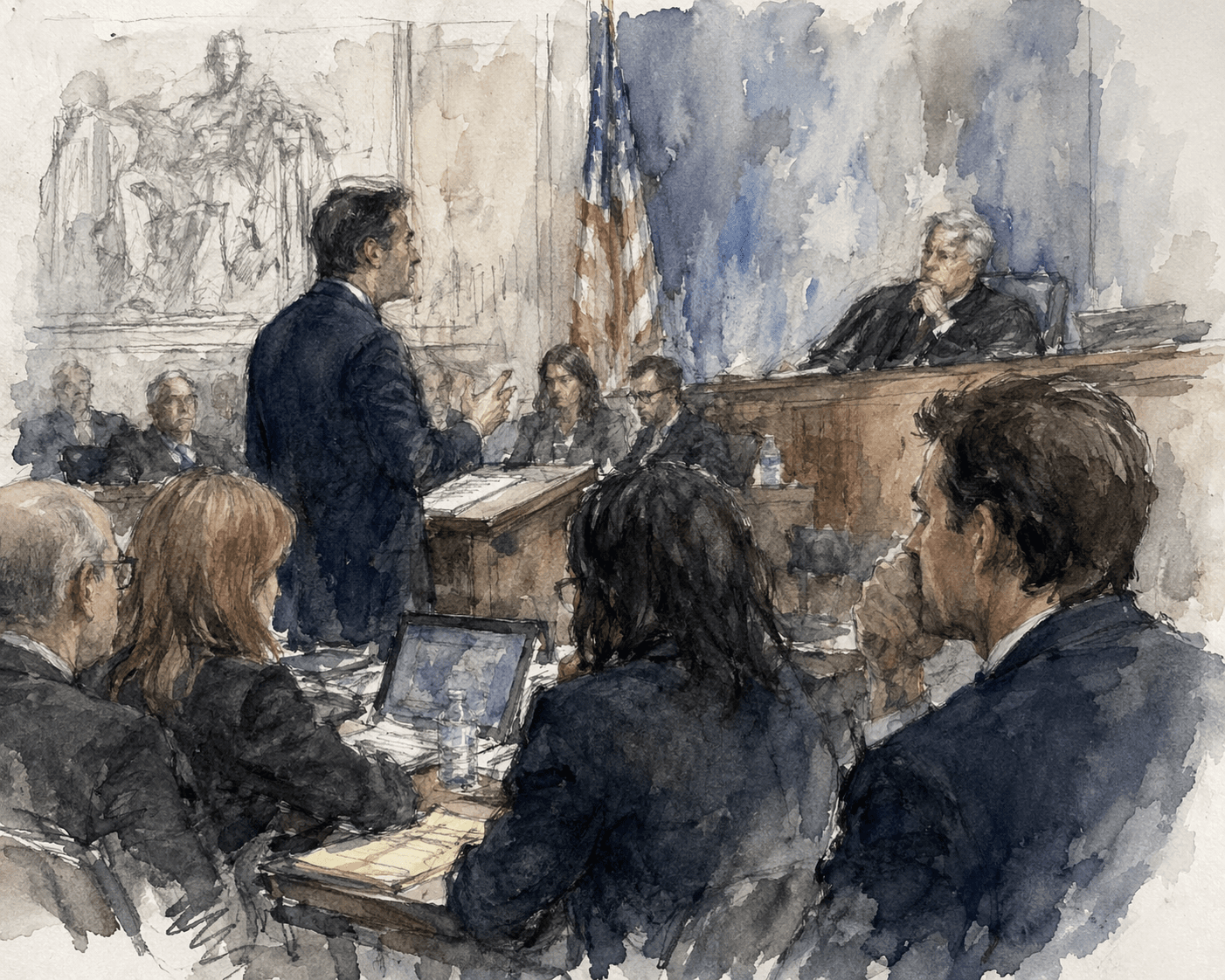
What it's about
It also raised what the proper remedy should be if that arrangement violated the Constitution’s Appointments Clause.
The dispute sat at the intersection of patent challenges and the Constitution's rules for appointing federal officers.
Question presented
1. Whether, for purposes of the Appointments Clause, U.S. Const. art. II, § 2, cl. 2, administrative patent judges of the U.S. Patent and Trademark Office are principal officers who must be appointed by the President with the Senate’s advice and consent, or “inferior Officers” whose appointment Congress has permissibly vested in a department head. 2. Whether, if administrative patent judges are principal officers, the court of appeals properly cured any Appointments Clause defect in the current statutory scheme prospectively by severing the application of 5 U.S.C. § 7513(a) to those judges.
What the Court decided
Holding
The judgment is vacated, and the case is remanded. 941 F. 3d 1320, vacated and remanded.
- Result
- Vacated
The vote
From the opinions
“For the very first time, this Court holds that Congress violated the Constitution by vesting the appointment of a federal officer in the head of a department.”
What's next
The Federal Circuit will handle further proceedings after the Supreme Court wiped out its ruling and sent the case back (vacated and remanded). The timing and outcome of the next ruling remain unsettled.
Documents
Docket activity
New analysis added
AI analysis generated: Impact Analysis
AI analysis generated: Opinion Summary
New analysis added
AI analysis generated: Case Briefing
Show 5 moreShow fewer
AI analysis generated: Decision Record
Case data updated: status, opinion_date
Opinion added: opinion
Brief added: Petition
Brief added: Questions Presented
More questions
- What constitutional question did United States v. Arthrex raise?
- It asked whether Patent Trial and Appeal Board judges were appointed under the Constitution's rules and what fix should follow if they were not.
- What did the Supreme Court do in Arthrex?
- It wiped out the Federal Circuit's ruling and sent the case back to that court (vacated and remanded).
- What remains unresolved after the lower-court ruling was wiped out?
- The parties' final result remains open because the Court sent the case back for further proceedings (remanded it).
- What happens next in the case?
- The Federal Circuit will handle further proceedings. The timing of its next ruling is unsettled.
Sources
Primary materials plus reporting. Best-effort analysis: this explainer relies on a mix of primary materials and trusted secondary sources. Official filings and opinions remain authoritative.