Clear patent claims
Nautilus v. Biosig Instruments
In brief
The Supreme Court rejected the appeals court’s test, wiped out its ruling (vacated it), and sent the case back without deciding whether Biosig’s patent claims are sufficiently clear.
- Where it stands
- Decided
Decided 9-0 · June 2, 2014 · Opinion by Justice Ginsburg
- What it’s about
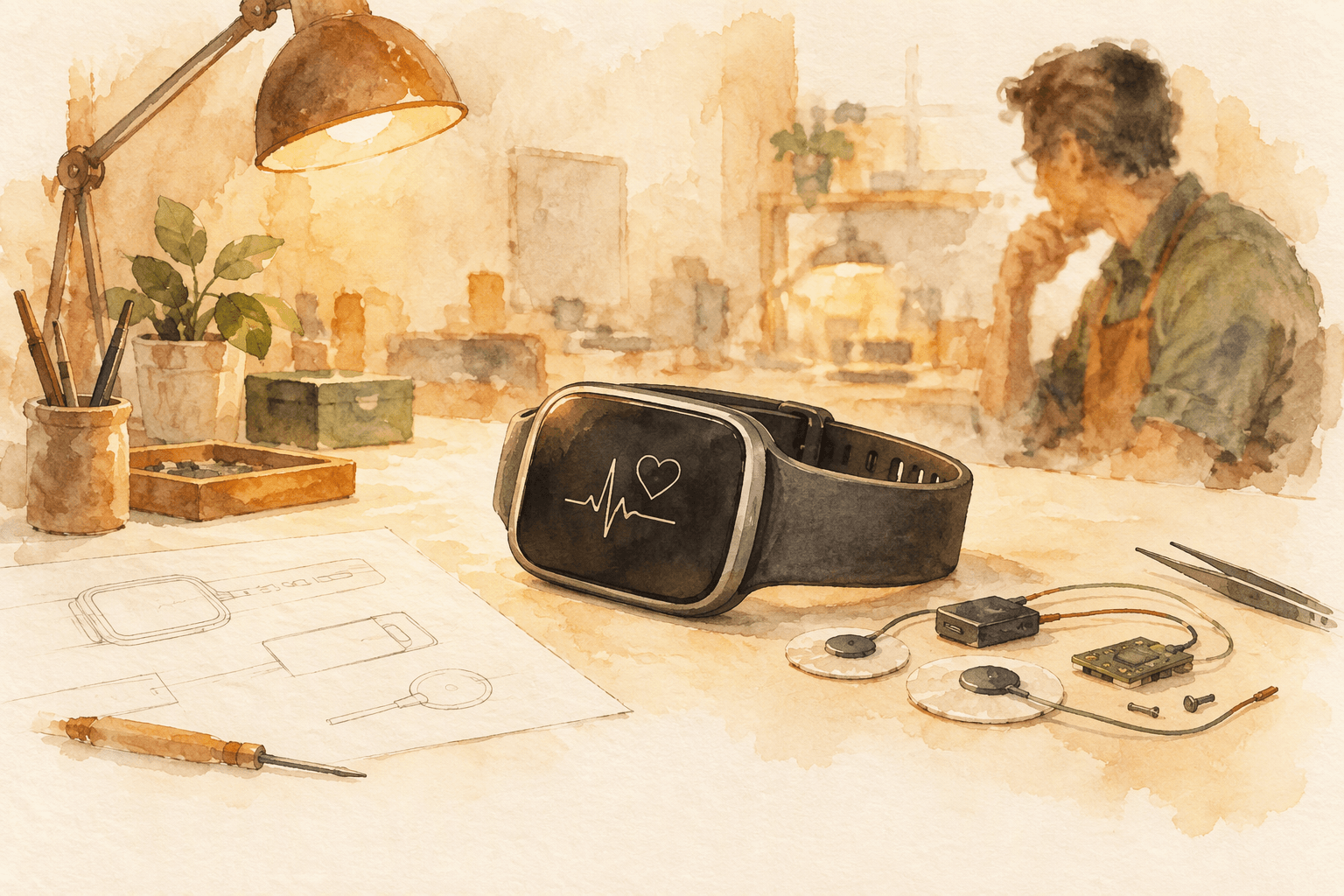
- Biosig sued Nautilus over a heart-rate monitor patent; Nautilus said its claims were unclear.
- Who it affects
- The Federal Circuit must reassess Biosig’s patent claims under the new test; the Supreme Court did not decide whether those claims meet it.
Summary: written with AI from the case record.
What it's about
The Supreme Court rejected the appeals court’s “insolubly ambiguous” test, wiped out its ruling (vacated it), and sent the case back to decide whether experts could understand the claims’ scope with reasonable certainty; it left open whether assuming patents are valid affects that test.
The dispute focused on federal patent law’s requirement that claims clearly define the scope of an invention.
Question presented
1. Does the U.S. Court of Appeals for the Federal Circuit's standard of whether a patent claim is "insolubly ambiguous" defeat the purpose of the statutory requirement for patents to be particular and distinct? 2. Does the presumption of patent validity dilute the statutory requirement for patents to be particular and distinct?
What the Court decided
Holding
1. A patent is invalid for indefiniteness if its claims, read in light of the patent’s specification and prosecution history, fail to inform, with reasonable certainty, those skilled in the art about the scope of the invention. The parties agree that definiteness is to be evaluated from the perspective of a person skilled in the relevant art, that claims are to be read in light of the patent’s specification and prosecution histo ry, and that definiteness is to be measured as of the time of the pa tent application. The parties disagree as to how much imprecision §112, ¶2 tolerates. Section 112’s definiteness requirement must take into account the inherent limitations of language. 2. The Federal Circuit’s standard, which tolerates some ambiguous claims but not others, does not satisfy the statute’s definiteness re quirement. The Court of Appeals inquired whether the ’753 patent’s claims were “amenable to construction” or “insolubly ambiguous,” but such formulations lack the precision §112, ¶2 demands. To tolerate imprecision just short of that rendering a claim “insolubly ambigu ous” would diminish the definiteness requirement’s public-notice function and foster the innovation-discouraging “zone of uncertainty,” United Carbon, 317 U. S., at 236, against which this Court has warned. 3. This Court, as “a court of review, not of first view,” Cutter v. Wilkinson, 544 U. S. 709, 718, n. 7, follows its ordinary practice of re manding so that the Federal Circuit can reconsider, under the proper standard, whether the relevant claims in the ’753 patent are suffi ciently definite, see, e.g., Johnson v. California, 543 U. S. 499, 515. 715 F. 3d 891, vacated and remanded.
- Result
- Vacated
The Court's reasoning
The Court said patent claims must tell people skilled in the field, with reasonable certainty, what the invention covers, read alongside the patent’s description and application record. It rejected the Federal Circuit’s test because allowing too much uncertainty would weaken the claims’ public-notice role.
The vote
What's next
The Federal Circuit will reconsider whether Biosig’s claims tell skilled readers, with reasonable certainty, what the invention covers.
Documents
Opinions
Docket activity
New analysis added
AI analysis generated: Case Briefing
AI analysis generated: Decision Record
Case data updated: summary, question_presented, generation_metadata
Case data updated: question_presented, extraction_metadata
Show 1 moreShow fewer
Opinion added: Opinion
Sources
Primary materials plus reporting. Best-effort analysis: this explainer relies on a mix of primary materials and trusted secondary sources. Official filings and opinions remain authoritative.