Warner-Jenkinson v. Hilton Davis Chemical
In brief
The Court kept the doctrine of equivalents in place, overturned the Federal Circuit's judgment, and sent the case back to apply the doctrine's full requirements.
- Where it stands
- Decided
Decided 9-0 · March 31, 1997 · Opinion by Justice Thomas
- What it’s about
- Two chemical companies disputed whether a new dye purification process operating at a slightly different pH level infringed on an existing patent.
- Who it affects
- The 1952 Patent Act did not displace the doctrine of equivalents, but courts applying it must preserve some meaning for each patent-claim element.
Summary: written with AI from the case record.
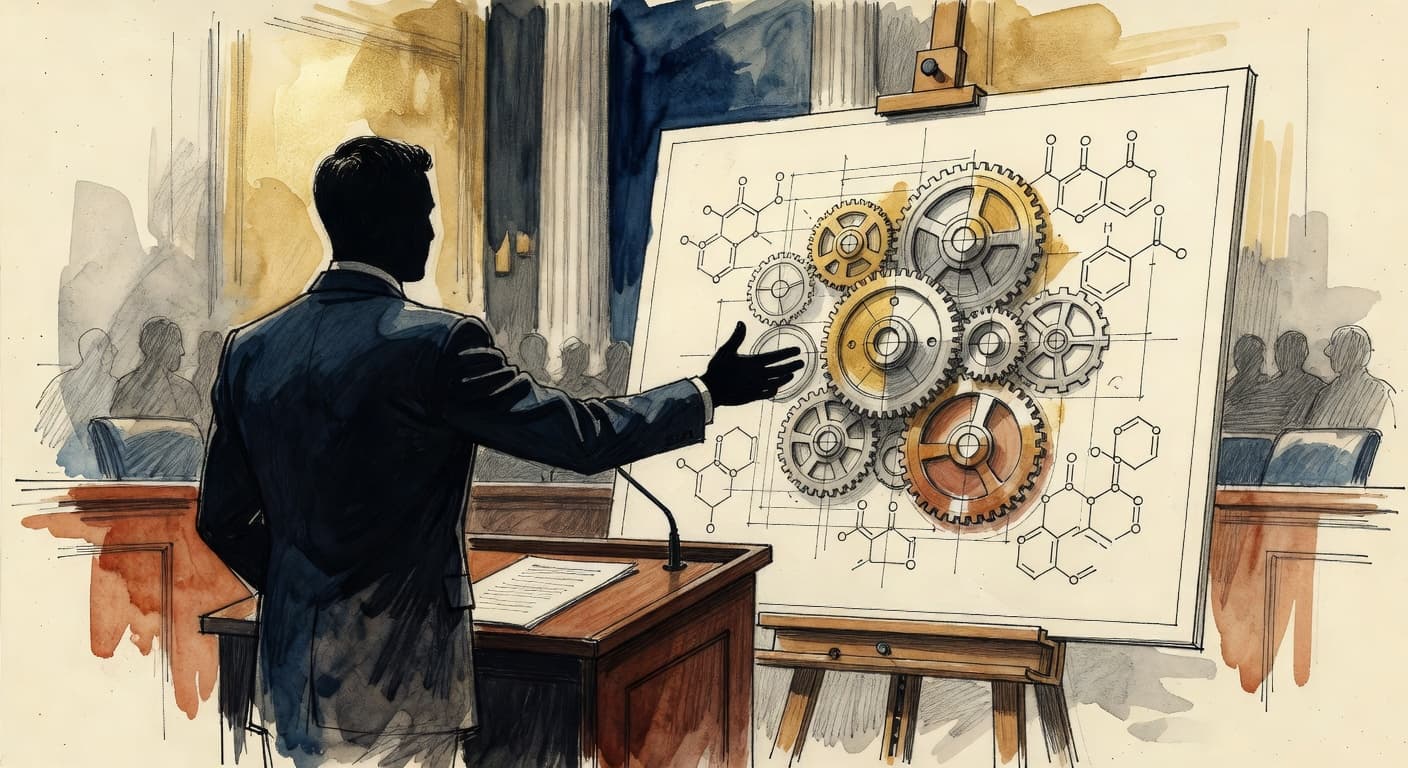
What it's about
The Supreme Court upheld the 'doctrine of equivalents' to determine patent infringement, but remanded the case because the lower court did not apply all of the doctrine's requirements.
The doctrine of equivalents asks whether a process that differs from a patent's stated terms can still count as infringement.
Question presented
Is the "doctrine of equivalents" a legitimate test for determining how similar a new invention must be to an existing patent to be deemed an illegal infringement?
What the Court decided
Holding
Because the Court of Appeals for the Federal Circuit did not consider all of the requirements as described by us today, particularly as related to prosecution history estoppel and the preservation of some meaning for each element in a claim, we reverse its judgment and remand the case for further proceedings consistent with this opinion.
- Result
- Reversed
The Court's reasoning
The Court said the 1952 Patent Act did not replace the doctrine of equivalents. It sent the case back because the Federal Circuit had not considered all its requirements, including how changes made while seeking a patent can limit its reach (prosecution-history estoppel) and the need to preserve some meaning for each patent-claim element.
The vote
- Joined the judgment
- Wrote an opinion
- Majority · 9joined the Court's opinion
- Rehnquist
- Stevens
- O'Connor
- Scalia
- Kennedy
- Souter
- Thomaswrote the opinion
- Ginsburgalso wrote separately
- Breyer
What's next
The Federal Circuit must continue the case under the Supreme Court's instructions, including considering whether changes made while Hilton Davis sought its patent limit its reach and whether each claim element retains some meaning.
Documents
Opinions
Docket activity
New analysis added
AI analysis generated: Case Briefing
New analysis added
AI analysis generated: Impact Analysis
AI analysis generated: Opinion Summary
Show 4 moreShow fewer
AI analysis generated: Decision Record
New analysis added
Case data updated: term, status, opinion_date
Opinion added: Warner Jenkinson
More questions
- Did the Supreme Court decide whether Warner-Jenkinson infringed?
- No; it sent the case back for the Federal Circuit to apply the doctrine's requirements rather than deciding infringement itself.
Sources
News reporting and legal analysis. Best-effort analysis: this explainer relies on trusted secondary sources and may be updated as primary materials become available. Official filings and opinions remain authoritative.