No. 25-7201October Term 2025Before Arguments
Reginald Winans, Petitioner v. Michael K. McKay
from the United States Court of Appeals for the Fifth Circuit.
Case status
- Current stage
- Before Arguments
- Latest event
- Accepted by the Court
- Decision timing
- No window until argument is scheduled.
- What it's about
from the United States Court of Appeals for the Fifth Circuit.
Question presented
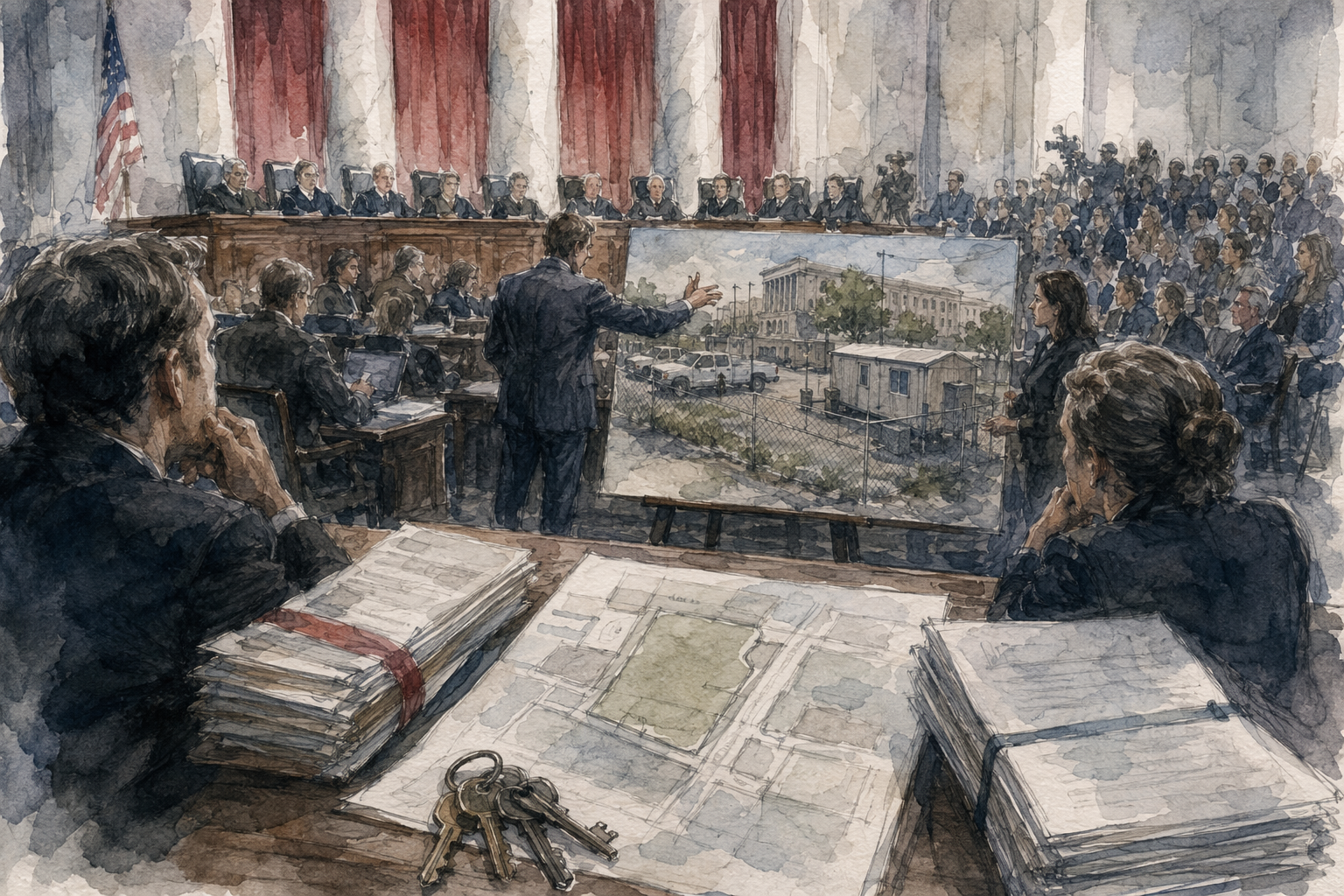
1. Whether a federal court violates Due Process Clause and the protections of the Federal Rule of Civil Procedure 56(d) when it denies a nonmovant’s request for limited, outcome determinative discovery and proceeds to enter summary judgment affecting asserted property rights, where the district court denied Rule 56(d) in a summary order, and the court of appeals affirmed even though it acknowledged that “[w]ithout offering an explanation as to why, the district court denied” the Rule 56(d) motion? 2. Whether, absent an express order shortening the Federal Rule’s response period, a party may refuse to answer written discovery served before a court-ordered discovery deadline by claiming the deadline required “completion” of discovery, so that service near the deadline is “untimely” because responses would fall after the cutoff, and whether summary judgment may be affirmed after the opposing party refused to answer Requests for Admission served a few days before the close of discovery, where the requested admissions sought judicial authorization and service/notice proof for an alleged writ of seizure and sheriff’s sale central to the claimed chain of title?
- Case path
United States Court of Appeals for the Fifth Circuit / Accepted by the Court
- Area
Supreme Court case awaiting argument
Timing
Expected by late June 2026, if argued this term
The Court granted review but has not yet scheduled oral argument. Once argued, the median case reaches a decision in 94 days. Nearly all cases are decided by the end of the term in which they are argued.
Related cases



Grounding
- Grounding
- Primary-source trail available.
- Note
- Plain-English explainer. Official filings and opinions remain authoritative.
- Checked
- Sep 1, 2026
- Method
- Methodology