Race in congressional maps
Cooper v. Harris
In brief
North Carolina lost its appeal, and the ruling against its District 1 and 12 maps remains in place.
- Where it stands
- Decided
Decided 5-3 · May 22, 2017 · Opinion by Justice Kagan
- What it’s about
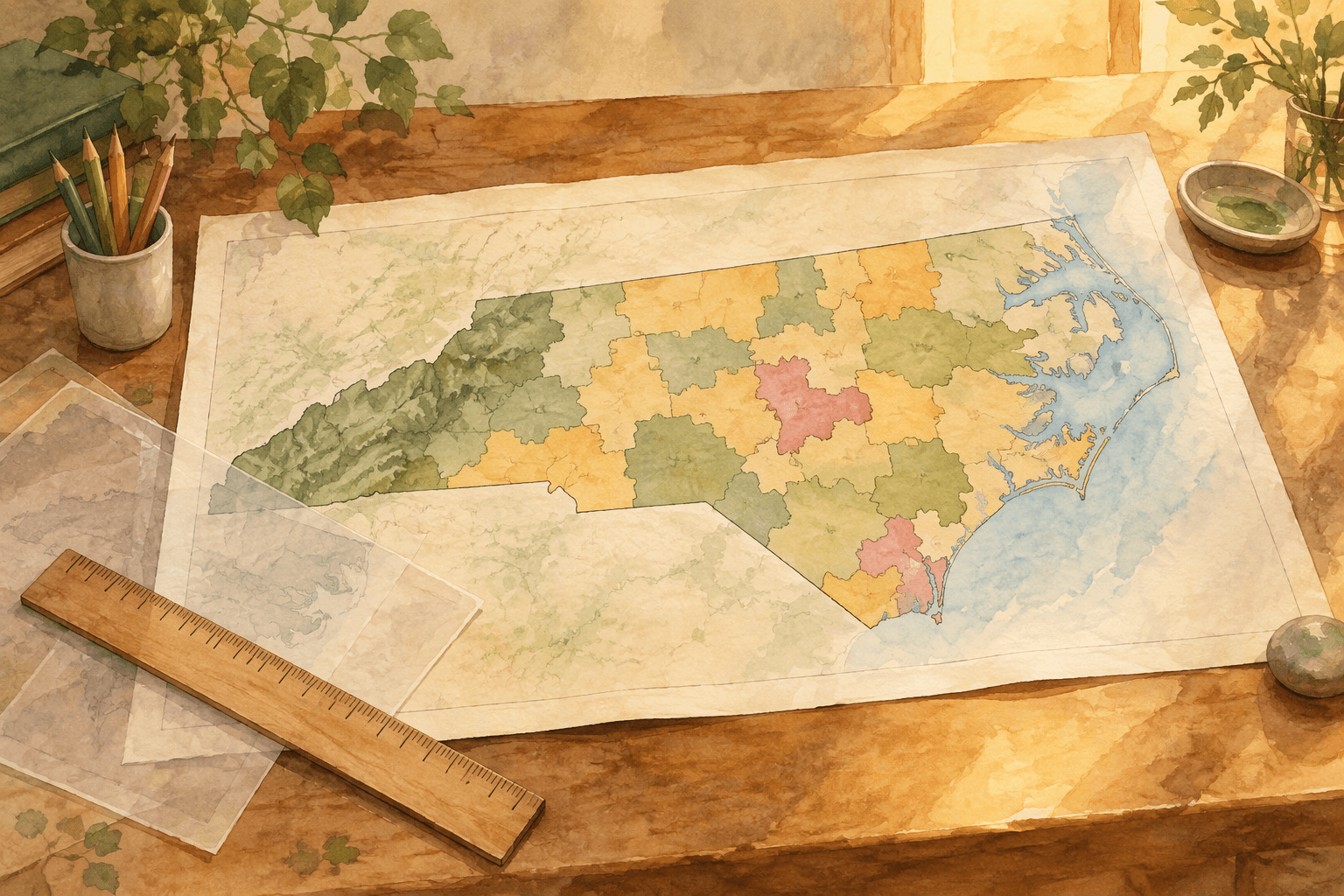
- The Supreme Court agreed that North Carolina drew Congressional Districts 1 and 12 mainly based on race, violating the Constitution’s equal-treatment rule; the Voting Rights Act did not justify this in District 1.
- Who it affects
- The ruling leaves in place the finding that race drove both districts and that voting-rights compliance did not justify using race in District 1.
Summary: written with AI from the case record.
What it's about
It rejected the state’s claim that an earlier case barred the challenge because North Carolina did not prove these plaintiffs were linked to the earlier plaintiffs.
Before this federal case, a North Carolina state court rejected a similar challenge to the same two districts.
Question presented
1. Did the court below err in presuming racial predominance from North Carolina’s reasonable reliance on this Court’s holding in Strickland that a district created to ensure that African Americans have an equal opportunity to elect their preferred candidate of choice complies with the VRA if it contains a numerical majority of African Americans? 2. Did the court below err in applying a standard of review that required the State to demonstrate its construction of CD 1 was "actually necessary" under the VRA instead of simply showing it had "good reasons" to believe the district, as created, was needed to foreclose future vote dilution claims? 3. Did the court below err in relieving plaintiffs of their burden to prove "race rather than politics" predominated with proof of an alternative plan that achieves the legislature's political goals, is comparably consistent with traditional redistricting principles, and brings about greater racial balance than the challenged districts? 4. Regardless of any other error, was the three-judge court's finding of racial gerrymandering violations based on clearly erroneous fact-finding? 5. Did the court below err in failing to dismiss plaintiffs' claims as being barred by claim preclusion or issue preclusion? 6. In the interests of judicial comity and federalism, should the Court order full briefing and oral argument to resolve the split between the court below and the North Carolina Supreme Court which reached the opposite result in a case raising identical claims?
What the Court decided
Holding
1. North Carolina’s victory in a similar state-court lawsuit does not dictate the disposition of this case or alter the applicable standard of review. Before this case was filed, a state trial court rejected a claim by several civil rights groups that Districts 1 and 12 were unlawful racial gerrymanders. The North Carolina Supreme Court affirmed that decision under the state-court equivalent of clear error review. The State claims that the plaintiffs are members of the same organizations that brought the earlier case, and thus precluded from raising the same questions anew. But the State never satisfied the District Court that the alleged affiliation really existed. 2. The District Court did not err in concluding that race furnished the predominant rationale for District 1’s redesign and that the State’s interest in complying with the VRA could not justify that consideration of race. 3. The District Court also did not clearly err by finding that race predominated in the redrawing of District 12. 159 F. Supp. 3d 600, affirmed.
- Result
- Affirmed
The Court's reasoning
The Court agreed that race was the main reason for District 1’s redesign and that voting-rights compliance did not justify using race there. It also found no basis to overturn the lower court’s finding that race drove District 12.
The vote
From the opinions
“But that is what the Court does today in its decision regarding North Carolina’s 12th Congressional District: The Court junks a rule adopted in a prior, remarkably similar challenge to this very same congressional district.”
What's next
The federal court’s ruling remains in place; the Supreme Court did not send the case back for more proceedings.
Each side's argument
- North Carolina
- The state said it drew District 1 to comply with the Voting Rights Act, political goals drove District 12, and an earlier lawsuit barred the challenge.
- The plaintiffs
- They argued that race, rather than politics, was the main reason for both districts and made them unconstitutional.
Documents
Docket activity
New analysis added
AI analysis generated: Case Briefing
AI analysis generated: Decision Record
Case data updated: summary, question_presented, generation_metadata
Case data updated: question_presented, extraction_metadata
Show 1 moreShow fewer
Brief added: Questions Presented
More questions
- Why didn’t the earlier lawsuit block the challenge?
- North Carolina did not persuade the federal court that the current plaintiffs were affiliated with the organizations that brought the earlier suit.
Sources
Primary materials plus reporting. Best-effort analysis: this explainer relies on a mix of primary materials and trusted secondary sources. Official filings and opinions remain authoritative.