Sandoval v. Texas
In brief
The Supreme Court denied review (refused to hear Sandoval's case) and did not decide whether excluding him and his lawyer violated due process.
- Where it stands
- Decided
Decided · May 13, 2024 · Opinion by Justice Jackson
- What it’s about
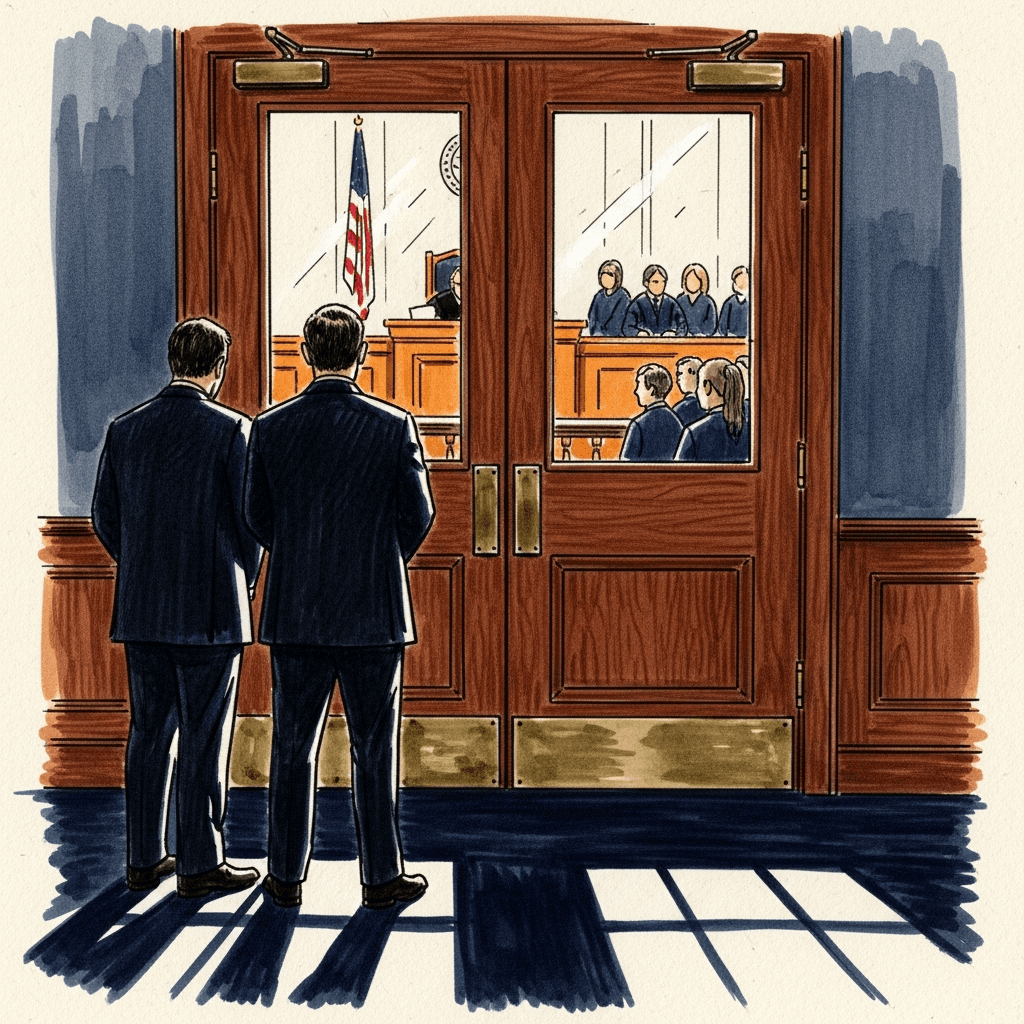
- This case involves a criminal defendant who challenged his exclusion, along with his lawyer, from a preliminary proceeding where potential jurors requested to be excused from service.
- Who it affects
- Sandoval received no Supreme Court decision on whether excluding him and his lawyer violated his due-process rights. The denial does not endorse either side's arguments or resolve that question in this case.
Summary: written with AI from the case record.
What it's about
The defendant argued that barring him from this part of the jury selection process violated his constitutional right to due process.
The case concerns a criminal defendant's right to be present during a jury-selection step and the Supreme Court's choice whether to review a state-court ruling.
Question presented
Whether the state court erred when it held, without analysis of the underlying facts, that the trial court did not violate Gustavo Sandoval"s due process rights when it excluded him and his counsel from proceedings in which members of the jury panel who were called for his trial " and who knew the case that they were summoned for " sought discretionary excusals from the court?
What the Court decided
Holding
Petition DENIED. Justice Jackson, with whom Justice Sotomayor joins, dissenting from the denial of certiorari. (Detached Opinion )
The vote
- Majority author
- Ketanji Brown Jackson
What's next
The Supreme Court's action in this case is finished. The record identifies no further proceeding in this Court.
Documents
Docket activity
New analysis added
AI analysis generated: Case Briefing
AI analysis generated: Decision Record
Opinion added: Sandoval
Opinion added: Opinion
Show 2 moreShow fewer
Brief added: Petition
Court Order added: Lower Court Orders/Opinions
More questions
- What did the Supreme Court do in Sandoval v. Texas?
- It denied review (refused to hear the case), so it did not decide Sandoval's due-process claim.
- What did Gustavo Sandoval challenge?
- He argued that excluding him and his lawyer while potential jurors asked to be excused from jury service violated his right to fair procedures.
- Did the Supreme Court decide whether the exclusion was constitutional?
- No. The Court declined to hear the case, so it did not resolve that constitutional question.
- Who disagreed with denying review in Sandoval v. Texas?
- Justice Jackson disagreed with denying review, and Justice Sotomayor joined that disagreement.
- What happens next for Sandoval v. Texas?
- This Supreme Court case action is finished, and the record identifies no further proceeding in this Court.
Sources
Primary materials plus reporting. Best-effort analysis: this explainer relies on a mix of primary materials and trusted secondary sources. Official filings and opinions remain authoritative.