Coinbase v. Suski
In brief
When contracts conflict over who decides whether a dispute goes to arbitration, a court first decides which contract governs.
- Where it stands
- Decided
Decided 9-0 · May 23, 2024 · Opinion by Justice Jackson
- What it’s about
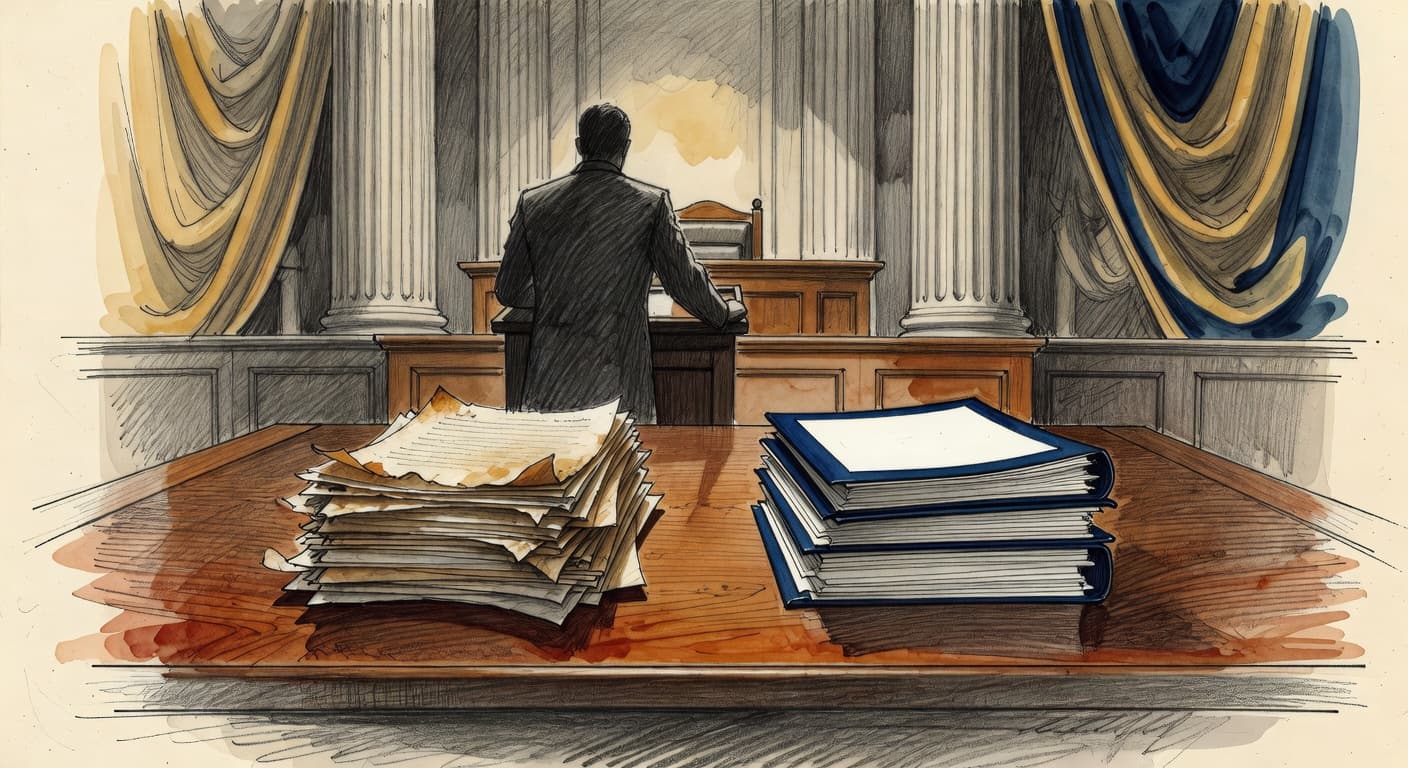
- The Supreme Court unanimously ruled that when parties execute two conflicting contracts—one mandating arbitration and a later one sending disputes to court—a judge, rather than an arbitrator, must decide which agreement governs.
- Who it affects
- Businesses and consumers with multiple agreements may get a court decision on where their dispute belongs before arbitration begins. For example, a later contest agreement can affect whether an earlier arbitration clause controls.
Summary: written with AI from the case record.
What it's about
This decision clarifies that courts retain the authority to resolve conflicts between superseding contracts regarding the forum for dispute resolution.
The decision draws a line between disputes parties delegated to an arbitrator and disputes over whether a later contract changed that delegation.
Question presented
When parties enter into an arbitration agreement with a delegation clause, does an arbitrator or a court decide whether that arbitration agreement is narrowed by a later contract that is silent as to arbitration and delegation?
What the Court decided
Holding
Where parties have agreed to two contracts—one sending arbitrability disputes to arbitration, and the other either explicitly or implicitly sending arbitrability disputes to the courts—a court must decide which contract governs. 55 F. 4th 1227, affirmed.
- Result
- Affirmed
The vote
From the opinions
“a court must decide which contract governs.”
What's next
Lower courts must apply this rule when parties rely on conflicting contracts to dispute the proper forum. Parties with multiple agreements may need courts to resolve which agreement controls before arbitration can proceed.
Documents
Docket activity
New analysis added
AI analysis generated: Impact Analysis
AI analysis generated: Opinion Summary
New analysis added
AI analysis generated: Case Briefing
Show 6 moreShow fewer
AI analysis generated: Decision Record
Opinion added: Coinbase
Opinion added: opinion
Brief added: Petition
Court Order added: Lower Court Orders/Opinions
Brief added: Questions Presented
More questions
- What did the Supreme Court rule in Coinbase v. Suski?
- The Court said a judge must decide which contract governs when one contract delegates arbitrability disputes to arbitration and another sends them to court.
- Who won Coinbase v. Suski?
- The Ninth Circuit's decision was affirmed. The Court ruled unanimously that courts decide which conflicting contract controls.
- What does Coinbase v. Suski mean for parties with multiple contracts?
- They may need to ask a court to decide which agreement controls before an arbitrator decides whether the dispute belongs in arbitration.
- Is the rule on conflicting arbitration contracts still the law after Coinbase v. Suski?
- Yes. Courts must decide which agreement governs when contracts conflict over whether arbitrability disputes go to an arbitrator or a court.
Sources
Primary materials plus reporting. Best-effort analysis: this explainer relies on a mix of primary materials and trusted secondary sources. Official filings and opinions remain authoritative.