DeVillier v. Texas
In brief
Texas property owners may pursue compensation claims for alleged takings through an existing cause of action under Texas law.
- Where it stands
- Decided
Decided 9-0 · April 16, 2024 · Opinion by Justice Thomas
- What it’s about
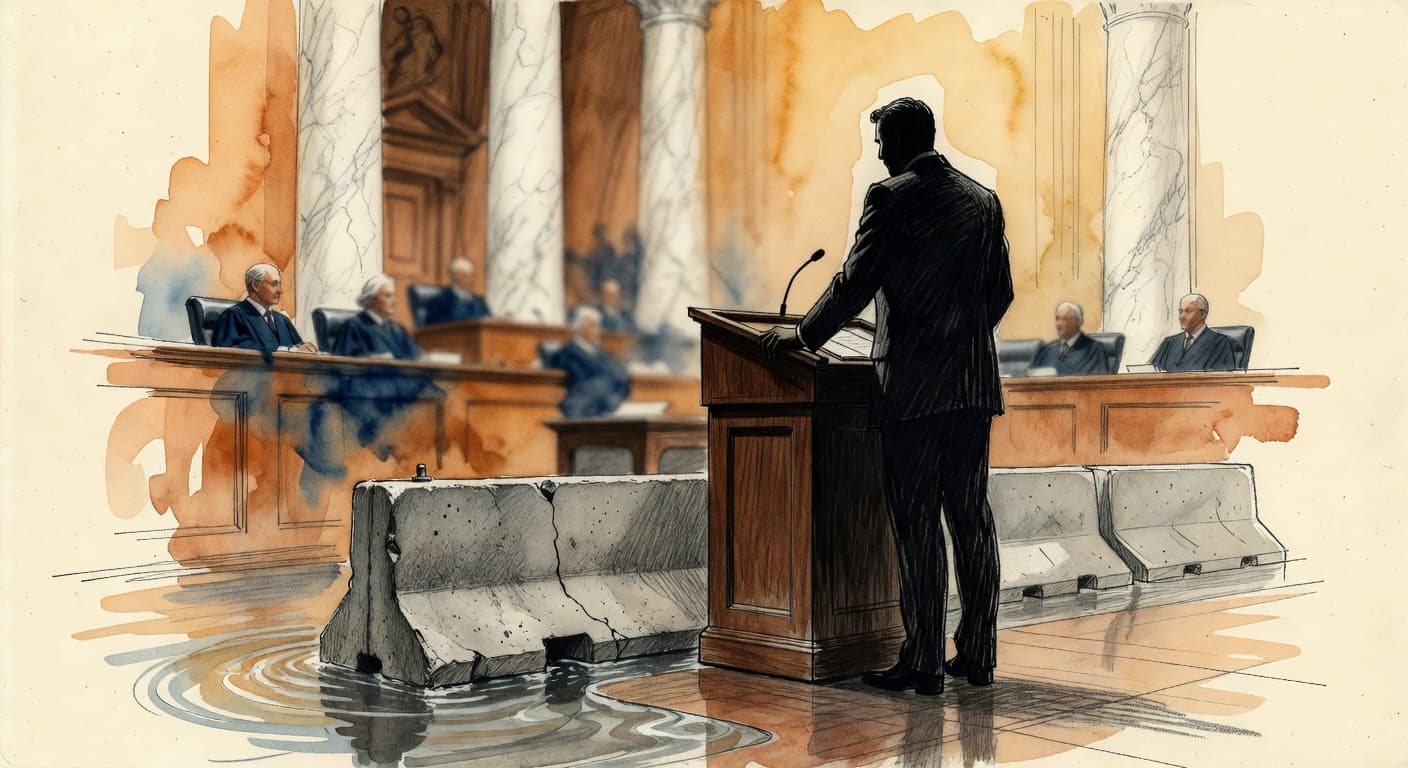
- This case involves Texas property owners who sued the state for compensation after a highway barrier caused flooding on their land, arguing the damage constituted an uncompensated taking.
- Who it affects
- Property owners alleging that state projects damaged or took their property can seek compensation through available Texas-law claims. For example, a landowner whose property is flooded by a public highway project may pursue a claim in Texas court.
Summary: written with AI from the case record.
What it's about
The Supreme Court vacated the lower court's decision, ruling that the property owners could pursue their claims through an existing cause of action under Texas state law.
The decision reinforces that the Takings Clause requires just compensation while state-law procedures can provide the path for owners to seek it.
Question presented
May a party sue a state directly under the Takings Clause of the Fifth Amendment?
What the Court decided
Holding
DeVillier and the other property owners should be permitted to pursue their claims under the Takings Clause through the cause of action available under Texas law. The Takings Clause of the Fifth Amendment states: “nor shall private property be taken for public use, without just compensation.” The Court has explained that “a property owner acquires an irrevocable right to just compensation immediately upon a taking” “[b]ecause of ‘the self-executing character’ of the Takings Clause ‘with respect to compensation.’ ” Knick v. Township of Scott , 588 U. S. 180, 192 (quoting First English Evangelical Lutheran Church of Glendale v. County of Los Angeles , 482 U. S. 304, 315). 53 F. 4th 904, vacated and remanded.
- Result
- Vacated
The vote
From the opinions
““A property owner acquires an irrevocable right to just compensation immediately upon a taking.””
What's next
The case returns for further proceedings consistent with the Court's decision. The property owners can pursue their compensation claims under Texas law, and Texas courts or agencies must apply that available path.
Documents
Docket activity
New analysis added
AI analysis generated: Impact Analysis
AI analysis generated: Opinion Summary
AI analysis generated: Decision Record
New analysis added
Show 5 moreShow fewer
AI analysis generated: Case Briefing
Opinion added: DeVillier
Opinion added: opinion
Brief added: Petition
Brief added: Questions Presented
More questions
- What did the Supreme Court rule in DeVillier v. Texas?
- The Court said the owners may pursue Takings Clause compensation claims through a cause of action available under Texas law.
- Who is affected by DeVillier v. Texas?
- Texas property owners alleging that government projects flooded or otherwise took their property may use available Texas-law claims to seek compensation.
- What happens next in DeVillier v. Texas?
- The case returns for further proceedings. The owners may continue seeking compensation through the Texas-law cause of action.
Sources
Primary materials plus reporting. Best-effort analysis: this explainer relies on a mix of primary materials and trusted secondary sources. Official filings and opinions remain authoritative.