Smith v. Arizona
In brief
A prosecutor cannot avoid cross-examination by having one expert repeat an absent forensic analyst's testimonial findings as support for an opinion.
- Where it stands
- Decided
Decided 9-0 · June 21, 2024 · Opinion by Justice Kagan
- What it’s about
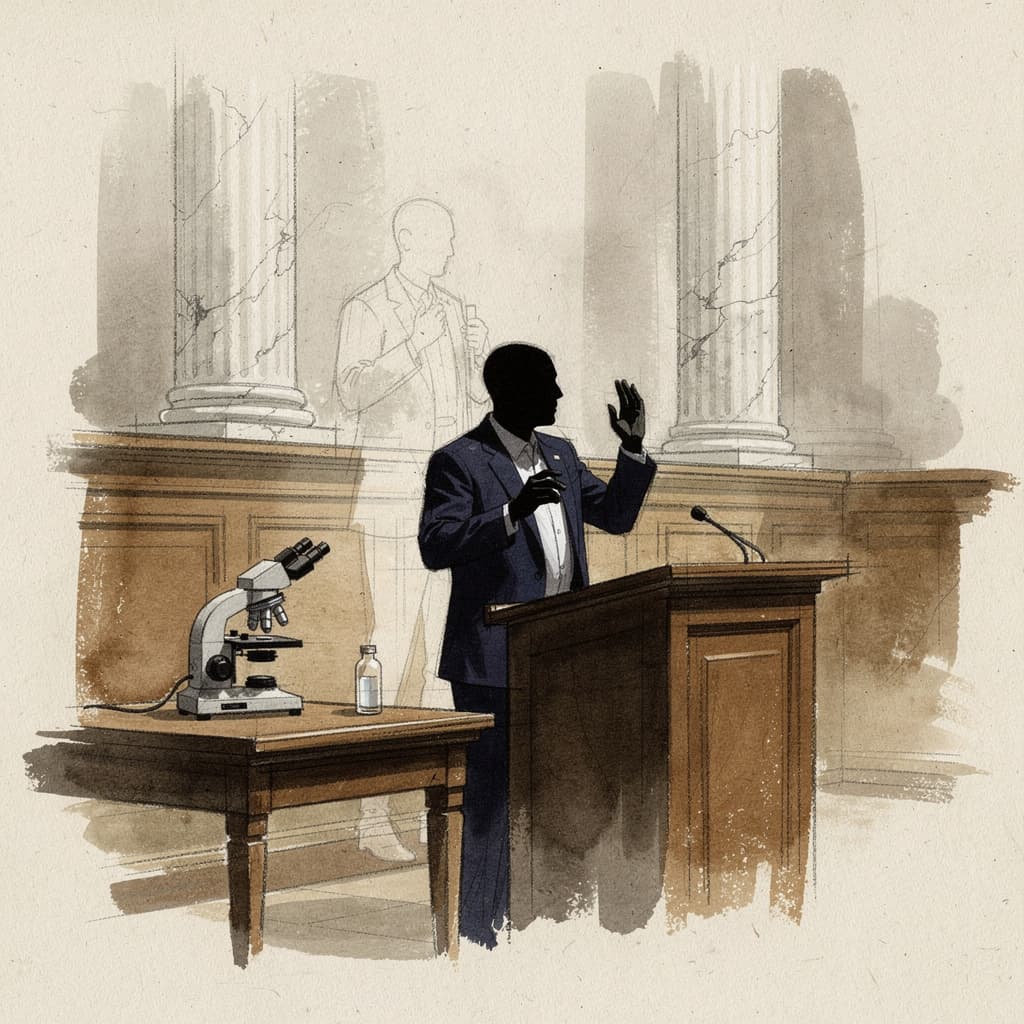
- The Supreme Court ruled that a criminal defendant's Sixth Amendment Confrontation Clause rights were violated when a substitute expert witness testified about the findings of a non-testifying forensic analyst.
- Who it affects
- Prosecutors cannot use a substitute expert to relay an absent analyst's statements when those statements support the expert's opinion only if they are true.
Summary: written with AI from the case record.
What it's about
The Court held that when an expert conveys an absent analyst's statements to support their own opinion, those statements are effectively being introduced for their truth, requiring the defendant to have the opportunity to cross-examine the original analyst.
The decision reinforces that defendants generally must have a chance to question the analyst whose testimonial lab statements are used against them.
Question presented
Does the Confrontation Clause of the Sixth Amendment permit the prosecution in a criminal trial to present testimony by a substitute expert conveying the testimonial statements of a nontestifying forensic analyst?
What the Court decided
Holding
When an expert conveys an absent analyst’s statements in support of the expert’s opinion, and the statements provide that support only if true, then the statements come into evidence for their truth. Pp. 11– 22. (a) The parties agree that Smith’s confrontation claim can succeed only if Rast’s statements came into evidence for their truth. Smith argues that the condition is satisfied here because her statements were conveyed, via Longoni’s testimony, to establish that what she said happened in the lab did in fact happen. The State contends that Rast’s statements came into evidence not for their truth, but to “show the basis” of Longoni’s independent opinion. Vacated and remanded.
- Result
- Vacated
The vote
- Joined the judgment
- Concurred in a separate opinion
- Wrote an opinion
From the opinions
“When an expert conveys an absent analyst's statements in support of the expert's opinion, and the statements provide that support only if true, then the statements come into evidence for their truth.”
What's next
Arizona courts must apply the Supreme Court's decision as Smith's case returns for further proceedings. Prosecutors and forensic agencies will need to ensure the relevant analyst can be cross-examined when testimonial lab statements are used for their truth.
Why it matters
This affects defendants in cases involving lab testing, including drug-analysis cases, and the forensic agencies that prepare evidence.
Docket activity
New analysis added
AI analysis generated: Impact Analysis
AI analysis generated: Opinion Summary
AI analysis generated: Decision Record
New analysis added
Show 5 moreShow fewer
AI analysis generated: Case Briefing
Opinion added: Opinion
Opinion added: opinion
Brief added: Petition
Brief added: Questions Presented
More questions
- What did the Supreme Court rule in Smith v. Arizona?
- The Court ruled that using a substitute expert to convey an absent analyst's testimonial findings violated Smith's right to confront witnesses.
- Who is affected by the Smith v. Arizona decision?
- Criminal defendants, prosecutors, forensic analysts, and crime laboratories are affected when lab findings are introduced through an expert who did not perform the analysis.
- What happens next in Smith v. Arizona?
- The case returns to Arizona courts for further proceedings under the Supreme Court's rule. Courts must apply the decision to the testimony at issue.
Sources
Primary materials plus reporting. Best-effort analysis: this explainer relies on a mix of primary materials and trusted secondary sources. Official filings and opinions remain authoritative.