Cantero v. Bank of America, N. A.
In brief
The Court did not decide whether New York's interest requirement applies to national banks, but required the lower court to use the correct test.
- Where it stands
- Decided
Decided 9-0 · May 30, 2024 · Opinion by Justice Kavanaugh
- What it’s about
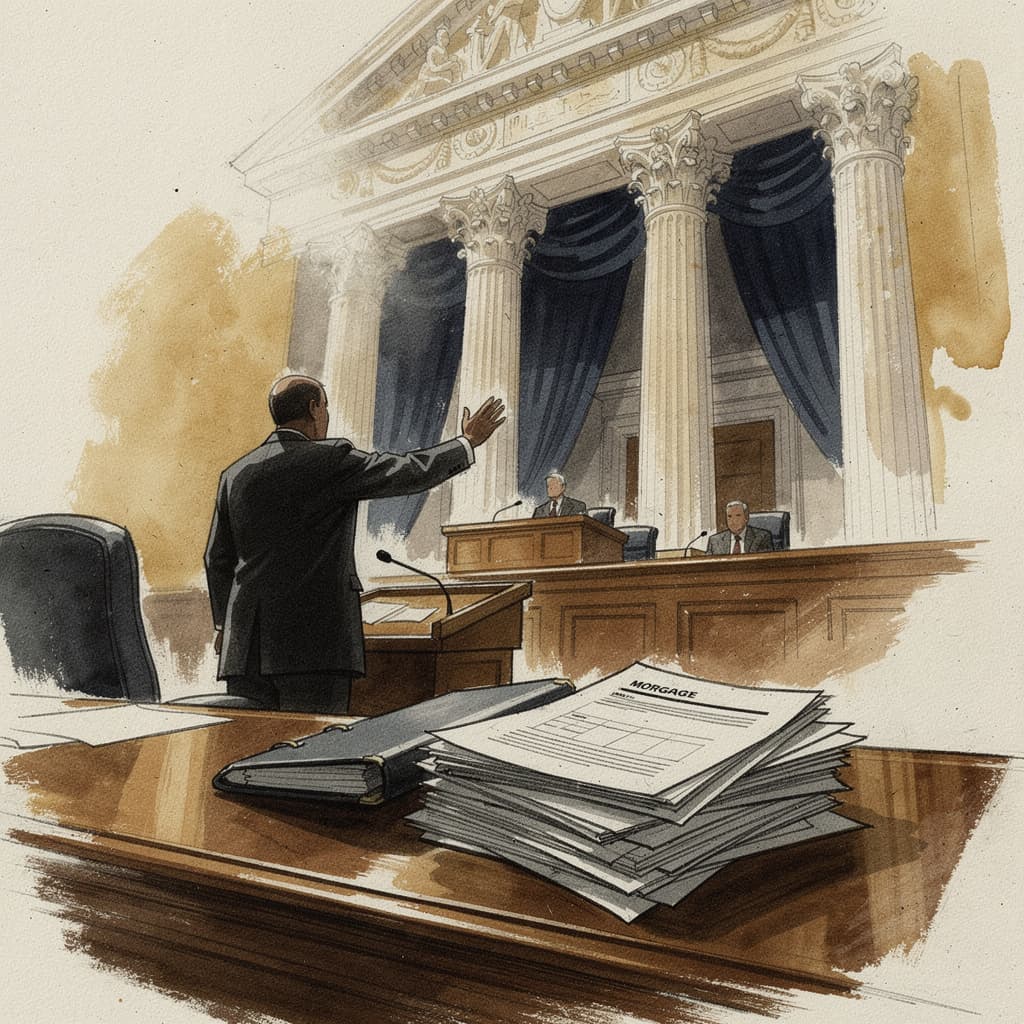
- This case addressed whether the National Bank Act preempts a New York state law requiring banks to pay interest on funds held in mortgage escrow accounts.
- Who it affects
- National banks and mortgage customers may be affected by whether banks must pay interest on money set aside for property taxes and insurance. Courts must examine whether a state rule prevents or significantly interferes with a national bank's federal powers.
Summary: written with AI from the case record.
What it's about
The Supreme Court unanimously held that courts must determine if the state law prevents or significantly interferes with a national bank's powers, rather than applying a categorical preemption rule.
The decision clarifies that federal law does not automatically override state banking rules; courts must apply the prevents-or-significantly-interferes test.
Question presented
When are state laws that regulate national banks preempted under federal law?
What the Court decided
Holding
The Second Circuit failed to analyze whether New York’s intereston-escrow law is preempted as applied to national banks in a manner consistent with Dodd-Frank and Barnett Bank . 49 F. 4th 121, vacated and remanded.
- Result
- Vacated
The vote
From the opinions
“The Second Circuit failed to analyze whether New York’s interest-on-escrow law is preempted as applied to national banks in a manner consistent with Dodd-Frank and Barnett Bank.”
What's next
The case returns to the Second Circuit, which must decide whether the New York law prevents or significantly interferes with national banks' powers. Banks, customers, and regulators will look to that analysis in similar disputes over state banking rules.
Documents
Docket activity
New analysis added
AI analysis generated: Impact Analysis
AI analysis generated: Opinion Summary
AI analysis generated: Decision Record
New analysis added
Show 5 moreShow fewer
AI analysis generated: Case Briefing
Opinion added: Cantero
Opinion added: opinion
Brief added: Petition
Brief added: Questions Presented
More questions
- What did the Supreme Court rule in Cantero v. Bank of America?
- The Court vacated the Second Circuit's decision and required it to apply Dodd-Frank and Barnett Bank's interference test.
- Who could be affected by the Cantero decision?
- National banks and mortgage customers could be affected. The issue is whether banks must pay interest on funds in mortgage escrow accounts.
- What happens next in Cantero v. Bank of America?
- The Second Circuit will reconsider the case. It must determine whether New York's law prevents or significantly interferes with national-bank powers.
Sources
Primary materials plus reporting. Best-effort analysis: this explainer relies on a mix of primary materials and trusted secondary sources. Official filings and opinions remain authoritative.