Sheetz v. El Dorado County
In brief
A local law authorizing a building-permit fee does not by itself exempt that fee from Fifth Amendment scrutiny.
- Where it stands
- Decided
Decided 9-0 · April 12, 2024 · Opinion by Justice Barrett
- What it’s about
- The Supreme Court unanimously ruled that the Takings Clause of the Fifth Amendment applies equally to land-use permit conditions imposed by legislatures as it does to those imposed by administrative agencies.
- Who it affects
- Local governments cannot avoid constitutional review of permit fees simply by putting them in legislation. For example, a homebuilder facing a fee as a permit condition can argue the fee lacks a required connection to the project or is disproportionate.
Summary: written with AI from the case record.
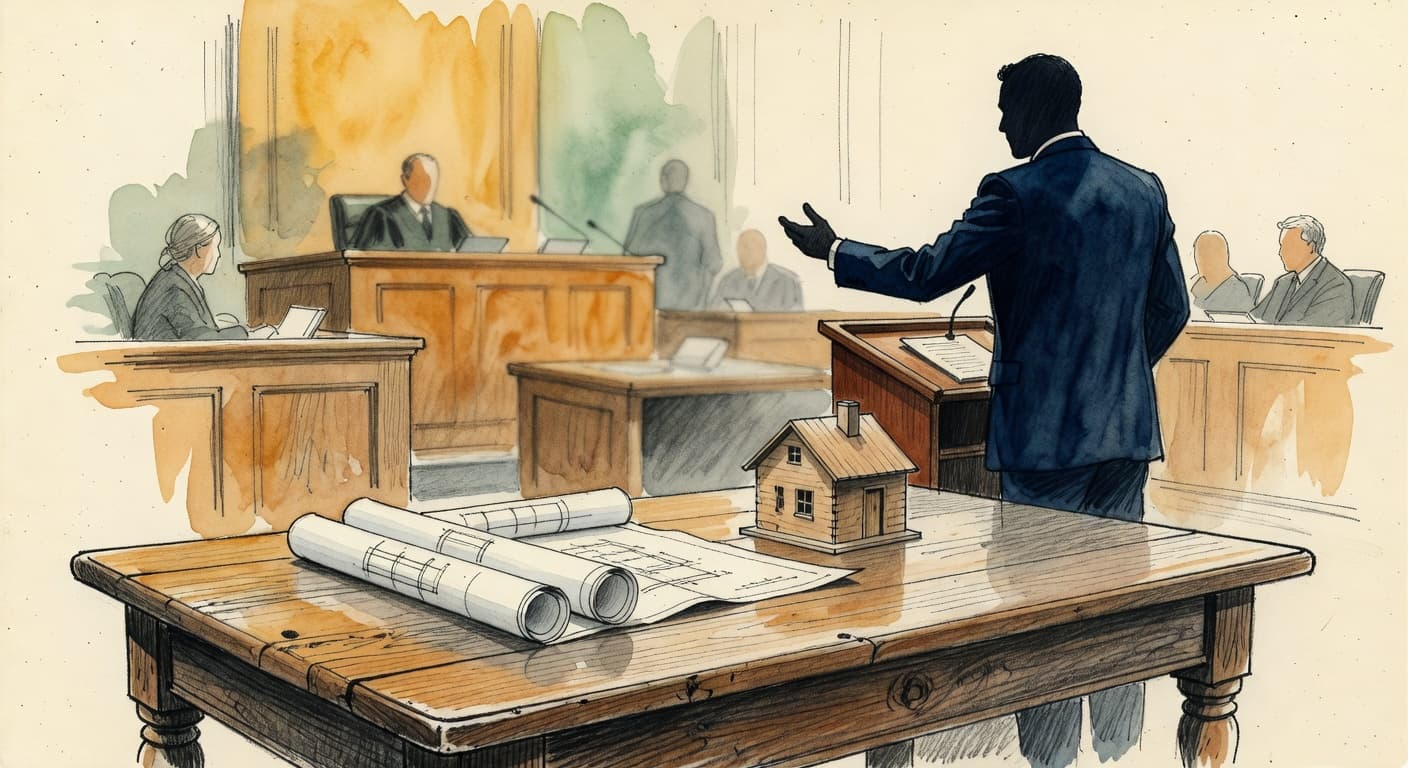
What it's about
The decision clarifies that legislative exactions, such as monetary fees for building permits, are subject to the same constitutional scrutiny regarding nexus and proportionality as administrative decisions.
The decision applies the same Fifth Amendment limits to legislative and administrative land-use permit conditions.
Question presented
Is a monetary exaction imposed by a local government as a condition for a building permit exempt from the “essential nexus” and “rough proportionality” requirements established in Nollan v. Cal. Coastal Comm’n and Dolan v. City of Tigard , simply because the exaction is authorized by local legislation?
What the Court decided
Holding
The Takings Clause does not distinguish between legislative and administrative land-use permit conditions. 84 Cal. App. 5th 394, 300 Cal. Rptr. 3d 308, vacated and remanded.
- Result
- Vacated
The vote
- Joined the judgment
- Concurred in a separate opinion
- Wrote an opinion
From the opinions
“The Takings Clause does not distinguish between legislative and administrative land-use permit conditions.”
What's next
The case returns to the California courts for further proceedings under the Supreme Court's rule. Lower courts and local agencies must evaluate legislative permit conditions under the same nexus and proportionality standards used for administrative conditions.
Documents
Docket activity
New analysis added
AI analysis generated: Impact Analysis
AI analysis generated: Opinion Summary
AI analysis generated: Decision Record
New analysis added
Show 5 moreShow fewer
AI analysis generated: Case Briefing
Opinion added: Sheetz
Opinion added: opinion
Brief added: Petition
Brief added: Questions Presented
More questions
- What did the Supreme Court rule in Sheetz v. El Dorado County?
- The Court ruled that legislative land-use permit conditions are subject to the Fifth Amendment's Takings Clause, just like administrative conditions.
- Who is affected by the Sheetz decision?
- Property owners, builders, local governments, and permitting agencies are affected. Permit fees authorized by local laws may face constitutional challenges.
- What happens next in Sheetz v. El Dorado County?
- California courts will reconsider the case under the Supreme Court's rule. Local agencies must apply the required connection and proportionality tests to legislative permit conditions.
Sources
Primary materials plus reporting. Best-effort analysis: this explainer relies on a mix of primary materials and trusted secondary sources. Official filings and opinions remain authoritative.