Right to question witnesses
Hemphill v. New York
In brief
The Supreme Court overturned the state court’s ruling because admitting Morris’s plea transcript over Hemphill’s objection violated his right to confront witnesses, then sent the case back to the lower court (remanded).
- Where it stands
- Decided
Decided 8-1 · January 20, 2022 · Opinion by Justice Sotomayor
- What it’s about
- The Supreme Court ruled that a criminal defendant does not forfeit their Sixth Amendment right to confront witnesses simply by making arguments that 'open the door' to otherwise inadmissible evidence.
- Who it affects
- Because the transcript admission violated Hemphill’s Sixth Amendment right, the state court’s ruling was overturned and the case must be addressed again. The decision leaves Hemphill’s final relief unresolved.
Summary: written with AI from the case record.
What it's about
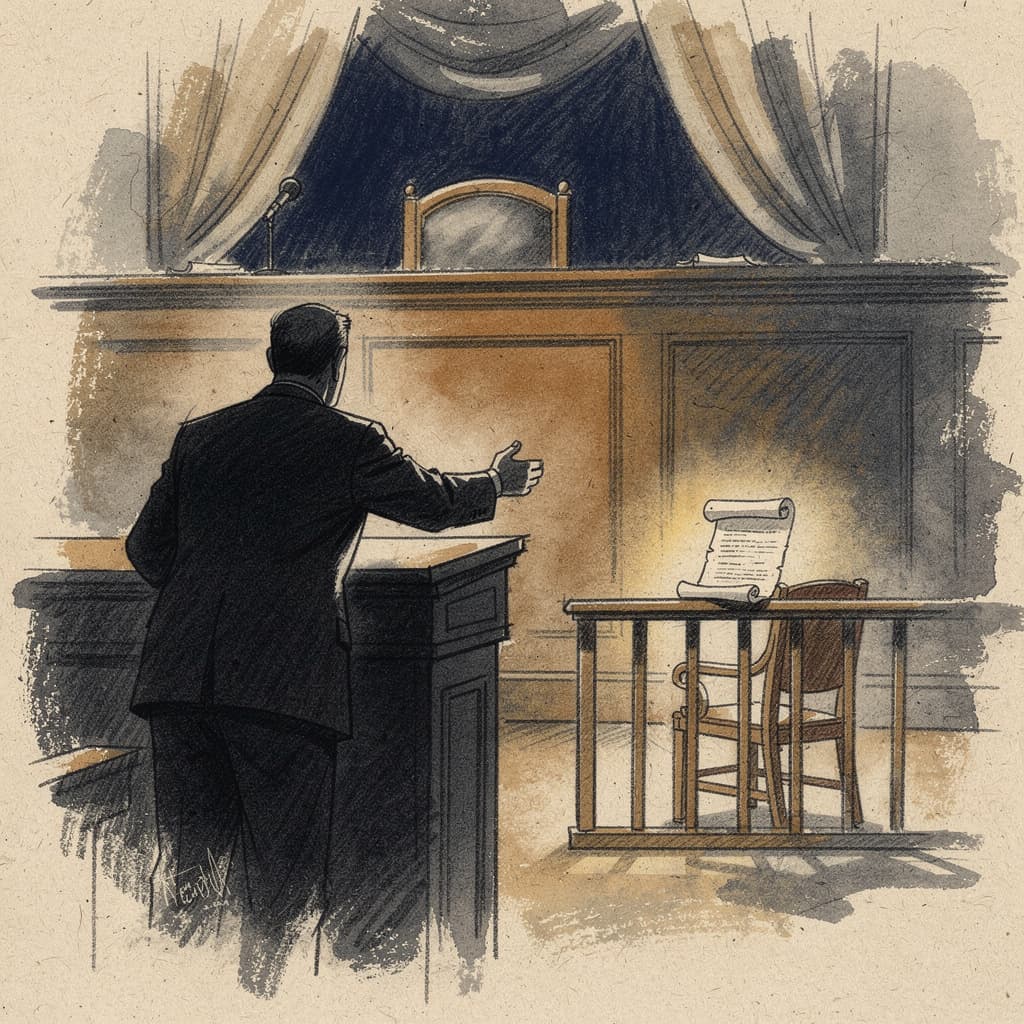
The Court held that admitting an unavailable witness's plea transcript over the defendant's objection violated the Confrontation Clause.
The case tested whether New York’s “opening the door” rule for correcting misleading impressions could override a criminal defendant’s Sixth Amendment right to confront witnesses.
Question presented
Whether the Sixth Amendment’s Confrontation Clause, which provides that “[i]n all criminal prosecutions, the accused shall enjoy the right . . . to be confronted with the witnesses against him,” admits of a court-created “opening the door” exception?
What the Court decided
Holding
The trial court’s admission of the transcript of Morris’ plea allocution over Hemphill’s objection violated Hemphill’s Sixth Amendment right to confront the witnesses against him. 35 N. Y. 3d 1035, 150 N. E. 3d 356, reversed and remanded.
- Result
- Reversed
The vote
From the opinions
“Because Darrell Hemphill did not raise his Sixth Amendment claim in the New York Court of Appeals, we lack jurisdiction to review that court’s decision.”
What's next
The Supreme Court sent the case back to the lower court (remanded) for further proceedings. The decision leaves Hemphill’s final relief unresolved.
Documents
Docket activity
New analysis added
AI analysis generated: Case Briefing
New analysis added
AI analysis generated: Impact Analysis
AI analysis generated: Opinion Summary
Show 6 moreShow fewer
AI analysis generated: Decision Record
New analysis added
Case data updated: status, opinion_date
Opinion added: opinion
Brief added: Petition
Brief added: Questions Presented
More questions
- What did the Supreme Court decide in Hemphill v. New York?
- It decided that admitting Morris’s plea transcript over Hemphill’s objection violated his Sixth Amendment right to confront witnesses.
- Did “opening the door” allow the trial court to use Morris’s transcript?
- Not in this case. The Court said the admission violated Hemphill’s Sixth Amendment right to confront witnesses and overturned the state ruling.
- Who wrote the opinions in Hemphill v. New York?
- Justice Sotomayor wrote the Court’s opinion. Justice Alito wrote a concurrence (agreement with the result for different reasons), and Justice Thomas wrote a dissent (a written disagreement).
- What happens next for Hemphill?
- The Supreme Court sent the case back to the lower court (remanded) for further proceedings. The decision leaves his final relief unresolved.
Sources
Primary materials plus reporting. Best-effort analysis: this explainer relies on a mix of primary materials and trusted secondary sources. Official filings and opinions remain authoritative.