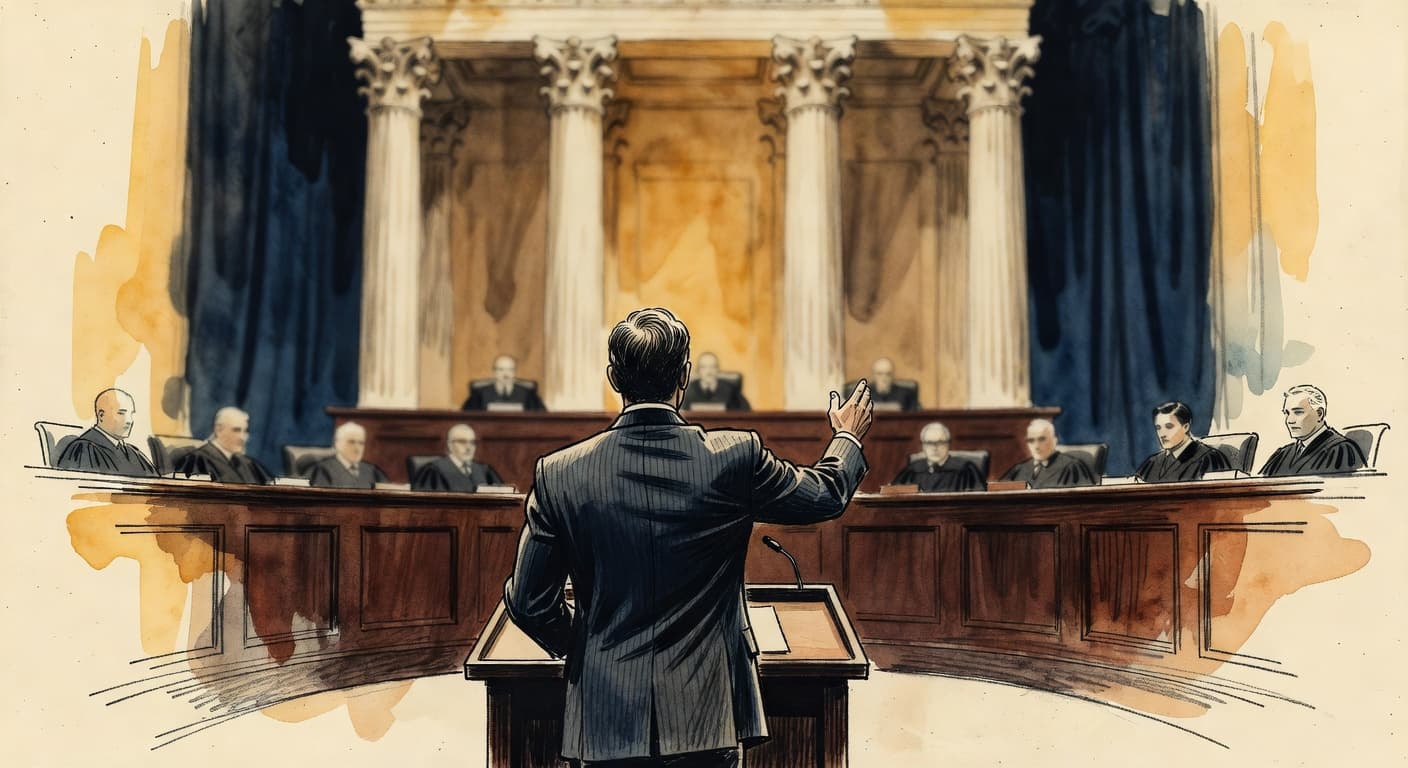
Martinez v. United States
This case considers whether the First Amendment protects political speech when the speaker lacks a specific intent to threaten or intimidate. It examines the legal boundaries of protected speech under federal law.
- Status
- Before Arguments
- Appeal from
- United States Court of Appeals for the Sixth Circuit
Briefing
What Happened
The Supreme Court is reviewing a case about whether the government can punish political speech if the speaker did not mean to threaten or scare anyone. The case comes from a lower court ruling that looked at the legal limits of protected speech under federal law.
Why It Matters
This case could change how the government prosecutes people for things they say or write online and in person. It affects anyone who uses strong or controversial language to talk about politics, as it determines if their intent matters in a criminal case.
The Big Picture
The First Amendment usually protects free speech, but there are exceptions for 'true threats.' This case asks the Court to decide if speech is only a threat if the person saying it actually intended to be threatening.
What the Justices Said
No substantive justice or advocate reactions are available yet.
The Bottom Line
The Court must decide if the First Amendment requires proof that a speaker intended to intimidate others before their speech can be punished.
What's Next
The next major milestone is for the Court to schedule and hold oral arguments. After that, the justices will meet in private to discuss the case and eventually release a written decision.
What is the core dispute in this case?
The case asks if the First Amendment protects political speech when the speaker does not have a specific intent to threaten or intimidate others.
What are the real-world consequences of this ruling?
The ruling will clarify when political protesters or online speakers can be charged with crimes for using aggressive language. It impacts the safety of free expression.
What legal rule is the Court examining?
The Court is examining the boundaries of the First Amendment and federal laws regarding threats. They are deciding if a speaker's subjective intent is a required element for a conviction.
What is the next procedural step for this case?
The case is currently pending, and the next step is for the Court to schedule oral arguments. This allows lawyers from both sides to present their views to the justices.
How does this fit into broader legal trends?
This case is part of an ongoing effort by the Court to define the limits of free speech in the modern era. It addresses how much protection the Constitution gives to controversial speakers.
Timeline
Sources
Docket plus reporting.
Refreshed Mar 11, 2026.
Context reporting
Documents
Coverage
Related cases