McKinney v. Arkansas
In brief
The Supreme Court declined to hear McKinney’s petition and did not decide whether the courtroom could lawfully be closed during jury selection.
- Where it stands
- Decided
Decided · May 18, 2020
- What it’s about
- The Supreme Court considered a petition for a writ of certiorari filed by McKinney against the state of Arkansas. The petition was filed in forma pauperis following a decision by the Court of Appeals of Arkansas.
- Who it affects
- The denial ended McKinney’s request for Supreme Court review, but it did not decide whether the courtroom closure violated the Constitution.
Summary: written with AI from the case record.
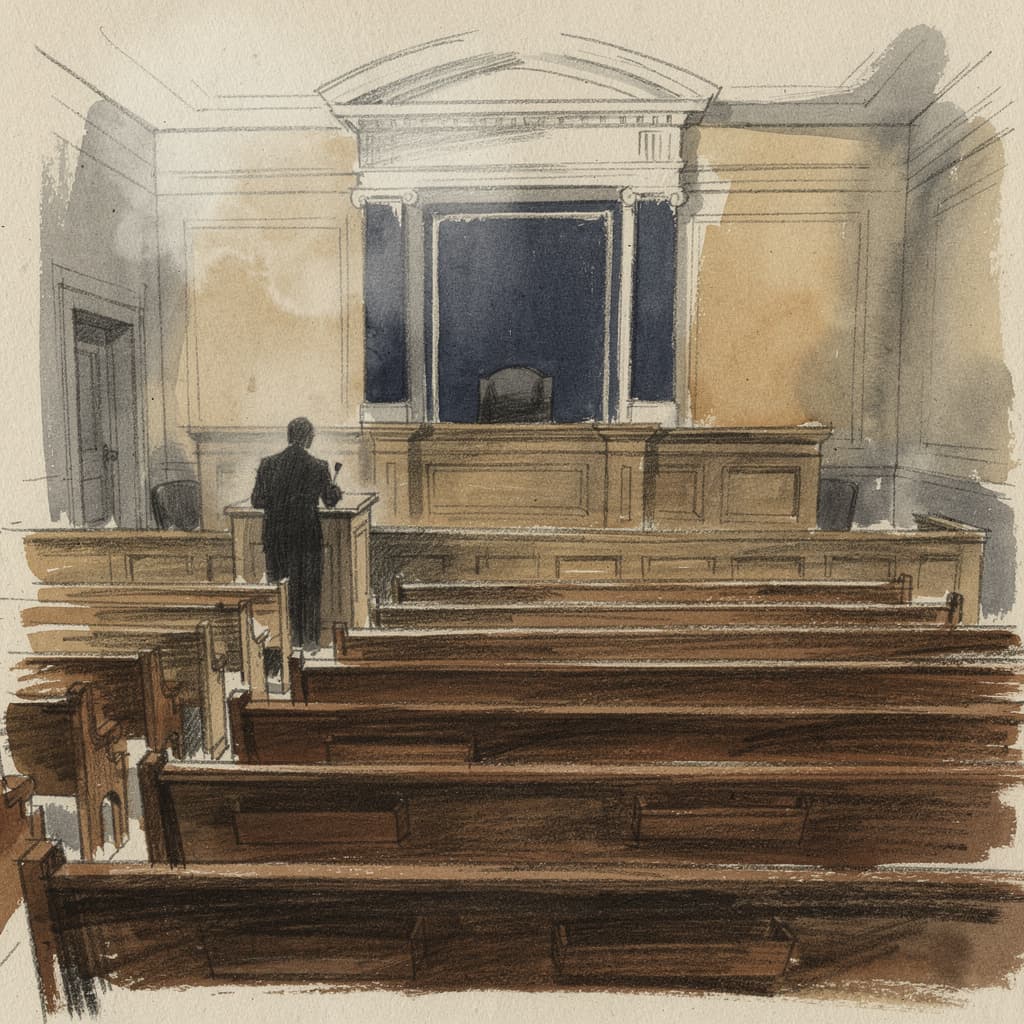
What it's about
The petition followed a decision by the Court of Appeals of Arkansas and concerned the Sixth Amendment public-trial right as applied to state proceedings through the Fourteenth Amendment.
Question presented
Whether the Sixth Amendment right to a public trial, as applied to the states through the Fourteenth Amendment, is violated when a trial court closes the courtroom to the public during jury selection without making the findings required by Waller v. Georgia, 467 U.S. 39 (1984), and Presley v. Georgia, 558 U.S. 209 (2010)?
What the Court decided
Holding
Petition DENIED.
What's next
The Supreme Court has finished this docket action. It did not rule on the constitutional question or send the case back to a lower court.
Documents
Opinions
Key filings
Docket activity
New analysis added
AI analysis generated: Case Briefing
New analysis added
New analysis added
New analysis added
Show 7 moreShow fewer
New analysis added
New analysis added
New analysis added
New analysis added
New analysis added
New analysis added
New analysis added
Sources
Primary materials plus reporting. Best-effort analysis: this explainer relies on a mix of primary materials and trusted secondary sources. Official filings and opinions remain authoritative.