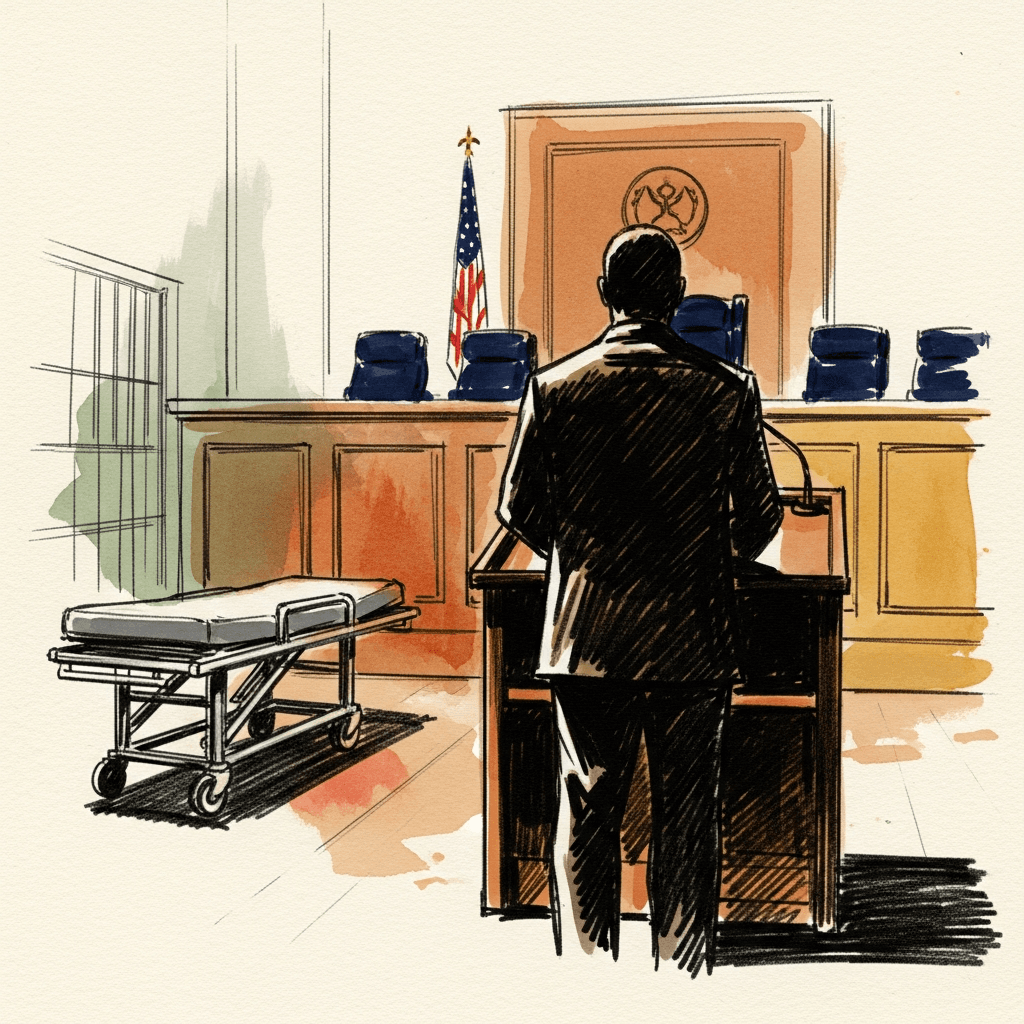
Illustration for Smith v. Underwood
Docket 19-6839

Smith v. Underwood

Smith v. Underwood is a case appealed from the United States Court of Appeals for the Second Circuit where the petitioner filed to proceed without paying court fees.

Status
Decided
Appeal from
United States Court of Appeals for the Second Circuit
Decision released
May 18, 2020

Decision briefing

The case in plain English

Start with the holding, why it matters, and the strongest takeaways from the opinions.

What Happened

The Supreme Court reviewed a case where a prisoner claimed officials ignored his serious medical needs, which would violate the Eighth Amendment's ban on cruel and unusual punishment. The Court looked at whether lower courts were wrong to dismiss the complaint before it could be fully heard. The case specifically dealt with whether the prisoner's legal claims were strong enough to move forward in the court system.

Why It Matters

This case affects how prisoners can seek justice when they believe their health is being neglected by prison staff. If courts dismiss these claims too easily, it could prevent people in custody from getting help for serious medical issues. For example, a person with a chronic illness might be unable to sue if their medication is withheld without a good reason.

The Big Picture

The Eighth Amendment is meant to protect people from treatment that is considered cruel or unusual while they are in government custody. This case is part of a long history of the Court defining what 'deliberate indifference' (ignoring a known risk) means in a prison setting. It balances the rights of incarcerated people with the legal rules that prevent courts from being overwhelmed by minor complaints.

What the Justices Said

The Court issued a decision on May 18, 2020, regarding the petition and the request to proceed without paying fees. No substantive justice or advocate reactions are available yet regarding the specific reasoning of the individual justices.

The Bottom Line

The Supreme Court addressed whether a prisoner's medical neglect claim was legally sufficient to avoid being dismissed early in the legal process.

What's Next

Observers should watch how lower courts and prison systems change their rules for handling medical complaints following this ruling. The case now moves back to the lower courts or affected parties to implement the Supreme Court's direction. Future lawsuits will likely use this case to argue whether prison officials are doing enough to care for those in their charge.

What was the core dispute in this case?

The case centered on whether prison officials were 'deliberately indifferent' to a prisoner's medical needs. The petitioner argued that his Eighth Amendment rights were violated when his health concerns were ignored.

What are the real-world consequences for prisoners?

The ruling helps determine how difficult it is for incarcerated people to sue for better medical care. It sets a standard for what kind of evidence is needed to start a lawsuit.

What legal rule did the Court examine?

The Court looked at the Eighth Amendment's protection against cruel and unusual punishment. It specifically focused on the rule for 'failure to state a claim' during the early stages of a case.

What is the next procedural step for this case?

The case will now be handled by lower courts or agencies based on the Supreme Court's decision. Legal experts will monitor how these courts apply the ruling to similar medical neglect claims.

How does this fit into a broader legal trend?

This case is part of an ongoing effort to define the limits of government responsibility for people in custody. It reflects the Court's role in balancing individual rights with the efficiency of the legal system.

Where things stand

Timeline

Key court milestones at a glance.

Case Accepted
Arguments AheadUpcoming
Decision ReleasedMay 18, 2020

Source note

How this page is sourced

Official case materials anchor this page. Reporting is used only to add context and explain the dispute in plain English.

Page data last refreshed Mar 30, 2026.

Primary materials

Documents & resources

Briefs, opinions, transcripts, and audio when they are available.

Recent coverage

In the news

Selected reporting and analysis that can help you follow the public conversation around the case.

More to watch

Related cases on the docket

Other live cases with a similar posture, so readers can move across the docket without losing the thread.