Foreign groups' speech rights
Agency for Int'l De v. v. Alliance for Open Soc'y Int'l
In brief
The Supreme Court allowed the government to apply the funding policy to the groups' separately incorporated foreign affiliates.
- Where it stands
- Decided
Decided 5-3 · June 29, 2020 · Opinion by Justice Thomas
- What it’s about
- The case asked whether the federal government could require foreign affiliates of U.S.-based aid groups fighting HIV/AIDS abroad to adopt a policy opposing prostitution and sex trafficking as a condition of receiving federal funds.
- Who it affects
- The decision allows the government to enforce that funding condition against the foreign affiliates at issue. The Court said those affiliates have no First Amendment rights because they are separate legal organizations operating outside U.S. territory.
Summary: written with AI from the case record.
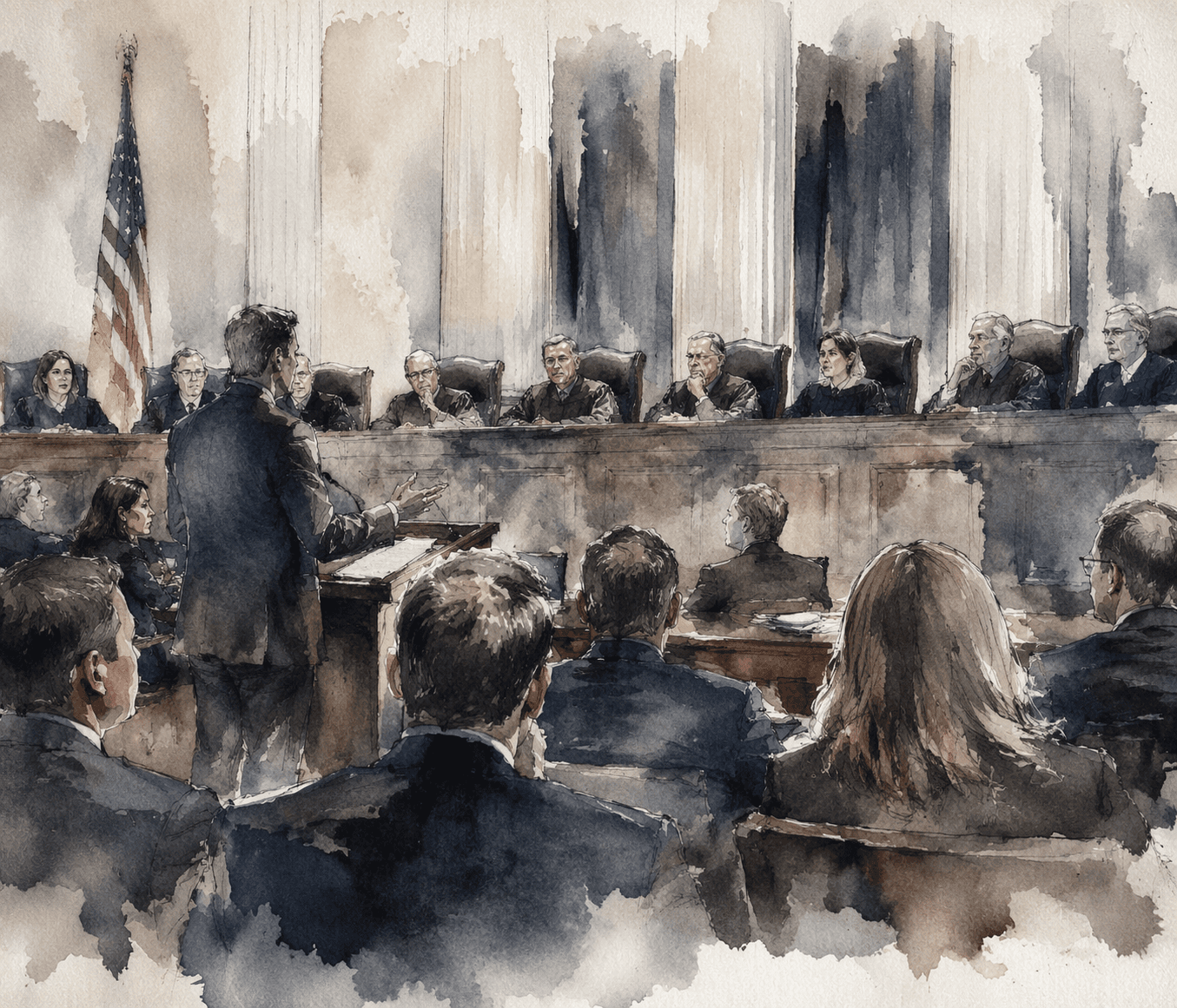
What it's about
The Supreme Court held that applying that requirement to those legally separate foreign affiliates is constitutional because foreign organizations operating overseas do not have First Amendment rights.
It tested whether constitutional protection for U.S. aid groups also covered their separately incorporated foreign affiliates.
Question presented
Whether the First Amendment further bars enforcement of that directive with respect to legally distinct foreign entities operating overseas that are affiliated with respondents.
What the Court decided
Holding
Because plaintiffs’ foreign affiliates possess no First Amendment rights, applying the Policy Requirement to them is not unconstitutional. Two bedrock legal principles lead to this conclusion. As a matter of American constitutional law, foreign citizens outside U. S. territory do not possess rights under the U. S. Constitution. See, e.g., Boumediene v. Bush, 553 U. S. 723, 770–771. And as a matter of American corporate law, separately incorporated organizations are separate legal units with distinct legal rights and obligations. See, e.g., Dole Food Co. v. Patrickson, 538 U. S. 468, 474–475. 911 F. 3d 104, reversed.
- Result
- Reversed
The vote
From the opinions
“The Court, in my view, asks the wrong question and gives the wrong answer.”
What's next
The Supreme Court has finished its action in the case. Any further proceedings must apply its ruling to the foreign affiliates at issue.
Documents
Docket activity
New analysis added
AI analysis generated: Impact Analysis
AI analysis generated: Opinion Summary
New analysis added
AI analysis generated: Case Briefing
Show 5 moreShow fewer
AI analysis generated: Decision Record
Case data updated: status, opinion_date
Opinion added: opinion
Brief added: Petition
Brief added: Questions Presented
More questions
- What did the Supreme Court decide in Alliance for Open Society?
- It overturned the Second Circuit's ruling and decided that applying the funding policy to the foreign affiliates was constitutional.
- How did the Court justify applying the policy to the foreign affiliates?
- The Court said the affiliates had no First Amendment rights because they were separate corporations operating outside U.S. territory.
- What did the ruling allow the government to do?
- It allowed the government to enforce the funding requirement against the foreign affiliates at issue.
- What happens next after the Supreme Court's action?
- The Court's action is complete; any remaining lower-court proceedings must follow its ruling.
Sources
Primary materials plus reporting. Best-effort analysis: this explainer relies on a mix of primary materials and trusted secondary sources. Official filings and opinions remain authoritative.